







What is 1.4762 Stainless Steel?
Apr 07, 2026
Leave a message
1.4762 stainless steel, commonly known as 446 or UNS S44600, is a high-chromium ferritic stainless steel designed for exceptional resistance to high-temperature oxidation and sulfidation. With its elevated chromium content (23-27%), it offers superior scaling resistance at temperatures up to 1100°C, making it the material of choice for demanding high-temperature applications such as furnace components, burner parts, and heat treatment equipment where conventional stainless steels would rapidly degrade. Its ferritic structure provides good thermal conductivity and low thermal expansion, essential for thermal cycling applications.
This high-temperature ferritic grade is standardized under key international systems.
| Standard | Equivalent Grade |
|---|---|
| EN (Europe) | 1.4762 |
| ASTM/AISI (USA) | 446, UNS S44600 |
| JIS (Japan) | SUS446 |
| Common Name | 446 |
Its high chromium content is key to its exceptional high-temperature oxidation resistance.
| Element | C | Si | Mn | P | S | Cr | N |
|---|---|---|---|---|---|---|---|
| Content (%) | ≤ 0.20 | ≤ 1.0 | ≤ 1.5 | ≤ 0.04 | ≤ 0.03 | 23.0 - 27.0 | ≤ 0.25 |
It offers good strength at elevated temperatures with excellent oxidation resistance.
| Property | Yield Strength (Rp0.2) | Tensile Strength (Rm) | Elongation (A) | Hardness (HB) |
|---|---|---|---|---|
| Typical Value (Room Temp) | ≥ 275 MPa | 450 - 600 MPa | ≥ 20% | ≤ 220 |
| Typical Value (900°C) | ~ 30 MPa | ~ 50 MPa | ~ 35% | - |
Key Characteristics and Applications of 1.4762 / 446
Exceptional High-Temperature Oxidation Resistance: The high chromium content (23-27%) provides outstanding resistance to scaling and oxidation in continuous service up to 1100°C (2010°F) and intermittent service up to 1050°C (1920°F).
Excellent Sulfidation Resistance: Superior resistance to sulfur-containing atmospheres makes it ideal for high-temperature applications in the presence of combustion gases and sulfur compounds.
Low Thermal Expansion: Ferritic structure provides lower thermal expansion than austenitic grades, reducing thermal stress in cyclic heating applications.
Good Thermal Conductivity: Higher thermal conductivity than austenitic stainless steels, beneficial for heat transfer applications.
Primary Applications:
Furnace Components: Radiant tubes, burner parts, retorts, muffles, and furnace linings.
Heat Treatment Equipment: Support grids, trays, baskets, and fixtures for heat treating operations.
Petrochemical Industry: Components in reformers, crackers, and high-temperature process equipment.
Power Generation: Superheater tubes, boiler components, and heat recovery systems.
Glass Industry: Glass handling equipment and kiln components.
Cement Industry: Preheater cyclones and ducting.
Waste Incineration: Combustion chambers and heat exchangers in high-sulfur environments.
How does 446 (1.4762) compare to 310S (1.4845) and 304 (1.4301)?
446 offers superior oxidation resistance at higher temperatures compared to both 310S and 304. While 310S is suitable up to about 1150°C, 446 provides excellent performance up to 1100°C with better resistance to sulfur-containing atmospheres. Compared to 304, which is limited to about 800°C, 446 offers dramatically higher temperature capability. However, 446 is ferritic (magnetic) with lower toughness at room temperature and reduced weldability compared to austenitic grades. 446 is often chosen for applications where high-temperature oxidation and sulfidation resistance are paramount, and where the ferritic structure's thermal expansion characteristics are advantageous.
What are the welding considerations for 446 stainless steel?
Welding 446 requires careful control due to its ferritic structure and high chromium content. Key considerations include:
Low heat input welding techniques are essential to minimize grain growth in the heat-affected zone
Preheating (200-300°C) is recommended to reduce thermal shock and prevent cracking
Austenitic filler metals (309L, 310L) are recommended for better weld ductility and to avoid embrittlement
Post-weld annealing at 760-820°C followed by slow cooling may be required to restore ductility
For critical applications, welding in the annealed condition is preferred
Thicker sections require careful procedure qualification to avoid cracking
Resistance welding may be suitable for thin gauge applications
What are the limitations of 446 stainless steel?
While 446 offers exceptional high-temperature performance, it has several limitations:
Brittle at room temperature, particularly in thicker sections and in the as-welded condition
Poor weldability compared to austenitic grades, requiring careful procedure control
Limited toughness, especially at lower temperatures
Not suitable for cryogenic applications due to ductile-to-brittle transition
Can be susceptible to 475°C embrittlement after prolonged exposure in the 400-500°C range
Lower strength at room temperature compared to precipitation-hardening grades
Oxidation resistance decreases in highly reducing atmospheres
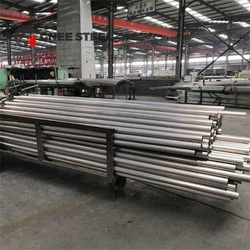
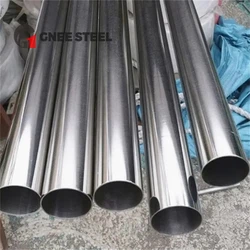
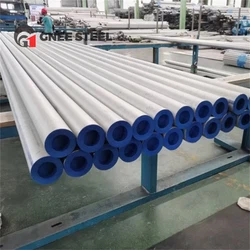
Looking for a Reliable Supplier of 1.4762 / 446 Stainless Steel?
GNEE Steel supplies premium high-temperature 446 (1.4762) stainless steel in plate, sheet, bar, and forging forms for demanding furnace and heat treatment applications. We provide full material certification (EN 10204 3.1) and processing support including cutting, forming, and welding guidance. If you have any requirements, please feel free to contact us.
Send Inquiry