GNEE offers a comprehensive range of stainless steel sheets in various specifications, catering to diverse requirements ranging from industrial manufacturing to architectural decoration:
By Processing Method: Hot-rolled sheets (No.1), Cold-rolled sheets (2B/BA).
By Material Grade:
Austenitic: 304, 304L, 316, 316L, 310S, 321, etc.
Ferritic/Martensitic: 410, 420, 430, 440, etc.
Duplex Stainless Steel: 2205, 2507, S31803.
Super Stainless Steel: 904L, 254SMO, Hastelloy, etc.
By Surface Finish: Mirror (8K), Brushed (HL/No.4), Sandblasted, Etched, Embossed, PVD Color Coating (Gold, Black, Rose Gold, etc.).
Special Forms: Medium-to-thick plates, Patterned plates (Anti-slip/Tread plates), Perforated plates, Precision steel strips, Custom-cut parts.
310/310S Stainless Steel Plate
904L Stainless Steel Plate
2205 Stainless Steel Plate
The following are the equivalent grades of our stainless steel plates.
| Series |
ASTM/AISI Grade |
UNS Code |
EN/DIN Standard |
JIS Grade |
| Austenitic |
304 |
S30400 |
1.4301 |
SUS304 |
| |
304L |
S30403 |
1.4307 |
SUS304L |
| |
316 |
S31600 |
1.4401 |
SUS316 |
| |
316L |
S31603 |
1.4404 |
SUS316L |
| |
321 |
S32100 |
1.4541 |
SUS321 |
| |
310S |
S31008 |
1.4845 |
SUS310S |
| Ferritic |
430 |
S43000 |
1.4016 |
SUS430 |
| |
409L |
S40903 |
1.4512 |
SUS409L |
| Martensitic |
410 |
S41000 |
1.4006 |
SUS410 |
| |
420 |
S42000 |
1.4021 |
SUS420 |
| Duplex |
2205 |
S32205 |
1.4462 |
SUS32205 |
| |
2507 |
S32750 |
1.4410 |
SUS32750 |
| Super Alloy |
904L |
N08904 |
1.4539 |
SUS890L |
Stainless Steel Plate Production Process
Stainless steel plate production involves melting raw materials (iron, chromium, nickel) in an electric arc furnace, casting them into slabs, hot rolling to reduce thickness, and finishing through annealing and pickling to remove scale. Further cold rolling and surface polishing are used for precise, high-finish plates.

Thickness Tolerances for Stainless Steel Sheets
The thickness tolerance of stainless steel plates is typically allowed within the range of 0.05 mm to +5 mm (0.002 in – 0.02 in), depending on the specification, grade, and standards such as ASTM A240 or EN 10259. Thinner sheets (e.g., 20 gauge) have tighter tolerances (around +0.002 in), while thicker plates (e.g., 7 gauge) allow larger deviations (up to about +0.007 in).
Thickness Tolerances for Cold Rolled Stainless Steel Sheets
Standard: Based on ASTM A480
Applicable to: 2B, BA, No.4, HL finishes
| Specified Thickness (mm) |
Tolerance for Width ≤ 1250mm (mm) |
Tolerance for Width 1250-1500mm (mm) |
Precision Tolerance (Optional) |
| 0.30 - 0.60 |
± 0.03 |
± 0.04 |
± 0.02 |
| 0.61 - 1.00 |
± 0.04 |
± 0.05 |
± 0.03 |
| 1.01 - 1.50 |
± 0.05 |
± 0.06 |
± 0.04 |
| 1.51 - 2.00 |
± 0.06 |
± 0.08 |
± 0.05 |
| 2.01 - 3.00 |
± 0.08 |
± 0.10 |
± 0.07 |
| 3.01 - 4.00 |
± 0.12 |
± 0.15 |
± 0.10 |
| 4.01 - 6.00 |
± 0.15 |
± 0.18 |
± 0.13 |
Thickness Tolerances for Hot Rolled Stainless Steel Plates
Standard: Based on ASTM A480/A240
Applicable to: No.1 Finish
| Specified Thickness (mm) |
Tolerance Over (mm) |
Tolerance Under (mm) |
Typical Application |
| 3.00 - 4.75 |
0.40 |
0.30 |
Light Industrial Tanks |
| 4.76 - 9.50 |
0.50 |
0.30 |
Chemical Processing |
| 9.51 - 15.00 |
0.60 |
0.30 |
Structural Support |
| 15.01 - 25.00 |
0.75 |
0.30 |
Pressure Vessels |
| 25.01 - 50.00 |
1.00 |
0.30 |
Heavy Machinery |
| > 50.00 |
1.50 |
0.30 |
Marine Engineering |
If you would like to view more detailed Thickness tolerances for stainless steel plates, click below to access the ASTM A480 technical document.

How do you calculate stainless steel plates?
Stainless steel plates are usually calculated by using the following formula:
Weight Calculation Formula:
Weight=Length×Width×Thickness×Density
For stainless steel, the common density is:
304 / 316 stainless steel ≈ 7.93 g/cm³ (or 7930 kg/m³)
Metric Calculation Formula
Weight (kg)=L(m)×W(m)×T(mm)×7.93
Where:
L = Length (m)
W = Width (m)
T = Thickness (mm)
Example
For a stainless steel plate:
Length = 2 m
Width = 1 m
Thickness = 3 mm
The calculation is:
2 × 1 × 3 × 7.93 = 47.58 kg
This method is commonly used for calculating the theoretical weight of 304, 316, 316L, and other stainless steel plates.
Stainless Steel Sheet Surface Treatment

| Finish |
Name |
Description |
Common Uses |
| No.1 |
Hot Rolled |
Annealed and pickled. Silver-white, dull finish. |
Chemical tanks, industrial plants. |
| 2B |
Cold Rolled |
Bright, smooth, and moderate reflectivity. |
Medical tools, food equipment, construction. |
| BA |
Bright Annealed |
Mirror-like brightness, very smooth. |
Home appliances, mirrors, decorative trim. |
| No.4/HL |
Brushed/Hairline |
Fine abrasive lines, non-reflective. |
Elevators, kitchen backsplashes, handrails. |
| 8K |
Mirror |
Highly reflective, distorted-free image. |
Luxury decoration, architectural façades. |
| Embossed |
Textured |
Raised patterns (teardrop, diamond, etc.). |
Anti-slip floors, elevator interiors. |
Our stainless steel plate export cases
Rhine River Chemical Storage Terminal
Year: 2020
Country: Germany
Products: 316L Hot Rolled Stainless Steel Plates, 316L Industrial Seamless Pipes
Quantity: 68 tons
Marina Bay Coastal Pedestrian Bridge
Year: 2021
Country: Singapore
Products: 2205 Duplex Stainless Steel Plates, 316L Stainless Steel Round Bars
Quantity: 120 tons
Downtown Commercial Plaza Facade Project
Year: 2022
Country: UAE
Products: 316L Gold PVD Mirror Stainless Steel Sheets, 316L Etched Elevator Door Panels
Quantity: 42 tons
Green Valley Dairy Processing Expansion
Year: 2023
Country: New Zealand
Products: 304 Food-grade Stainless Steel Sheets (No.4 Finish), 304 Sanitary Stainless Steel Pipes
Quantity: 35 tons
Chemical Processing Facility
Year: 2023
Country: Germany
Products: 316L hot rolled plates (10mm-25mm thickness), 316L industrial welded tubes
Quantity: 88 tons
North Sea Offshore Oil Platform Maintenance
Year: 2024
Country: Norway
Products: 316L Anti-corrosion Thick Plates, 316L Heavy-wall Stainless Steel Pipes
Quantity: 95 tons
304 316 2205 Stainless steel plate supplier - GNEE
As a leading supplier of stainless steel plates, GNEE is dedicated to providing high-quality material solutions to customers worldwide. We maintain extensive, year-round inventory covering a full range of grades, including the 300 and 400 series as well as duplex stainless steel.
In terms of processing precision, GNEE has introduced industry-leading equipment, including 12,000W ultra-high-power laser cutting machines, precision five-stand cold rolling production lines, and fully automatic CNC leveling machines. Our processing tolerance can be accurately controlled within ±0.05 mm. We have also established a strict quality inspection laboratory, where every batch of products is certified by ISO 9001, CE, and SGS, and supplied with complete original MTC material certificates.
We guarantee shipment of regular stock products within 3–5 days, while customized processing solutions can be delivered within 10–15 days. Currently, GNEE’s service network covers more than 60 countries worldwide, making us your trusted strategic partner in the construction, chemical, and food machinery industries.
GNEE Stainless Steel Plate Inventory Showcase

Quality Control & Testing
1. PMI Spectral Analysis (Positive Material Identification)
Method:Using a handheld XRF spectrometer or an optical emission spectrometer (OES).
Purpose:To quickly determine the content of elements such as Chromium (Cr), Nickel (Ni), Molybdenum (Mo), and Manganese (Mn).
For example, distinguishing between 304 and 316L stainless steel, as 316L must contain more than 2% molybdenum.
2. Mechanical Properties Testing
This testing evaluates the performance of stainless steel plates during loading, processing, and stamping operations.
Tensile Test: Measures yield strength, tensile strength, and elongation to ensure the plate will not crack or permanently deform during structural applications.
Hardness Test: Determines the hardness level of the stainless steel plate.
Bending Test: The plate is bent to a specified angle to observe whether cracks appear in the bending area.
3. Dimensional & Tolerance Inspection
Thickness Tolerance Inspection: Measured using a digital micrometer.
Flatness Inspection: Checked using a straightedge ruler or laser flatness measuring instrument.
Diagonal Measurement: Measures whether the plate dimensions are square and proportional, preventing poor joint fitting caused by “diamond-shaped” plates.
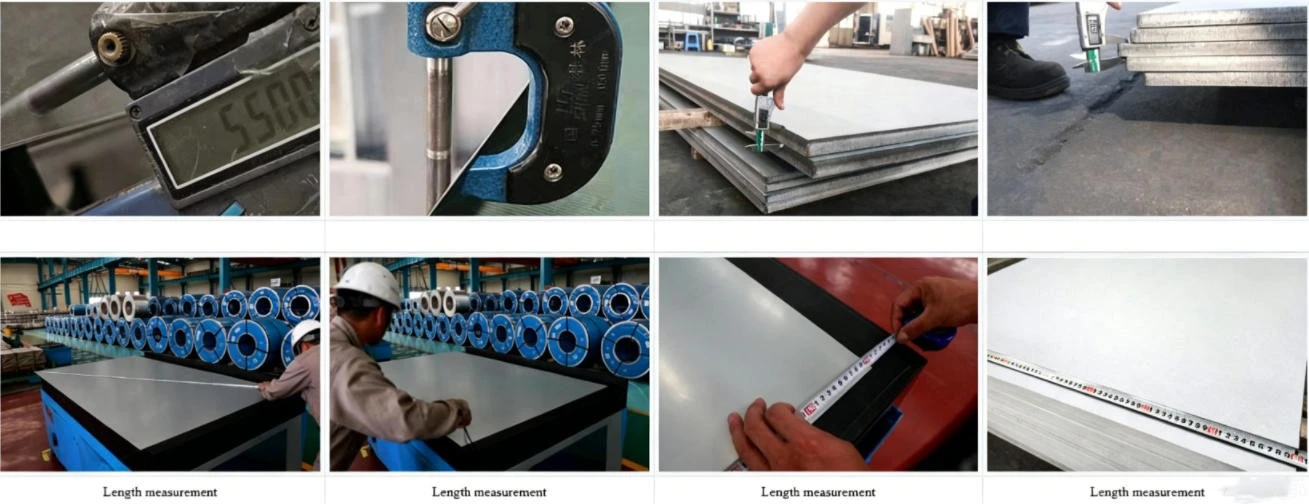
Every batch of stainless steel plates undergoes a rigorous series of evaluations—including PMI chemical composition analysis, mechanical tensile strength testing, and salt spray corrosion testing—to ensure that the materials you receive fully meet your project's specific requirements. All products are delivered accompanied by a Mill Test Certificate (MTC), version 3.1B, in compliance with the EN 10204 standard.
201 Stainless Steel Material Certificate
2205 Stainless Steel Material Certificate
304 Stainless Steel Material Certificate
Professional Stainless Steel Packaging
For sheets intended for various applications, we provide precise surface protection solutions:
Standard Protective Film: We offer single-layer or double-layer PE/PVC protective films ranging from 70μm to 100μm in thickness to prevent scratches during processing and installation.
Paper Interleaving: For 8K mirror-finish sheets or ultra-thin precision sheets, neutral moisture-proof paper is inserted between the sheets to prevent adhesion and surface abrasion.
Structural Support & Bundling
Ensuring cargo remains stable and free from deformation during hoisting and container shipping:
Fumigation-Free Wooden Pallets: Compliant with the international ISPM 15 standard, ensuring hassle-free customs clearance for exports.
Robust Steel Frame Support: For exceptionally heavy or oversized sheets, we provide custom-welded steel frame pallets to ensure maximum load-bearing capacity.
Marking
Clear Shipping Marks: Each package features waterproof shipping labels clearly indicating the material grade, heat number, dimensions, net/gross weight, and a "Made in China" label.
One Package, One Certificate: A laminated copy of the MTC (Material Test Certificate) is included inside every package.

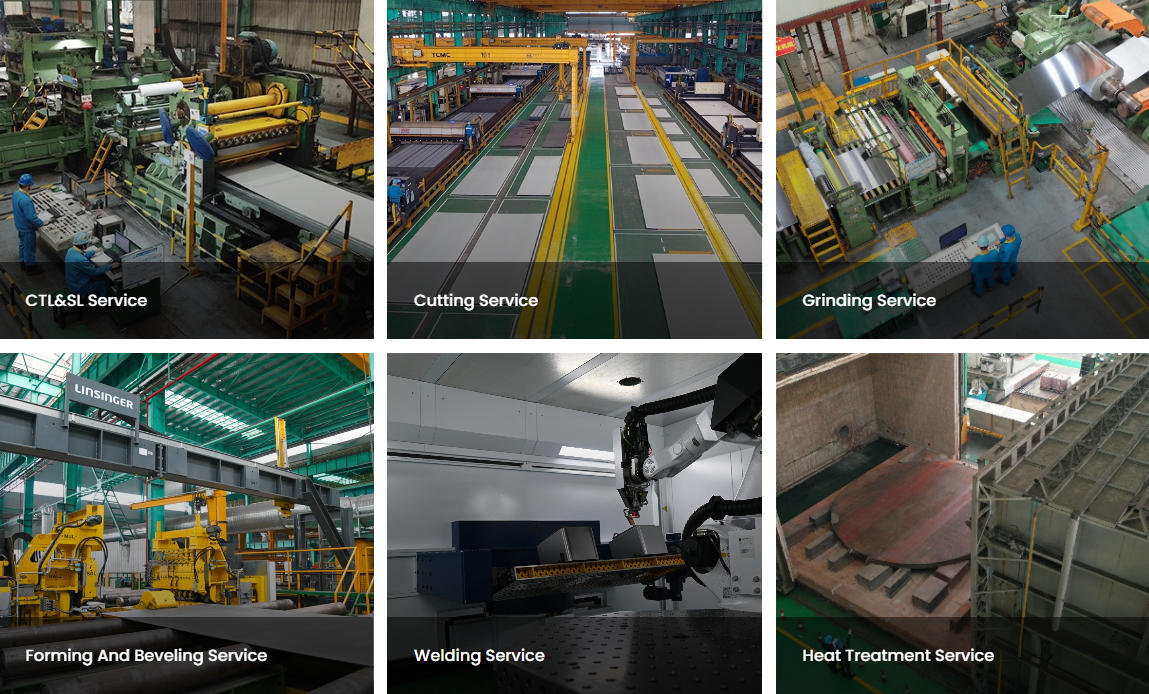
Stainless steel plate value-added processing services include laser cutting, bending, welding, polishing, slitting, drilling, and surface finishing. Advanced CNC equipment can achieve cutting tolerances within ±0.05 mm and surface roughness as low as Ra 0.4 μm.
FAQ
Q: What is the difference between 304 and 316 stainless steel plates?
A: The primary difference between 304 and 316 stainless steel plates is that 316 contains 2–3% molybdenum, which provides superior corrosion resistance, particularly against chlorides and in marine environments, while 304 is more affordable and standard for general, non-corrosive use. 316 is often considered a "marine grade" upgrade.
Q: What are the standard sizes for stainless steel sheets/plates?
A: Standard stainless steel sheets and plates are commonly sold in sizes of 48" x 96" (4' x 8'), 48" x 120" (4' x 10'), and 60" x 120" (5' x 10'). Common metric sizes include 1000 x 2000 mm, 1250 x 2500 mm, and 1500 x 3000 mm. Thicknesses range from thin gauges (26 GA) to thick plates over 2".
Q: What is Duplex 2205 stainless steel plate?
A: Duplex 2205 stainless steel plate (UNS S31803/S32205) is a high-performance, nitrogen-enhanced, two-phase alloy comprising roughly 50% austenite and 50% ferrite. It offers superior strength (double that of 304/316) and significantly higher pitting/stress corrosion resistance. It is widely used in harsh environments, such as oil & gas, chemical processing, and marine applications.
Q: Is 304 stainless steel plate truly rust-proof?
A: No, 304 stainless steel is not absolutely "rust-proof." Although it possesses exceptional corrosion resistance, it can still rust under specific conditions—such as prolonged exposure to high-chloride environments (e.g., coastal regions), remaining in a damp state for extended periods, or when its surface is damaged.
Q: Which stainless steel grade is best for food-grade applications?
A: Grade 316 is generally considered the best food-grade stainless steel for high-corrosion environments (salt, acid) due to its molybdenum content. However, Grade 304 is the most widely used "standard" for general, cost-effective food processing, while Grade 430 is an excellent, budget-friendly option for mild, non-corrosive food applications.
Q: What is the difference between Hot Rolled (HR) and Cold Rolled (CR) plates?
A: The primary difference between the two lies in the processing temperature: Hot-rolled (HR) steel is rolled at temperatures exceeding 1700°F (i.e., above its recrystallization temperature), whereas cold-rolled (CR) steel is processed at room temperature. Typically produced using hot-rolled steel as a feedstock, cold-rolled steel features a smoother surface finish, higher strength, and superior dimensional accuracy. Hot-rolled steel is an ideal choice for manufacturing structural components, while cold-rolled steel is best suited for applications demanding extremely high precision.
Q:Which welding method is best for stainless steel plates?
A: TIG (Tungsten Inert Gas Welding / GTAW) is typically the optimal and most versatile method for welding stainless steel plates, particularly for applications requiring extremely high quality and precision, as well as for materials ranging from thin to medium thickness.
Q: How much is the current price of 304 stainless steel plate per kg?
A: As of mid-2026, global market prices for 304 stainless steel plates typically fluctuate between $3.00 and $4.00 per kilogram; specifically, export prices in the Asian region tend to be lower ($3.15–$3.35/kg), while prices in the European region are relatively higher ($3.50–$3.97/kg).
Q: What is your terms of delivery?
Q: How about your delivery time?
A: We pledge: standard stock products are shipped within 3–5 days, while customized processing solutions are delivered within 10–15 days. Currently, GNEE’s service network spans over 120 countries worldwide, making us your trusted strategic partner in the construction, chemical, and food machinery sectors.










