







What is 1.4876 Stainless Steel?
Apr 03, 2026
Leave a message
1.4876 stainless steel, commonly known as Alloy 800 or UNS N08800, is a nickel-iron-chromium alloy designed for high-temperature service requiring excellent oxidation resistance, good creep strength, and exceptional resistance to carburization and sulfidation. With its balanced composition and high nickel content, it offers superior performance in demanding high-temperature environments where conventional stainless steels would rapidly degrade. It is widely used in petrochemical processing, power generation, and heat treatment equipment for applications up to 1100°C.
This high-temperature alloy is standardized under key international systems.
| Standard | Equivalent Grade |
|---|---|
| EN (Europe) | 1.4876 |
| ASTM/AISI (USA) | Alloy 800, UNS N08800 |
| Common Name | Incoloy 800 |
Its high nickel and chromium content provide excellent high-temperature oxidation and corrosion resistance.
| Element | C | Si | Mn | P | S | Cr | Ni | Fe | Al | Ti |
|---|---|---|---|---|---|---|---|---|---|---|
| Content (%) | ≤ 0.10 | ≤ 1.0 | ≤ 1.5 | ≤ 0.03 | ≤ 0.015 | 19.0 - 23.0 | 30.0 - 35.0 | ≥ 39.5 | 0.15 - 0.60 | 0.15 - 0.60 |
It maintains good mechanical properties at both room and elevated temperatures.
| Property | Yield Strength (Rp0.2) | Tensile Strength (Rm) | Elongation (A) | Hardness (HB) |
|---|---|---|---|---|
| Typical Value (Room Temp) | ≥ 210 MPa | 500 - 700 MPa | ≥ 35% | ≤ 200 |
Key Characteristics and Applications of 1.4876 / Alloy 800
Excellent High-Temperature Oxidation Resistance: Forms a stable chromium oxide layer that protects against scaling and oxidation in continuous service up to 1100°C (2010°F).
Good Creep and Rupture Strength: Maintains structural integrity under mechanical load at elevated temperatures, suitable for load-bearing high-temperature components.
Exceptional Carburization Resistance: High nickel content provides superior resistance to carbon absorption, preventing embrittlement in carbon-rich atmospheres.
Good Sulfidation Resistance: Performs well in sulfur-containing environments where conventional stainless steels would rapidly degrade.
Primary Applications:
Petrochemical Processing: Pyrolysis tubes, reformer tubes, cracking furnace components, and heat exchangers.
Power Generation: Superheater tubing, boiler components, and heat recovery systems.
Heat Treatment: Furnace components, retorts, muffles, radiant tubes, and baskets.
Nuclear Industry: Steam generator tubing and reactor components.
Chemical Processing: High-temperature reactors and heat exchangers.
Heat Exchangers: High-temperature heat transfer equipment.
How does Alloy 800 (1.4876) compare to 310 (1.4841) stainless steel?
Alloy 800 offers superior high-temperature performance compared to 310 due to its higher nickel content (30-35% vs. 19-22%). This provides better resistance to carburization, sulfidation, and chlorine attack, as well as improved creep strength at elevated temperatures. While 310 is suitable for many high-temperature applications up to 1100°C, Alloy 800 is preferred for more aggressive environments involving carburizing or sulfidizing atmospheres, or where longer service life is required. Alloy 800 also exhibits better stability of properties over long-term exposure. However, Alloy 800 is significantly more expensive than 310, so it is reserved for the most demanding applications.
What are the differences between Alloy 800, 800H, and 800HT?
The three variants of Alloy 800 are distinguished by carbon content and heat treatment:
Alloy 800 (1.4876): Standard grade with carbon ≤0.10%, suitable for general high-temperature applications
800H (1.4958): High-carbon version (0.05-0.10%) with controlled grain size (ASTM 5 or coarser), designed for improved creep strength at elevated temperatures
800HT (1.4959): Similar to 800H but with higher aluminum and titanium content (Al+Ti up to 1.2%) and controlled grain size, providing maximum creep and rupture strength for the most demanding applications
For applications requiring the highest creep strength above 650°C, 800HT is recommended. For moderate temperatures or non-load-bearing applications, standard 800 may be sufficient.
What are the welding considerations for Alloy 800?
Alloy 800 has good weldability using all common methods including TIG, MIG, and SMAW. Key considerations include:
Matching filler metals (ERNiCr-3, ERNiCrCoMo-1) are recommended
Low heat input techniques help maintain corrosion resistance
No preheating is generally required
Post-weld heat treatment (980°C, 1 hour) may be beneficial for optimizing properties
For high-temperature service, 800H or 800HT with controlled grain size may be preferred
Post-weld cleaning is recommended to remove oxides
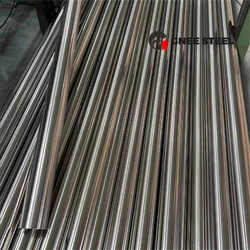
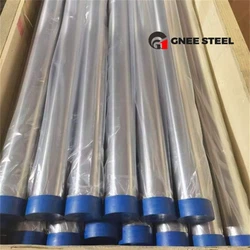

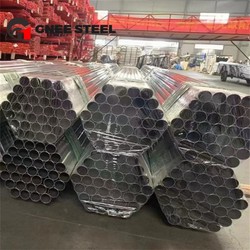
Looking for a Reliable Supplier of 1.4876 / Alloy 800 Stainless Steel?
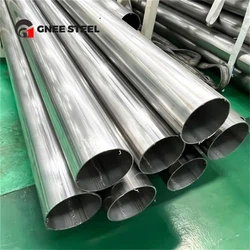
GNEE Steel supplies premium Alloy 800 (1.4876) stainless steel in plate, sheet, pipe, tube, bar, and fitting forms for the most demanding high-temperature applications. We provide full material certification (EN 10204 3.1) and processing support including cutting, forming, and welding services. If you have any requirements, please feel free to contact us.


Send Inquiry