







Geothermal Well Casing: 2507 vs. Alloy 625 Corrosion Resistance
Jun 23, 2025
Leave a message


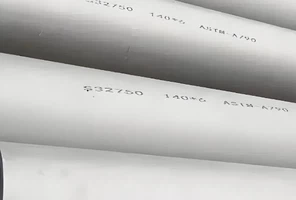
Why super duplex 2507 dominates production casing?
2507 provides PREN >42 for pitting resistance in 150,000 ppm chloride brines. Its yield strength (550 MPa) handles 250°C downhole conditions at half the cost of nickel alloys. Titanium stabilization prevents chloride stress cracking during thermal cycling.
When is alloy 625 required for critical zones?
Alloy 625 becomes essential when H₂S exceeds 5 psi partial pressure or pH drops below 3.5. The nickel-chromium-molybdenum matrix resects sulfidation corrosion 8x better than stainless steels. Mandatory for instrumentation housings in acidic reservoirs.
Maximum temperature limits?
2507 maintains corrosion resistance up to 280°C in reducing environments. Alloy 625 performs reliably to 350°C but requires oxygen scavengers above 200°C. Both alloys suffer sigma phase embrittlement beyond 600°C.
Critical welding precautions?
For 2507: Use 2594 filler with argon back-purge (O₂<50ppm). Interpass temperature below 100°C prevents nitride precipitation. Solution annealing at 1120°C dissolves harmful phases. Post-weld ferrite content must be 35-55%.
Corrosion monitoring techniques?
Ultrasonic wall thickness mapping quarterly. Hydrogen probes detect HIC risk in H₂S zones. Scale analysis for silica/chloride concentration trends. Retrievable coupon racks validate material performance annually.
Send Inquiry