







What is 1.4016 Stainless Steel?
Mar 04, 2026
Leave a message
1.4016 stainless steel, commonly known as 430 or UNS S43000, is a standard ferritic stainless steel. With its good corrosion resistance, formability, and cost-effectiveness due to the absence of nickel, it is widely used in decorative applications, automotive trim, kitchen appliances, and other non-critical structural components where moderate corrosion resistance is sufficient.
This economical ferritic grade is standardized under major international systems.
| Standard | Equivalent Grade |
|---|---|
| EN (Europe) | 1.4016 |
| ASTM/AISI (USA) | 430, UNS S43000 |
| JIS (Japan) | SUS430 |
| KS (Korea) | STS430 |
Its composition is centered on chromium for corrosion resistance, with no nickel.
| Element | C | Si | Mn | P | S | Cr |
|---|---|---|---|---|---|---|
| Content (%) | ≤ 0.12 | ≤ 1.0 | ≤ 1.0 | ≤ 0.04 | ≤ 0.03 | 16.0 - 18.0 |
It offers moderate strength and good ductility in the annealed condition.
| Property | Yield Strength (Rp0.2) | Tensile Strength (Rm) | Elongation (A) | Hardness (HB) |
|---|---|---|---|---|
| Typical Value | ≥ 240 MPa | 450 - 600 MPa | ≥ 22% | ≤ 200 |
Key Characteristics and Applications of 1.4016 / 430
Good Corrosion Resistance in Mild Environments: Performs well in indoor atmospheres, fresh water, and mild chemicals, but is not suitable for marine or severe industrial environments.
Excellent Formability and Surface Finish: Can be easily formed, polished, and textured, making it popular for decorative purposes.
Magnetic and Cost-Effective: Strongly magnetic and more affordable than nickel-containing austenitic grades due to its simpler composition.
Primary Applications:
Architectural and Decorative: Interior trim, wall panels, elevator interiors, and nameplates.
Automotive: Trim, moldings, and non-structural exhaust components.
Household Appliances: Washing machine drums, dishwasher interiors, and range hoods.
Catering Equipment: Sinks, countertops, and food preparation surfaces (in less demanding environments).
How does 430 (1.4016) stainless steel differ from 304 (1.4301)?
The main differences are structural and compositional. 430 is a ferritic (body-centered cubic) steel with no nickel, making it magnetic, generally less ductile, and with lower corrosion resistance-especially to pitting and stress corrosion cracking. 304 is an austenitic (face-centered cubic) steel containing nickel, making it non-magnetic, more ductile, and significantly more corrosion-resistant. 430 is chosen for cost-sensitive applications where high corrosion resistance is not critical.
What are the welding considerations for 430 stainless steel?
Welding 430 can be challenging due to its ferritic structure. The heat-affected zone (HAZ) is prone to excessive grain growth, which reduces ductility and toughness and can lead to cracking. Low heat input welding techniques, preheating (to around 150-200°C), and using stabilized filler metals (like 309L or 312) can help mitigate these issues. Post-weld annealing may be necessary to restore some ductility in critical applications.
Looking for a Reliable Supplier of 1.4016 / 430 Stainless Steel?
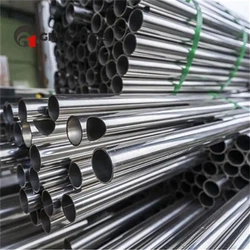
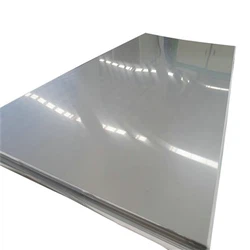
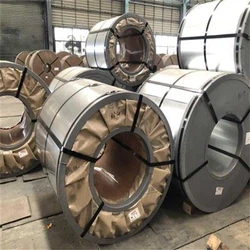
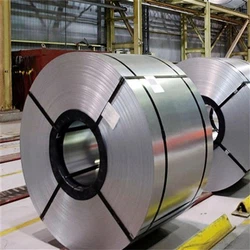
GNEE Steel supplies cost-effective 430 (1.4016) ferritic stainless steel in sheet, coil, strip, and bar forms, suitable for decorative and general-purpose applications. We provide material certification and processing services. If you have any requirements, please feel free to contact us.


Send Inquiry