







What material is 1.4177 equivalent to?
Apr 02, 2026
Leave a message
1.4117 stainless steel, commonly known as 440A or UNS S44002, is a high-carbon martensitic stainless steel that offers a good balance of hardness, corrosion resistance, and toughness. As the lower carbon member of the 440 series, it provides slightly lower hardness than 440B and 440C but offers improved toughness and better corrosion resistance due to fewer chromium carbides. This makes it suitable for applications requiring moderate wear resistance, good edge retention, and adequate corrosion resistance, such as cutlery, bearings, surgical instruments, and valve components.
Equivalent Grade of 1.4117 stainless steel
| Standard | Equivalent Grade |
|---|---|
| EN (Europe) | 1.4117 |
| ASTM/AISI (USA) | 440A, UNS S44002 |
| JIS (Japan) | SUS440A |
| Common Name | 440A |
Chemical Composition of 1.4117 stainless steel
| Element | C | Si | Mn | P | S | Cr | Mo |
|---|---|---|---|---|---|---|---|
| Content (%) | 0.60 - 0.75 | ≤ 1.0 | ≤ 1.0 | ≤ 0.04 | ≤ 0.03 | 16.0 - 18.0 | ≤ 0.75 |
Mechanical properties of 1.4117 stainless steel
| Condition | Yield Strength (Rp0.2) | Tensile Strength (Rm) | Elongation (A) | Hardness (HRC) |
|---|---|---|---|---|
| Annealed | ~ 450 MPa | ~ 740 MPa | ~ 15% | ~ 25 HRC |
| Hardened & Tempered | ≥ 550 MPa | ≥ 700 MPa | ≥ 12% | 52 - 56 HRC |
Key Characteristics and Applications of 1.4117 / 440A
Good Balance of Hardness and Toughness: Lower carbon content provides slightly lower maximum hardness than 440B or 440C but offers better toughness, making it less brittle and more resistant to chipping.
Moderate Corrosion Resistance: Offers better corrosion resistance than 440B and 440C due to fewer chromium carbides in the microstructure, with performance similar to 420 in most environments.
Magnetic and Hardenable: Strongly magnetic and responds well to heat treatment, with good through-hardening capability.
Good Wear Resistance: Provides adequate wear resistance for many applications without the brittleness of higher carbon grades.
Primary Applications:
Cutlery: Mid-range knives, blades, scissors, and kitchen utensils requiring a balance of edge retention and toughness.
Bearings: Ball bearings and races for less demanding applications.
Surgical Instruments: Instruments requiring sharp edges and good corrosion resistance.
Valve Components: Seats, balls, and stems in moderate wear applications.
Industrial Tools: Gauges, measuring tools, and machine parts requiring dimensional stability.
Dental Tools: Instruments requiring sterilization resistance and good edge retention.
How does 440A (1.4117) compare to 440B (1.4112) and 440C (1.4125)?
What is the recommended heat treatment for 440A stainless steel?
What are the welding considerations for 440A?
Looking for a Reliable Supplier of 1.4117 / 440A Stainless Steel?
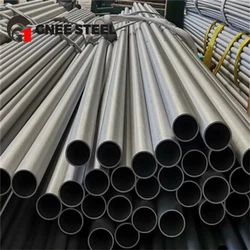
1.4117 Stainless Steel Pipes
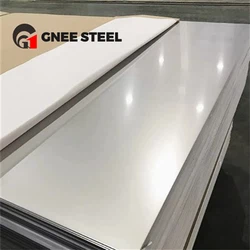
1.4117 Stainless Steel Plates
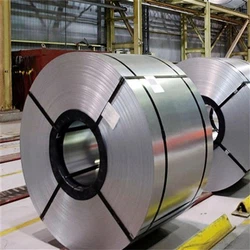
1.4117 Stainless Steel Coils
Send Inquiry