







What is 1.4122 Stainless Steel?
Apr 02, 2026
Leave a message
1.4122 stainless steel is a high-carbon, molybdenum-alloyed martensitic stainless steel that offers an excellent combination of hardness, wear resistance, and corrosion resistance. With its increased carbon content and molybdenum addition, it provides higher attainable hardness than standard 420 while maintaining good corrosion resistance, making it suitable for demanding applications in cutlery, surgical instruments, industrial blades, and food processing equipment where both edge retention and corrosion resistance are critical.
This enhanced martensitic grade is standardized under key international systems.
| Standard | Equivalent Grade |
|---|---|
| EN (Europe) | 1.4122 |
| ASTM/AISI (USA) | 420 S45 (Modified), UNS S42045 |
| Common Name | 420 S45, X20CrMo13 |
Its composition includes higher carbon and molybdenum for enhanced hardness and corrosion resistance.
| Element | C | Si | Mn | P | S | Cr | Mo |
|---|---|---|---|---|---|---|---|
| Content (%) | 0.30 - 0.38 | ≤ 1.0 | ≤ 1.0 | ≤ 0.04 | ≤ 0.03 | 14.0 - 16.0 | 0.90 - 1.30 |
It achieves high hardness with good corrosion resistance through proper heat treatment.
| Condition | Yield Strength (Rp0.2) | Tensile Strength (Rm) | Elongation (A) | Hardness (HRC) |
|---|---|---|---|---|
| Annealed | ~ 550 MPa | ~ 750 MPa | ~ 15% | ~ 25 HRC |
| Hardened & Tempered | ≥ 600 MPa | ≥ 800 MPa | ≥ 10% | 52 - 57 HRC |
Key Characteristics and Applications of 1.4122
High Hardness and Wear Resistance: Carbon content of 0.30-0.38% allows for high attainable hardness (up to 57 HRC), providing excellent wear resistance and edge retention for cutting applications.
Enhanced Corrosion Resistance: Higher chromium content (14-16%) and molybdenum addition (0.90-1.30%) provide significantly better corrosion resistance than standard 420, approaching that of 440C in many environments.
Good Hardenability: Molybdenum addition improves hardenability, allowing for through-hardening in thicker sections.
Good Toughness: Provides better toughness than 440C while achieving similar hardness levels, making it suitable for applications requiring a balance of hardness and impact resistance.
Primary Applications:
Cutlery and Blades: High-quality kitchen knives, hunting knives, and industrial blades requiring excellent edge retention and corrosion resistance.
Surgical Instruments: Surgical scalpels, forceps, retractors, and other precision instruments.
Food Processing: Cutting blades, slicer blades, and food processing equipment requiring corrosion resistance.
Industrial Components: Valve seats, pump shafts, bearings, and wear components.
Plastic Molds: Injection molds and extrusion dies for corrosive plastics.
Scissors and Shears: Professional shears and scissors requiring sharp edges and corrosion resistance.
How does 1.4122 compare to 420 (1.4021) and 440C (1.4125)?
1.4122 offers performance between standard 420 and 440C. Compared to 420 (0.16-0.25% C), 1.4122 provides significantly higher hardness (57 HRC vs. 55 HRC) and better wear resistance, with superior corrosion resistance due to its higher chromium and molybdenum content. Compared to 440C (0.95-1.20% C), 1.4122 offers slightly lower maximum hardness (57 HRC vs. 60-62 HRC) but provides better toughness, making it less brittle and more resistant to chipping. It also offers comparable or even better corrosion resistance than 440C due to better chromium distribution in the matrix. 1.4122 is often chosen when a balance of hardness, toughness, and corrosion resistance is required.
What is the recommended heat treatment for 1.4122?
Typical heat treatment for 1.4122 involves:
Hardening: Austenitize at 1000-1050°C, hold for sufficient time, then oil quench
Tempering: Temper at 150-350°C depending on desired properties
Lower tempering temperatures (150-250°C): Maximum hardness (55-57 HRC)
Medium temperatures (250-350°C): Slightly lower hardness with improved toughness
Avoid tempering between 400-550°C due to embrittlement
Annealing: Heat to 800-850°C, cool slowly in furnace for maximum machinability
Double tempering is recommended for stress relief and dimensional stability
What are the welding considerations for 1.4122?
Welding 1.4122 is not recommended for most applications due to its high carbon content and martensitic structure. If welding is necessary:
Preheating (250-350°C) is essential to prevent cracking
Low hydrogen welding processes are required
Austenitic filler metals (309L, 310L) are recommended
Post-weld heat treatment (tempering) is mandatory to restore properties
For critical applications, alternative grades with better weldability should be considered
Looking for a Reliable Supplier of 1.4122 Stainless Steel?
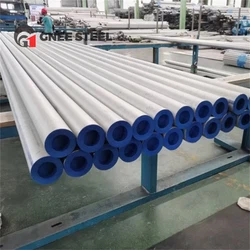
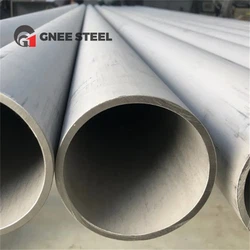
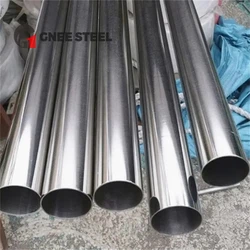
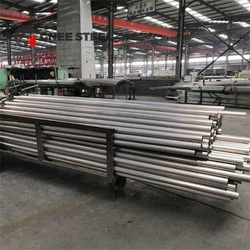
GNEE Steel supplies high-performance 1.4122 stainless steel in bar, plate, sheet, and strip forms, available in annealed condition for machining or pre-hardened to customer specifications. We provide full material certification (EN 10204 3.1) and processing support including precision cutting, grinding, and heat treatment services. If you have any requirements, please feel free to contact us.


Send Inquiry