







1.4418 Stainless Steel — Specs & Applications
Apr 02, 2026
Leave a message
1.4418 stainless steel, commonly known as 17-4PH or UNS S17400, is a martensitic precipitation-hardening stainless steel that combines high strength, good corrosion resistance, and excellent toughness through a simple heat treatment process. It achieves its properties by precipitating copper-rich phases within a martensitic matrix, offering a unique combination of fabricability in the solution-treated condition and high strength after aging. This makes it one of the most widely used precipitation-hardening stainless steels across aerospace, chemical processing, nuclear, and high-performance mechanical applications.
Equivalent Grade for 1.4418 stainless steel
| Standard | Equivalent Grade |
|---|---|
| EN (Europe) | 1.4418 |
| ASTM/AISI (USA) | 17-4PH, UNS S17400 |
| JIS (Japan) | SUS630 |
| Common Name | 17-4PH, Grade 630 |
Chemical composition of 1.4418 stainless steel
| Element | C | Si | Mn | P | S | Cr | Ni | Cu | Nb+Ta |
|---|---|---|---|---|---|---|---|---|---|
| Content (%) | ≤ 0.07 | ≤ 1.0 | ≤ 1.0 | ≤ 0.04 | ≤ 0.03 | 15.0 - 17.5 | 3.0 - 5.0 | 3.0 - 5.0 | 0.15 - 0.45 |
Mechanical properties of 1.4418 stainless steel
| Condition | Yield Strength (Rp0.2) | Tensile Strength (Rm) | Elongation (A) | Hardness (HRC) |
|---|---|---|---|---|
| Solution Treated (A) | ~ 550 MPa | ~ 900 MPa | ~ 15% | ~ 32 HRC |
| H900 (480°C age) | ~ 1170 MPa | ~ 1310 MPa | ~ 10% | ~ 44 HRC |
| H1025 (550°C age) | ~ 1070 MPa | ~ 1170 MPa | ~ 12% | ~ 38 HRC |
| H1150 (620°C age) | ~ 790 MPa | ~ 1000 MPa | ~ 12% | ~ 33 HRC |
Key Characteristics and Applications of 1.4418 / 17-4PH
High Strength-to-Weight Ratio: Achieves tensile strengths over 1300 MPa after aging, far exceeding standard austenitic and martensitic stainless steels, allowing for lightweight, high-performance designs.
Good Corrosion Resistance: Offers corrosion resistance similar to Type 304 stainless steel in many environments, suitable for moderate corrosive conditions including marine atmospheres, chemical processing, and food handling.
Precipitation Hardening: Can be machined in the solution-treated (softer) condition and then aged to achieve high strength with minimal distortion, excellent for complex precision components.
Excellent Fatigue Properties: Good fatigue strength makes it suitable for rotating and reciprocating components in demanding applications.
Primary Applications:
Aerospace: Landing gear components, turbine blades, fasteners, actuators, and structural parts.
Chemical & Petrochemical: Valves, pump shafts, fittings, mixers, and reactor components.
Oil & Gas: Downhole tools, wellhead components, blowout preventers, and instrument housings.
Nuclear Industry: Control rod mechanisms, valve components, and structural parts.
Medical: Surgical instruments and dental tools.
Food Processing: Equipment requiring strength and cleanability.
Paper Industry: Doctor blades, cutter bars, and wear components.
How does the heat treatment process work for 17-4PH (1.4418)?
What are the machining considerations for 1.4418 stainless steel?
Looking for a Reliable Supplier of 1.4418 / 17-4PH Stainless Steel?
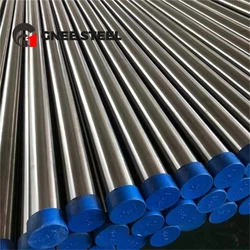
1.4418 Stainless Steel Pipes

1.4418 Stainless Steel Plates

1.4418 Stainless Steel Bars
Send Inquiry