







1.4462 (UNS S32205 / 2205) Duplex Stainless Steel Properties
Apr 03, 2026
Leave a message
1.4462 stainless steel, commonly known as Duplex 2205 or UNS S32205, is the most widely used duplex stainless steel worldwide. With its balanced ferritic-austenitic microstructure, it offers approximately twice the yield strength of standard austenitic stainless steels like 304 and 316, combined with excellent resistance to stress corrosion cracking, pitting, and crevice corrosion. This exceptional combination of high strength and superior corrosion resistance makes it the material of choice for demanding applications across chemical processing, oil and gas, marine environments, and pulp and paper industries.
Equivalent specifications for 1.4462 stainless steel
| Standard | Equivalent Grade |
|---|---|
| EN (Europe) | 1.4462 |
| ASTM/AISI (USA) | 2205, UNS S32205 / UNS S31803 |
| JIS (Japan) | SUS329J3L |
| KS (Korea) | STS329J3L |
| Common Name | Duplex 2205 |
Chemical composition of 1.4462 stainless steel
| Element | C | Si | Mn | P | S | Cr | Ni | Mo | N |
|---|---|---|---|---|---|---|---|---|---|
| Content (%) | ≤ 0.03 | ≤ 1.0 | ≤ 2.0 | ≤ 0.03 | ≤ 0.02 | 21.0 - 23.0 | 4.5 - 6.5 | 2.5 - 3.5 | 0.14 - 0.20 |
Properties of 1.4462 Stainless Steel
| Property | Yield Strength (Rp0.2) | Tensile Strength (Rm) | Elongation (A) | Hardness (HB) | Impact (J) |
|---|---|---|---|---|---|
| Typical Value | ≥ 450 MPa | 620 - 880 MPa | ≥ 25% | ≤ 290 | ≥ 100 (20°C) |
Key Characteristics and Applications of 1.4462 / Duplex 2205
High Strength and Excellent Fatigue Resistance: The duplex structure provides high yield strength (approximately double that of austenitic grades), allowing for thinner, lighter structures and components, reducing material costs and weight.
Outstanding Corrosion Resistance: Offers excellent resistance to pitting, crevice corrosion, and stress corrosion cracking (SCC), especially in chloride environments, with PREN typically 34-35.
Good Weldability: Can be welded using common techniques, though care must be taken to maintain the balanced microstructure in the weld and heat-affected zone.
Good Thermal Conductivity: Higher thermal conductivity than austenitic grades, beneficial for heat transfer applications.
Primary Applications:
Oil & Gas: Pressure vessels, pipelines, flowlines, heat exchangers, and offshore platform components.
Chemical & Petrochemical: Tanks, reactors, columns, and piping systems handling corrosive media including chlorides and acids.
Pulp & Paper Industry: Digesters, bleaching equipment, and handling systems for chloride-containing liquors.
Marine & Offshore: Seawater piping systems, propeller shafts, desalination plants, and marine hardware.
Pollution Control: FGD scrubbers, ducting, and chimney liners.
Structural Engineering: Bridges, storage tanks, and architectural features in corrosive environments.
Food Processing: Equipment requiring high strength and corrosion resistance.
How does Duplex 2205 (1.4462) compare to 316L (1.4404) in terms of performance?
What is the difference between UNS S32205 and UNS S31803?
What are the key considerations when welding 1.4462 duplex stainless steel?
Looking for a Reliable Supplier of 1.4462 / Duplex 2205 Stainless Steel?
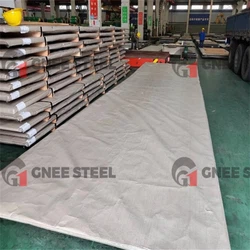
1.4462 stainless steel plate
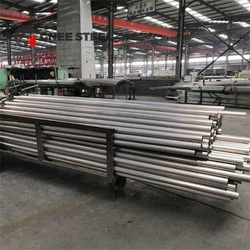
1.4462 stainless steel pipe

1.4462 stainless steel bar
Send Inquiry