







EN 1.4980 High‑Strength Heat‑Resistant Alloy Guide
Apr 03, 2026
Leave a message
1.4980 stainless steel, commonly known as A-286 or UNS S66286, is an iron-base superalloy that combines high strength, excellent creep resistance, and good oxidation resistance at elevated temperatures up to 700°C. Through a precipitation-hardening heat treatment, it achieves exceptional mechanical properties while maintaining good fabricability and weldability. This makes it the material of choice for aerospace, gas turbine, and high-temperature fastener applications where conventional stainless steels lack the required strength at elevated temperatures.
Equivalent Grade of 1.4980 stainless steel
| Standard | Equivalent Grade |
|---|---|
| EN (Europe) | 1.4980 |
| ASTM/AISI (USA) | A-286, UNS S66286 |
| Common Name | A-286, Alloy 286 |
Chemical composition of 1.4980 stainless steel
| Element | C | Si | Mn | P | S | Cr | Ni | Mo | Ti | Al | V | B |
|---|---|---|---|---|---|---|---|---|---|---|---|---|
| Content (%) | ≤ 0.08 | ≤ 1.0 | ≤ 2.0 | ≤ 0.025 | ≤ 0.025 | 13.5 - 16.0 | 24.0 - 27.0 | 1.0 - 1.5 | 1.9 - 2.3 | ≤ 0.35 | 0.10 - 0.50 | 0.003 - 0.010 |
Properties of 1.4980 Stainless Steel
| Condition | Yield Strength (Rp0.2) | Tensile Strength (Rm) | Elongation (A) | Hardness (HRC) |
|---|---|---|---|---|
| Solution Treated | ~ 690 MPa | ~ 1035 MPa | ~ 20% | ~ 30 HRC |
| Aged | ~ 965 MPa | ~ 1240 MPa | ~ 15% | ~ 38 HRC |
Key Characteristics and Applications of 1.4980 / A-286
Excellent High-Temperature Strength: Maintains high tensile and creep strength up to 700°C (1290°F), significantly outperforming standard stainless steels at elevated temperatures.
Good Oxidation and Corrosion Resistance: Resists scaling and oxidation in air up to about 815°C, with moderate corrosion resistance in various environments.
Precipitation Hardening: Can be solution treated and aged to achieve a combination of high strength and good ductility.
Good Fabricability: Can be formed, machined, and welded in the solution-treated condition before final aging.
Primary Applications:
Aerospace: Turbine blades, afterburner components, fasteners, casings, and jet engine parts.
Gas Turbines: Bolts, studs, shafts, and high-temperature structural components.
Automotive: Turbocharger components and high-performance exhaust systems.
Nuclear: Reactor components and high-temperature fasteners.
Industrial: High-stress fasteners and components for high-temperature service.
What is the difference between A-286 (1.4980) and 17-4PH (1.4542)?
What is the typical heat treatment for A-286?
The standard heat treatment for A-286 involves:
Solution Treatment: Heat to 980°C ± 15°C, hold for 1 hour, then rapid cool (oil or water quench) to achieve a soft, workable structure
Aging: Heat to 720°C ± 10°C, hold for 16 hours, then air cool to room temperature
This aging treatment precipitates the gamma prime phase (Ni₃(Al,Ti)), which provides the high-temperature strength
Care must be taken to avoid over-aging or exposure to temperatures that could cause detrimental phase formation
For maximum stress rupture properties, a double aging treatment may be employed
What are the welding considerations for A-286?
A-286 can be welded using common methods including TIG and MIG, but requires careful control. Key considerations include:
Welding should be performed in the solution-treated condition
Matching filler metals (A-286 type) are recommended
Low heat input techniques help prevent cracking and maintain properties
Post-weld aging treatment is required to restore strength
For critical applications, welding procedures should be qualified
Resistance welding may be used for thin sections
Looking for a Reliable Supplier of 1.4980 / A-286 Stainless Steel?
GNEE Steel supplies high-performance A-286 (1.4980) superalloy in bar, wire, forging, and fastener forms for demanding aerospace and high-temperature applications. We provide full material certification (EN 10204 3.1) and processing support including cutting, machining, and heat treatment services. If you have any requirements, please feel free to contact us.
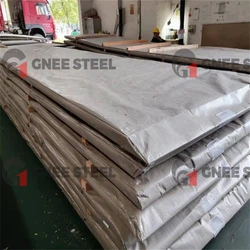
1.4980 Stainless Steel Plate
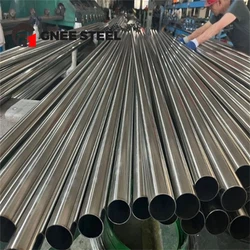
1.4980 Stainless Steel Pipe

1.4980 Stainless Steel Coil
Send Inquiry