







What is 1.4542 Stainless Steel?
Jan 26, 2026
Leave a message
1.4542 stainless steel, more commonly known as 17-4PH or UNS S17400 (Grade 630), is a martensitic precipitation-hardening stainless steel. It combines high strength, good corrosion resistance comparable to standard austenitic grades, and the ability to be heat-treated to achieve a wide range of mechanical properties, making it indispensable for aerospace, chemical, and high-strength structural components.
This versatile high-strength grade is identified across global standards.
| Standard | Equivalent Grade |
|---|---|
| EN (Europe) | 1.4542 |
| ASTM/AISI (USA) | 630, 17-4PH, UNS S17400 |
| JIS (Japan) | SUS630 |
Its composition includes copper and niobium/tantalum for precipitation hardening.
| Element | C | Si | Mn | Cr | Ni | Cu | Nb+Ta |
|---|---|---|---|---|---|---|---|
| Content (%) | ≤ 0.07 | ≤ 1.0 | ≤ 1.0 | 15.0 - 17.5 | 3.0 - 5.0 | 3.0 - 5.0 | 0.15 - 0.45 |
Mechanical properties vary significantly with heat treatment condition (e.g., Condition A, H900, H1150).
| Condition | Yield Strength (Rp0.2) | Tensile Strength (Rm) | Elongation (A) | Hardness (HRC) |
|---|---|---|---|---|
| Solution Treated (A) | ~ 550 MPa | ~ 900 MPa | ~ 15% | ~ 32 HRC |
| H900 | ~ 1170 MPa | ~ 1310 MPa | ~ 10% | ~ 44 HRC |
| H1150 | ~ 790 MPa | ~ 1000 MPa | ~ 12% | ~ 33 HRC |
Key Characteristics and Applications of 1.4542 / 17-4PH
High Strength-to-Weight Ratio: Achieves tensile strengths over 1300 MPa after aging, far exceeding standard austenitic steels, allowing for lightweight, high-performance designs.
Good Corrosion Resistance: Offers corrosion resistance similar to Type 304 stainless steel in many environments, suitable for moderate corrosive conditions.
Precipitation Hardening: Can be machined in the solution-treated (softer) condition and then aged to achieve high strength and dimensional stability with minimal distortion.
Primary Applications:
Aerospace: Landing gear components, turbine blades, fasteners, and structural parts.
Chemical & Petrochemical: Valves, pump shafts, and fittings requiring strength and moderate corrosion resistance.
Oil & Gas: Downhole tools and instrument components.
Medical: Surgical instruments and orthopedic implants.
How does the heat treatment process work for 17-4PH (1.4542)?
The process involves two main steps. First, the material is solution treated at around 1040°C and rapidly cooled, resulting in a soft, low-strength, martensitic structure that is easy to machine. Second, it undergoes aging (precipitation hardening) at a lower temperature (e.g., 480°C for H900, 620°C for H1150). This causes fine copper-rich precipitates to form within the martensitic matrix, dramatically increasing strength and hardness. Different aging temperatures produce different strength-toughness combinations.
What are the machining considerations for 1.4542 stainless steel?
It is most commonly machined in the solution-treated (Condition A) state, where it has a machinability rating similar to Type 304. After aging to higher strength conditions (like H900), machining becomes significantly more difficult and abrasive, requiring harder tool materials and adjusted parameters. Good practice is to perform most machining prior to the final aging treatment.

Looking for a Reliable Supplier of 1.4542 / 17-4PH Stainless Steel?
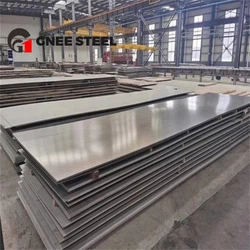
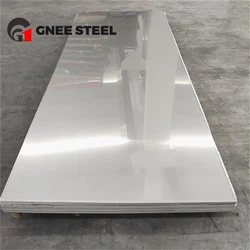
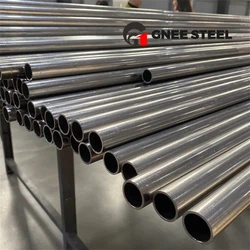
GNEE Steel supplies high-strength 17-4PH (1.4542) stainless steel in bar, plate, and forging forms, available in various heat-treated conditions to meet your specific design requirements. We provide full material certification and processing support. If you have any requirements, please feel free to contact us.



Send Inquiry