







410 ss vs 316 ss pipe:corrosion resistance
Apr 15, 2026
Leave a message
How is the corrosion resistance of 410 stainless steel pipe?
410 stainless steel pipe offers moderate, general-purpose corrosion resistance, suitable for mild environments, freshwater, steam, and dry air. As a martensitic grade, its resistance is lower than austenitic steels (like 304/316) and is best utilized in high-strength, wear-resistant applications where superior corrosion resistance is not the primary requirement.
What is the corrosion resistance of 316 SS pipe?
316 stainless steel pipes exhibit excellent corrosion resistance, especially in chloride-rich, marine, and acidic environments, primarily due to their 2-3% molybdenum content. They outperform 304 stainless steel in resistance to pitting corrosion, crevice corrosion, and corrosion from acids such as sulfuric acid, acetic acid, and phosphoric acid. However, they are not immune to warm seawater and will experience chloride stress corrosion cracking above 60°C.
410 SS vs 316 SS pipe: Key differences
| Feature | AISI 410 | AISI 316 |
| Microstructure | Martensitic (Hardenable) | Austenitic (Non-hardenable) |
| Magnetism | Magnetic | Non-Magnetic (in annealed state) |
| Main Characteristic | High strength and wear resistance. | Superior corrosion resistance (especially pitting). |
410 SS vs 316 SS pipe:Chemical Composition Comparison (%)
The presence of Molybdenum and higher Nickel in 316 is the primary reason for its performance gap in corrosive environments.
| Grade | Carbon (C) | Chromium (Cr) | Nickel (Ni) | Molybdenum (Mo) | Iron (Fe) |
| 410 | 0.08 – 0.15 | 11.5 – 13.5 | 0.75 max | None | Balance |
| 316 | 0.08 max | 16.0 – 18.0 | 10.0 – 14.0 | 2.0 – 3.0 | Balance |
410 SS vs 316 SS pipe:Mechanical Properties (Typical)
410 SS is often selected for its ability to be heat-treated to achieve high hardness, whereas 316 SS is chosen for ductility and toughness.
| Property | AISI 410 (Annealed) | AISI 316 (Annealed) |
| Tensile Strength (MPa) | ≥ 450 | ≥ 515 |
| Yield Strength (MPa) | ≥ 275 | ≥ 205 |
| Elongation (%) | ≥ 20% | ≥ 40% |
| Hardness (Brinell) | ~160 HB (can reach 400+ after HT) | ~160 HB (remains stable) |
| Impact Toughness | Moderate | Excellent (even at cryogenic temps) |
410 ss vs 316 ss pipe: corrosion resistance
316 stainless steel offers superior corrosion resistance compared to 410 stainless steel, primarily due to its higher chromium content (16–18% vs. 11.5–13%) and the addition of 2–3% molybdenum. Molybdenum significantly enhances 316's ability to resist pitting and crevice corrosion in chloride-rich environments, such as marine or coastal settings, whereas 410 is prone to rust in humid, salty, or acidic conditions.
| Parameter | AISI 410 | AISI 316 |
| Pitting Resistance (PREN) | ~12 (Low) | ~24 - 26 (High) |
410 ss vs 316 ss pipe: Heat Treatment
410 stainless steel requires heat treatment to achieve its high strength and hardness, whereas 316 stainless steel is generally used in the annealed (solution-annealed) condition and does not benefit from hardening heat treatments.
| Feature | 410 Stainless Steel | 316 Stainless Steel |
| Primary Treatment | Hardened & Tempered (Martensitic) | Solution Annealed (Austenitic) |
| Heat Treatment Goal | Increase hardness and strength | Restore corrosion resistance and ductility |
| Welding Preheat | Required (250°F–600°F based on C%) | Generally not required |
| Post-Weld Treatment | Often required (PWHT) to prevent cracking | Rarely required unless sensitized |
| Sensitivity to Heat | High risk of cracking without PWHT | Risk of sensitization above 1400°F |
410 ss vs 316 ss pipe: Weldability
316 stainless steel offers superior weldability compared to 410 stainless steel, making it the preferred choice for complex piping applications requiring extensive joining. 316's austenitic structure and lower carbon content minimize the risk of cracking and porosity, often eliminating the need for post-weld heat treatment.
410 ss vs 316 ss pipe:Cost
Stainless Steel 316 pipes cost significantly more than 410 pipes due to higher nickel and molybdenum content, with 316 pricing ranging from $8 to $30+ per foot depending on size and finish. 410 stainless steel is the more economical choice for applications where extreme corrosion resistance is not critical, offering lower upfront material costs.
410 ss vs 316 ss pipe: Applications
| AISI 410 Pipe | Petrochemical distillation columns, valve components, pump shafts, steam turbine parts, and fasteners where high strength and moderate corrosion resistance are needed. |
| AISI 316 Pipe | Marine engineering, chemical processing, pharmaceutical equipment, food and beverage piping, water treatment systems, and offshore oil/gas platforms. |
316 and 410 stainless steel pipe suppliers
GNEE conducts comprehensive chemical composition analysis on 410 and 316 stainless steel pipes to ensure that the molybdenum and chromium content meets ASTM standards. For 410 stainless steel pipes, we offer professional quenching and tempering services to achieve your required mechanical hardness. We provide 316 stainless steel pipes with a PREN value guarantee for critical offshore applications.
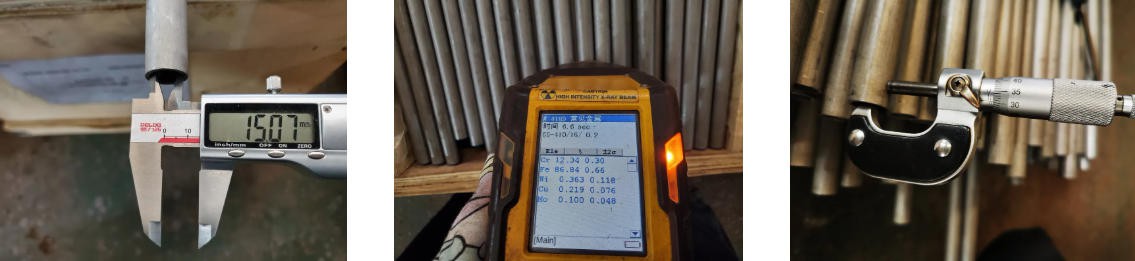
ASTM A268 TP410 Stainless Steel Seamless Tube Specification
| Outside Diameter | 6-203mm |
| Wall Thickness | 0.5-25mm |
| Length | Up to 25m |
| Standard | ASTM A268, ASME SA268 |
| Grade | TP410/TP405/TP420/TP430/TP430Ti/TP403/TP409/TP444/TP439/TP446,etc. |
| Delivery Condition | Pickled, Polished, Bright Annealed |
| Technique | Seamless/Welded |
| Application | Heat Exchanger, Heater, Condenser, Machining, Bearing Machining… |
| Marking | Standard, Grade, Size, Heat Number, Lot Number ... |
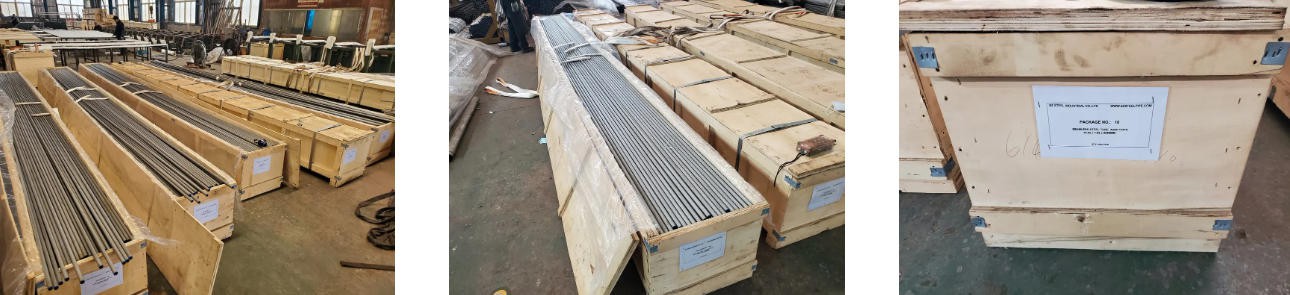
| Package | Bundle with plastic Cap, Plywood case, or as per customer's requirement. |
| Quality Requirement | Mill Test Certificate (EN 10204/3.1); 3.2, Third Part Inspection is acceptable. |
Packaging images
Send Inquiry