







Is 316 stainless steel pipe food grade?
Apr 15, 2026
Leave a message
What is the scope of the ASTM A270 specification?
ASTM A270 covers grades of seamless, welded, and heavily cold-worked austenitic and ferritic/austenitic stainless steel sanitary tubing. It is intended for use in the dairy and food industry, pharmaceutical applications, and other high-purity environments where cleanliness and surface integrity are critical.
Is stainless steel 316 Pipe safe for food?
Yes, 316 stainless steel pipe is safe for food contact when properly finished and maintained, as it is recognized by regulatory bodies like the FDA and meets international hygiene standards such as 3-A and EHEDG. The presence of molybdenum (2-3%) in 316 steel provides superior resistance to chloride and acid corrosion compared to 304, making it particularly suitable for salty, acidic, or chemically aggressive food environments.
Is surface finish important for food-grade 316 stainless steel pipe?
Surface finish is extremely important. Even 316 stainless steel cannot be called "food-grade" if the surface is rough.
Sanitary Piping: Food-grade stainless steel pipe must conform to the ASTM A270 standard for sanitary use.
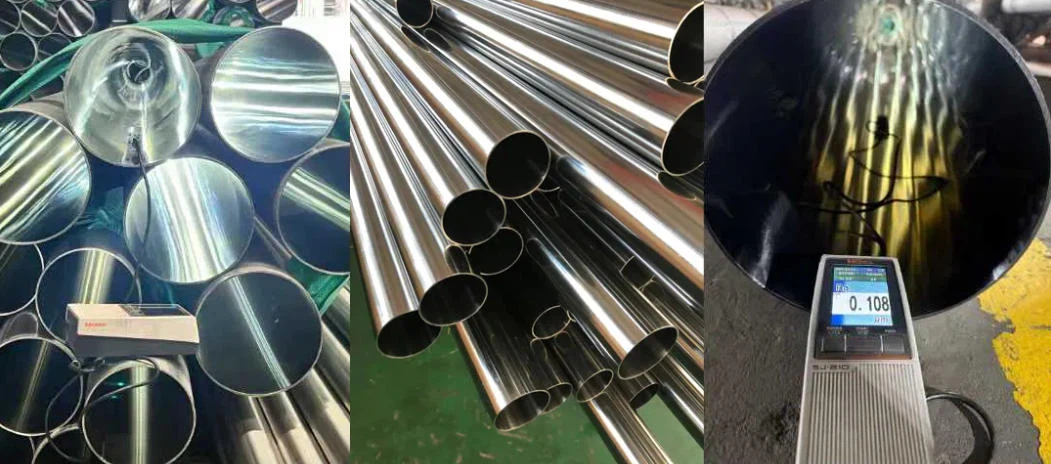
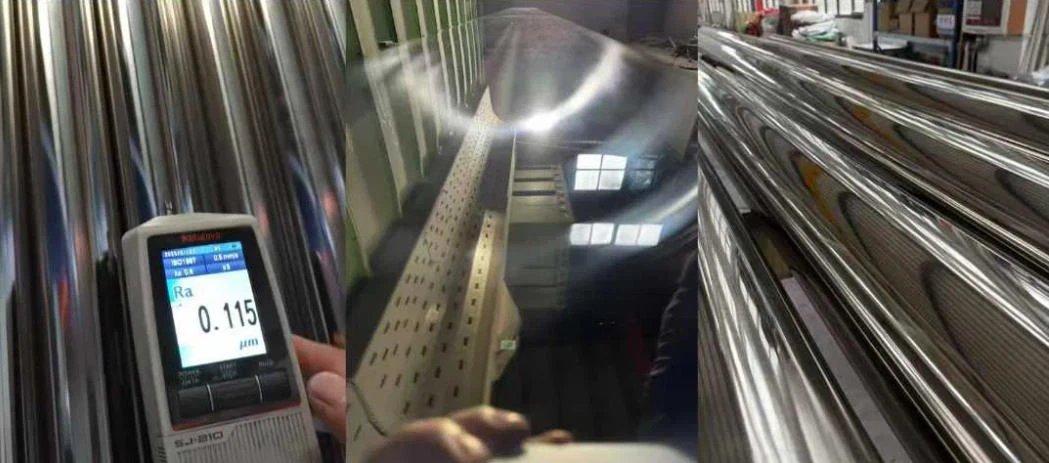
Surface Roughness (Ra): The inner surface must be extremely smooth to prevent bacterial contamination. Typically, the inner surface roughness Ra of food-grade stainless steel pipe is required to be less than 0.8 micrometers (32 microinches), and for high-purity applications, Ra can be even less than 0.4 micrometers. Surface Finish Type: Typically bright annealed (BA) or electropolished (EP).
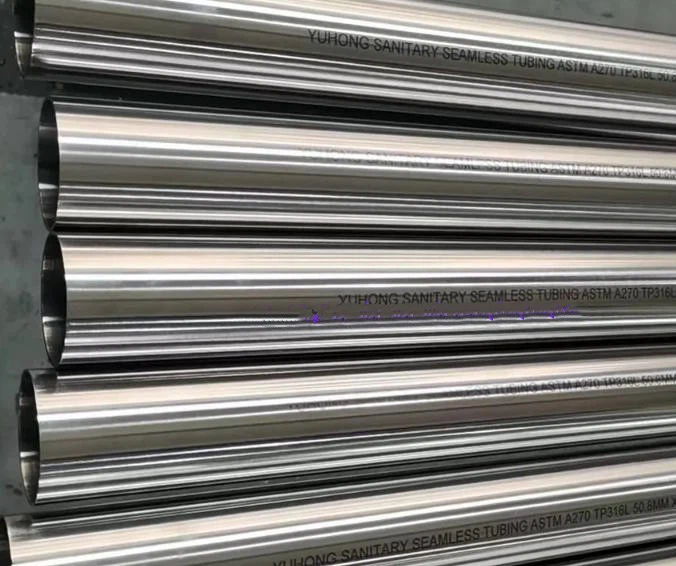
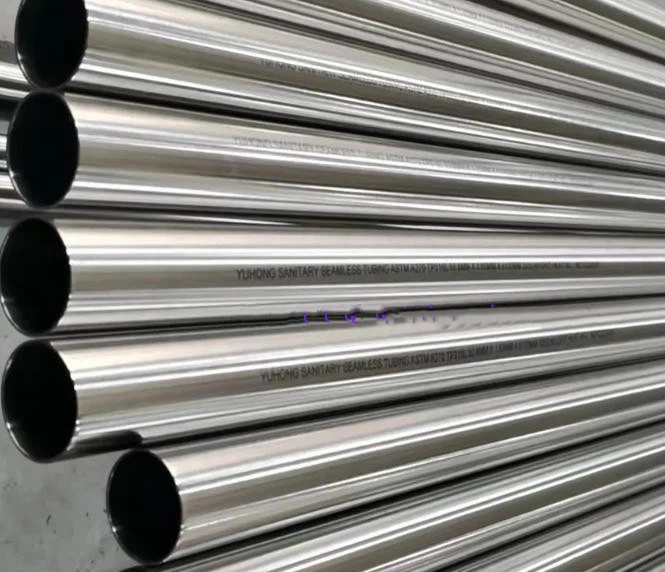
ASTM A270 Stainless Steel Sanitary Pipe Specifications
| Standard | ASTM A270/ASME SA270 |
| Roughness | 0.2 – 1.6 Μm |
| Grades | TP304 / 304L, TP316 / TP316L, TP321 / TP321H, 2205 / S31803 |
| Surface | Mechanical Polishing |
| Polishing Grit | 180, 240, 320, 400, 600 Grit |
| Outside Diameter | 12.7 Mm – 304 Mm |
| Thickness | 0.5 Mm – 5 Mm |
| Length | 6 M Or Cut To Length |
| Type | Seamless,Welded |
Stainless Steel Sanitary Pipe Chemical Composition
| STAINLESS STEEL SANITARY TUBE GRADES | UNS | C | Mn | P | S | Si | Cr | Ni | Mo | Ti | Nb |
| TP316 | S3160 | 0.08 | 2 | 0.045 | 0.03 | 1 | 16.0-18.0 | 11.0-14.0 | 2.0-3.0 | ||
| TP316L | S31603 | 0.035 | 2 | 0.045 | 0.03 | 1 | 16.0-18.0 | 10.0-14.0 | 2.0-3.0 |
316 Stainless Steel Food Grade Pipe Mechanical Properties
| Material | Heat | Temperure | Tensile Strength | Yield Strength | Elongation %, Min |
| Treatment | Min. | Ksi (MPa), Min. | Ksi (MPa), Min. | ||
| º F(º C) | |||||
| TP316 | Solution | 1900(1040) | 75(515) | 30(205) | 35 |
| TP316L | Solution | 1900(1040) | 70(485) | 25(170) | 35 |
316 Stainless Steel Sanitary Pipe Dimensions
| Tube OD | Thikness | Grade |
| 1/2 | 0.065 | 304 |
| 1/2 | 0.065 | 316 |
| 3/4 | 0.065 | 304 |
| 3/4 | 0.065 | 316 |
| 1 | 0.065 | 304 |
| 1 | 0.065 | 316 |
| 1 1/2 | 0.065 | 304 |
| 1 1/2 | 0.065 | 316 |
| 2 | 0.065 | 304 |
| 2 | 0.065 | 316 |
| 2 1/2 | 0.065 | 304 |
| 2 1/2 | 0.065 | 316 |
| 3 | 0.065 | 304 |
| 3 | 0.065 | 316 |
| 4 | 0.083 | 304 |
| 4 | 0.083 | 316 |
| 6 | 0.109 | 304 |
| 6 | 0.109 | 316 |
| 8 | 0.109 | 304 |
| 8 | 0.109 | 316 |
Contact GNEE for precise technical data sheets and quotes on ASTM A270 TP 316/316L sanitary tubes.
Applications of ASTM A270 TP316 Sanitary Pipe
Pharmaceutical and biotechnology industries: Used in aseptic process piping, cleanroom applications, vaccine production, and high-purity water systems.
Dairy processing: Essential equipment for transporting milk, cheese, yogurt, and other dairy products.
Food and beverage production: Used in beverage processing, breweries, wineries, and food production lines.
Quality Control
To ensure compliance with food and pharmaceutical grade safety requirements, we offer the following tests:
Weld Bead Control: The internal weld seams of the welded pipe undergo a smoothing process (cold working) to ensure a completely smooth inner wall, free of any residue or dead corners, preventing bacterial growth.
Roughness Measurement: The Ra value of the inner wall is tested for each batch using a professional roughness tester.
Eddy Current Testing: 100% detection of cracks or leaks in the pipe body.
Positive Material Identification (PMI): Ensures that the nickel and molybdenum content meets the 316L standard.
Flattening/Flanging Test: Verifies the ductility and mechanical properties of the pipe during subsequent processing (such as bending and welding).
Packaging:
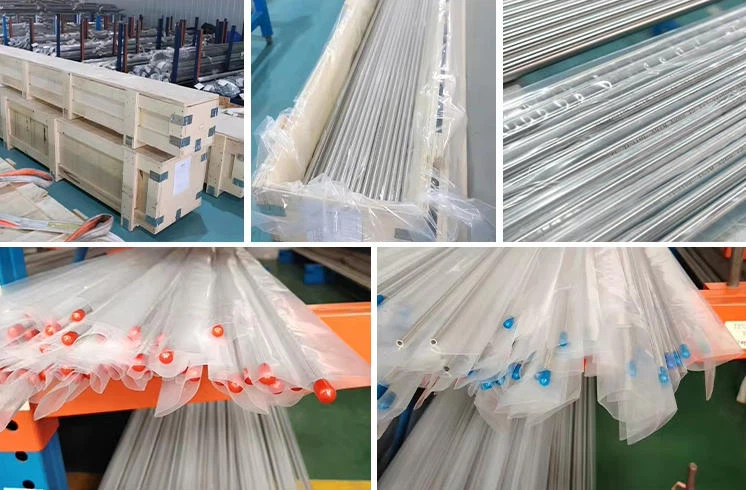
Cleaning: Tubes are cleaned to remove all oils, metal shavings, and polishing compounds.
End Caps: Each tube is fitted with plastic caps to prevent contamination.
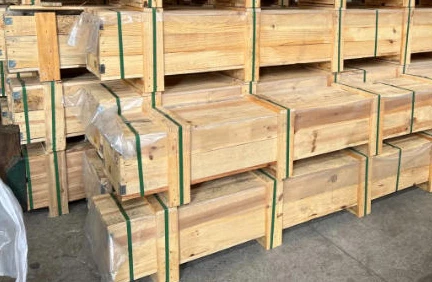
Packaging: Usually individually wrapped in plastic sleeves and shipped in wooden crates to prevent bending or surface scratching during transit.
Send Inquiry