

EN 10216-5 1.4541 stainless steel heat exchanger tube
Nov 12, 2026
Leave a message
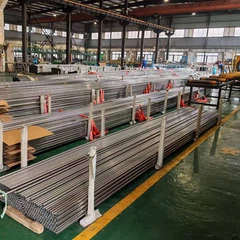
Are you experiencing common problems in high-temperature heat exchangers and waste heat recovery systems, such as repeated leakage at tube-to-tubesheet weld joints, premature creep deformation, and unplanned heat exchanger tube bundle replacements? If standard 304 stainless steel tubes are prone to intergranular corrosion after welding, while 316L stainless steel tubes are too costly due to their molybdenum content (which may be unnecessary in high-temperature, low-chloride environments), EN 10216-5 1.4541 (X6CrNiTi18-10) seamless heat exchanger tubes could be the ideal solution for your application, specifically designed for long-term high-temperature heat transfer service.
Our EN 10216-5 1.4541 stainless steel seamless tubes feature precisely controlled titanium additions (titanium content ≥ 5 times the carbon content, with a maximum of 0.70%). This promotes the preferential formation of stable titanium carbides, preventing chromium carbide precipitation at grain boundaries during welding or prolonged service within the sensitization temperature range of 425–815°C. Supplied in the fully solution-annealed condition, these tubes feature a uniform grain structure and consistent ductility during tight-radius U-bending operations, helping prevent localized wall thinning, cracking, and excessive work hardening.
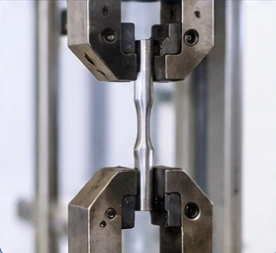
According to EN 10216-5, the material's mechanical properties include a tensile strength of 500–700 MPa, a 0.2% proof strength of ≥ 200 MPa, and an elongation of ≥ 40%. Its oxidation resistance supports service temperatures of up to 850°C under continuous operation and 925°C under intermittent operation. Actual operating data indicate that over a five-year service period, heat exchanger tube bundles manufactured from 1.4541 stainless steel can reduce the decline in heat transfer efficiency caused by oxidation by approximately 40% compared with 304 stainless steel tubes.
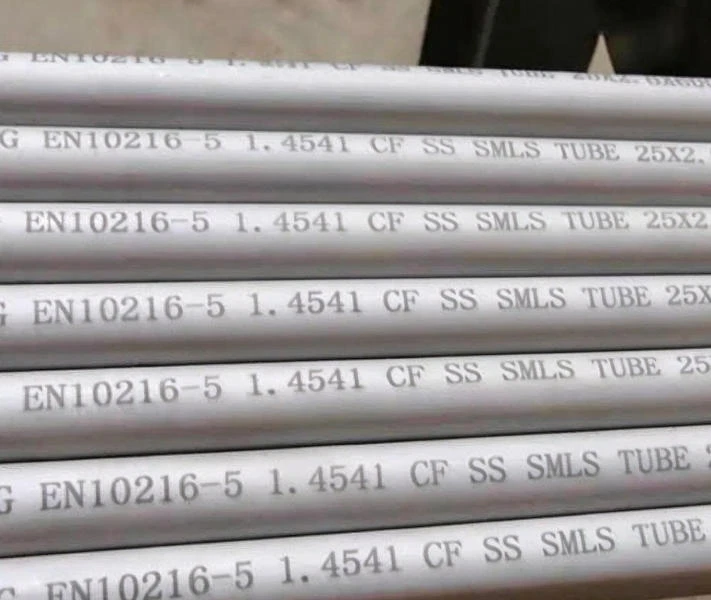
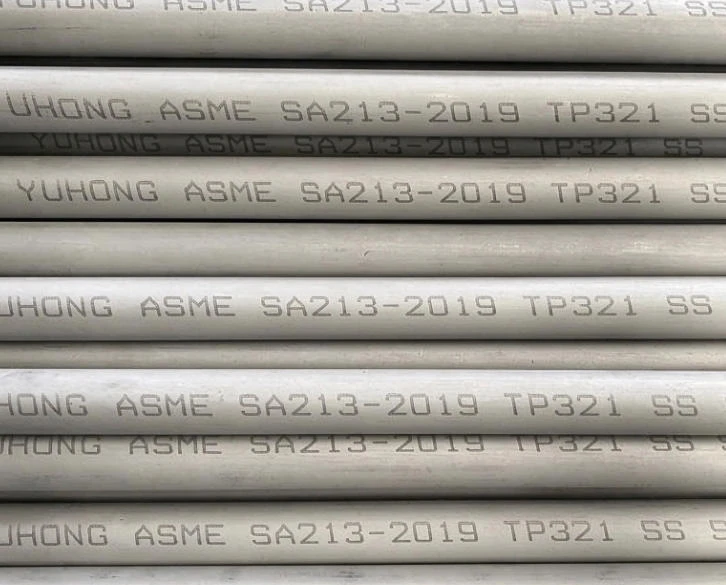
We supply fully compliant EN 10216-5 1.4541 seamless heat exchanger tubes in cold-finished and hot-finished conditions. Outer diameter range covers 6.35 mm to 114.3 mm, wall thickness from 0.8 mm to 12.7 mm, with standard random lengths of 6000 mm / 12000 mm and custom cut-to-length pieces available. We also manufacture U-bent tubes with controlled bend radii and optional stress-relief treatment for U-tube heat exchanger assemblies.
If you need specific details, let me know:
• What are your required outer diameter (OD) and wall thickness (WT)?
• Do you need TC1 or TC2 test certification?
EN X6CrNiTi18-10 (1.4541) material equivalent grade
| European Union | US | ISO | Japan |
| Steel Name (Material Number) | Grade (UNS) | Grade (ISO number ) | Grade |
| X6CrNiTi18-10 (1.4541) | 321 (UNS S32100) | X6CrNiTi18-10 (4541-321-00-I ) | SUS321 |
X6CrNiTi18-10 (1.4541) Chemical Composition (wt%)
| Element | C | Mn | P | S | Si | Cr | Ni | Mo |
| Max | 0.035 | 2.00 | 0.045 | 0.030 | 1.00 | - | - | - |
| Range | - | - | - | - | - | 18.0–20.0 | 8.0–12.0 | - |
X6CrNiTi18-10 (1.4541) Mechanical Properties (Solution Annealed)
| Property | Value |
| Tensile Strength, min | 70 ksi [485 MPa] |
| Yield Strength (0.2% offset), min | 25 ksi [170 MPa] |
| Elongation in 2 in. (50 mm), min | 35% |
| Hardness, max | 192 HBW / 200 HV / 90 HRB |
Heat Treatment
| Parameter | Requirement |
| Process | Solution treatment (annealing) |
| Temperature, min | 1900 °F [1040 °C] |
| Cooling | Water quench or other rapid cool |
X6CrNiTi18-10 (1.4541) Physical Properties
| Property | Value |
| Density | 0.29 lb/in³ (7.93 g/cm³) |
| Specific Heat (32–212 °F) | 0.12 Btu/lb·°F |
| Electrical Resistivity (68 °F) | 432 μΩ·cm |
| Melting Point | 2650 °F [1455 °C] |
| Modulus of Elasticity (Tension) | 28 Msi [193 GPa] |
| Thermal Conductivity @100 °C | 16.2 W/m·K |
| CTE (0–100 °C) | 17.2 μm/m·°C |
Minimum 0.2% Proof Strength (Rp0.2) at Elevated Temperatures
Important for Heat Exchanger Applications
|
Temperature (°C) |
100°C |
200°C |
300°C |
400°C |
500°C |
550°C |
|---|---|---|---|---|---|---|
|
Minimum 0.2% Proof Strength (MPa) |
185 |
165 |
145 |
135 |
128 |
125 |
Note: Values should be verified against the applicable material standard and edition before being published as guaranteed minimum properties.
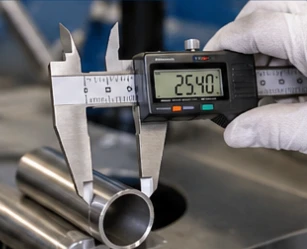
EN 10216-5 Size & Tolerance (Typical)
| OD Range | OD Tolerance | Wall Tolerance |
| ≤ 25.4 mm | ±0.10 mm | +20%, 0% (OD>50, T>5.6: ±10%) |
| 25.4–38.1 mm | ±0.15 mm | +20%, 0% |
| 38.1–50.8 mm | ±0.20 mm | +20%, 0% |
| 50.8–76.2 mm | ±0.25–0.30 mm | +20%, 0% |
| 76.2–101.6 mm | ±0.38 mm | +20%, 0% |
| >101.6–168.3 mm (hot rolled) | +0.4/−1.2 mm | +28%, 0% |
Scope of the standard: OD 1/8 in. [3.2 mm] to 5 in. [127 mm], with a minimum wall thickness of 0.015–0.500 in. [0.4–12.7 mm]; manufactured via cold-drawing or hot-rolling (seamless).
What is the difference between TC1 and TC2 in the EN 10216-5 standard?
TC1 (Test Category 1): This is a basic test category. Non-destructive testing (NDT) for longitudinal imperfections is either optional or subject to less stringent requirements.
TC2 (Test Category 2): This category requires 100% non-destructive testing (using eddy current or ultrasonic testing) to detect longitudinal imperfections. Additionally, verification of the proof strength (non-proportional extension strength) at elevated temperatures is mandatory for each heat.
1.4541 vs. 1.4404 (316L) :How to choose?
When the primary operational challenge involves temperature (400°C – 750°C) and the need for resistance to intergranular corrosion in high-temperature gas, steam, or flue gas environments, 1.4541 (321) should be selected.
When the primary challenge is wet chemical corrosion, 1.4404 (316L) should be chosen; this is particularly applicable in conditions involving chlorides, condensates, brackish water, or acidic chemical substances, at temperatures up to 300°C.
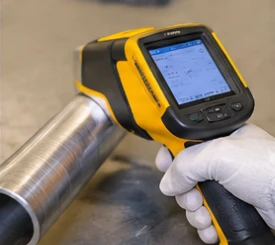
Quality Control & Inspection Requirements
|
Test / Inspection Item |
Reference Standard |
Acceptance Criteria / Remarks |
|---|---|---|
|
Intergranular Corrosion Test |
EN ISO 3651-2 Method A (Strauss Test) / ASTM A262 Practice E |
No cracks after sensitization treatment at 650°C for 30 minutes, followed by bending. |
|
Hydrostatic Test |
EN 10216-5 / ASTM A1016 |
100% tested. Test pressure calculated using P = 2 × S × t / D, typically up to 20–30 MPa, subject to applicable requirements. |
|
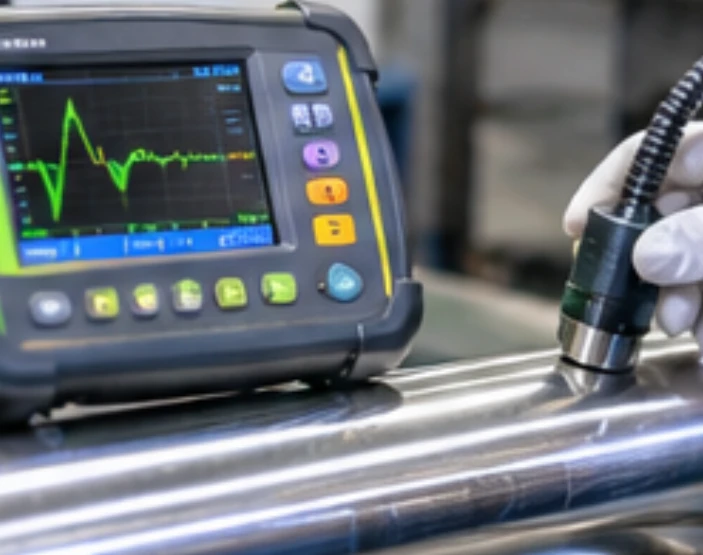
Eddy Current Testing (NDT) |
EN ISO 10893-1 / EN ISO 10893-2 |
100% in-line testing against calibrated reference notch defects. |
|
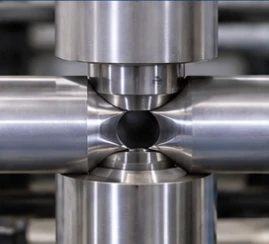
Flattening Test |
EN ISO 8492 |
No cracks or surface defects until the plate distance (H) meets the specified standard formula. |
|
Flaring / Drift Expanding Test |
EN ISO 8493 |
Expansion of 20%–30% with a 60° cone angle, without cracking or rupture. |
|
Cleanliness & Passivation |
ASTM A380 / EN 2516 |
Surface free from heat tint, scale, chlorides, and oil residues. Tube ends protected with caps. |
Lead Time and Packaging:
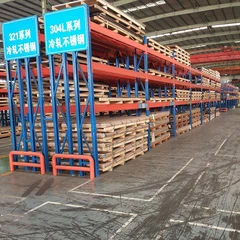
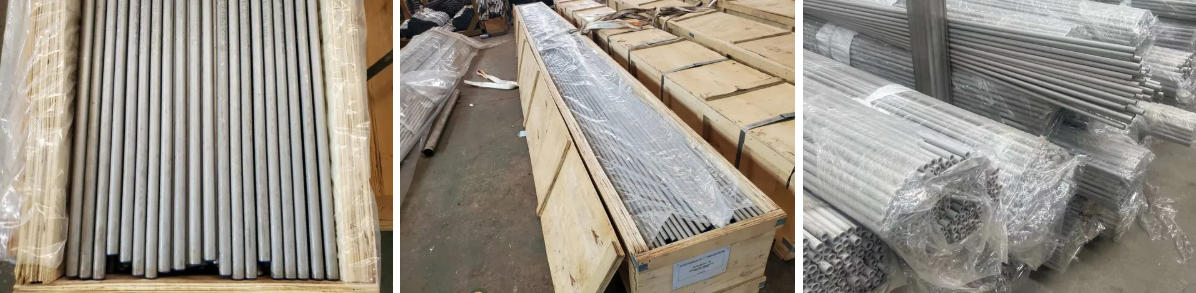
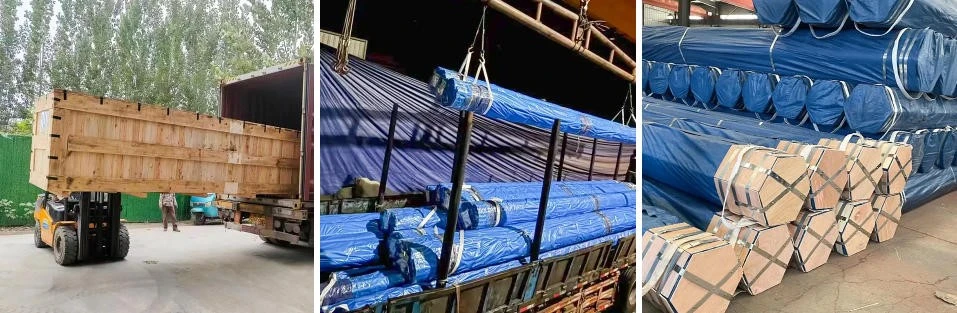
Standard stock items can be dispatched within 10–16 business days; for custom dimensions, U-bent tubes, or products requiring specialized testing, the lead time is 18–28 business days. Each tube is fitted with plastic end caps, wrapped in anti-rust paper, and packed into fumigated wooden crates. The crates are equipped with internal dividers to prevent damage to the tube surfaces or ends during sea transport. All tube bundles are clearly marked with the steel grade, material number (1.4541), heat number, applicable standard (EN 10216-5), dimensions, and inspection batch, ensuring full traceability upon receipt.
FAQ
Q: Is 1.4541 heat exchanger tube the same as ASTM TP321 tube?
A: Chemically and functionally they are very close - both are titanium-stabilized 18Cr-10Ni stainless. 1.4541 is the European material number under EN standards (X6CrNiTi18-10), while TP321 is the ASTM/ASME grade. They have slightly different sulfur limits and mechanical property ranges ; for projects requiring EN compliance, 1.4541 to EN 10216-5 is the correct specification.
Q: When should I choose 1.4541 instead of 316L heat exchanger tube?
A: Choose 1.4541 for high-temperature, low-chloride service where weld-zone intergranular corrosion and thermal strength are the main risks, such as waste heat boilers and furnace convection sections. Choose 316L for lower-temperature, chloride-bearing** cooling water and brine service where pitting corrosion is the primary failure mode.
Q: Can 1.4541 tubing be U-bent for heat exchanger bundles?
A: Yes. In the solution-annealed delivery condition, 1.4541 has excellent ductility suitable for U-tube bending. We can supply U-bent tubes with controlled bend radii and optional post-bend stress relief to match your heat exchanger design requirements.
Send Inquiry