







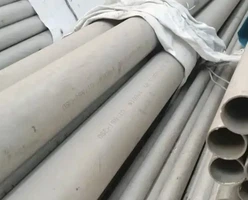
Hydrogen Pipeline Stainless Steel: 316H vs. 310S vs. 825
Jun 18, 2025
Leave a message
Why 316H for 70-bar hydrogen pipelines?
Solution-annealed condition prevents HIC (hydrogen-induced cracking). Controlled ferrite content <5% minimizes hydrogen trapping. Proven in 50+ km European hydrogen networks.
When is 310S needed for high-temperature hydrogen?
For reformer outlet piping at 650°C. 25% chromium forms stable Cr₂O₃ scale resisting hydrogen permeation. Required for syngas with 20% H₂ partial pressure.
Advantages of alloy 825 for hydrogen storage?
Nickel-rich (38-46%) matrix slows hydrogen diffusion rate by 4x vs 316L. Titanium stabilization prevents sulfide stress cracking. Used for 10,000 psi underground cavern liners.
Critical welding procedures for hydrogen service?
GTAW with ERNiCrMo-3 filler metal. Post-weld heat treatment at 620°C for 4 hours. 100% radiography + hardness testing <22 HRC.
Hydrogen embrittlement testing protocols?
NACE TM0177 Method A testing at 90% SMYS. Slow strain rate testing (10⁻⁶ s⁻¹) in 100 psi H₂. Fractography for intergranular cracking evaluation.
Send Inquiry