

EN 1.4401 / AISI 316 Stainless Steel: Composition, Properties and Applications
EN 1.4401 and AISI 316: Grade Identity and Scope
EN 1.4401 is the European material number for the molybdenum-bearing austenitic stainless steel known in the American system as AISI 316 (UNS S31600) and in the Japanese system as SUS 316. It is the second most widely used austenitic grade after 304, and the molybdenum addition of 2 to 3 percent is what separates it from the 304 family. Molybdenum markedly improves resistance to pitting and crevice corrosion in chloride-bearing media, which is why 1.4401 has become the default choice for chemical process plant, marine hardware and process piping. The low-carbon variant, EN 1.4404 or AISI 316L (UNS S31603), keeps the same alloying concept with carbon held at 0.030 percent maximum so that welded joints resist sensitisation and intergranular corrosion.
Both grades stay fully austenitic and therefore essentially non-magnetic in the annealed condition, showing only a slight magnetic response at cold-worked surfaces and weld zones. Neither grade can be hardened by heat treatment; strength is increased only by cold working.
Chemical Composition to EN 10088-1 and ASTM A240
| Element, percent | 316 / 1.4401 | 316L / 1.4404 |
|---|---|---|
| Carbon (C) | 0.07 max (EN), 0.08 max (ASTM A240) | 0.030 max |
| Silicon (Si) | 1.00 max | 1.00 max |
| Manganese (Mn) | 2.00 max | 2.00 max |
| Phosphorus (P) | 0.045 max | 0.045 max |
| Sulfur (S) | 0.030 max | 0.030 max |
| Chromium (Cr) | 16.0 to 18.0 | 16.0 to 18.0 |
| Nickel (Ni) | 10.0 to 14.0 | 10.0 to 14.0 |
| Molybdenum (Mo) | 2.00 to 3.00 | 2.00 to 3.00 |
| Nitrogen (N) | 0.10 max | 0.10 max |
Chromium builds the passive chromium-oxide film that provides corrosion resistance; nickel stabilises the austenitic structure and preserves toughness down to cryogenic temperatures; molybdenum lifts the pitting resistance equivalent number to roughly 25 for 316 against about 18 for 304. That difference is decisive wherever chlorides are present, because both grades share the same 16 to 18 percent chromium base.
Mechanical and Physical Properties of Annealed Product
| Property | 316 / 1.4401 | 316L / 1.4404 |
|---|---|---|
| Tensile strength, Rm | 515 MPa min (ASTM A312), typically 530 to 680 MPa | 485 MPa min |
| 0.2 percent proof stress, Rp0.2 | 205 MPa min | 170 to 182 MPa min |
| Elongation, A | 35 percent min | 40 percent min |
| Hardness | 95 HRB max | 95 HRB max |
| Density | 7.98 g/cm3 | 7.98 g/cm3 |
| Melting range | 1375 to 1400 degrees C | 1375 to 1400 degrees C |
| Thermal conductivity at 20 degrees C | 16.3 W/(m.K) | 16.3 W/(m.K) |
| Specific heat, 0 to 100 degrees C | 500 J/(kg.K) | 500 J/(kg.K) |
| Thermal expansion, 0 to 100 degrees C | 15.9 micrometre per metre per degree C | 16.0 micrometre per metre per degree C |
| Elastic modulus | 193 GPa | 193 GPa |
| Electrical resistivity | 0.74 micro-ohm metre | 0.75 micro-ohm metre |
Cold working raises tensile and proof strength substantially, but it also increases magnetic permeability and reduces ductility, so heavily cold-formed 1.4401 parts should be stress-relieved or annealed before service in aggressive media.
Product Standards, Delivery Forms and Applications
EN 1.4401 is supplied against a range of product standards, and the correct standard must be quoted together with the grade so that chemistry, mechanical properties and testing are unambiguous:
Seamless tube: ASTM A213 / ASME SA213, EN 10216-5
Welded tube and pipe: ASTM A312 / ASME SA312, EN 10217-7
Plate, sheet and strip: ASTM A240 / ASME SA240, EN 10088-2
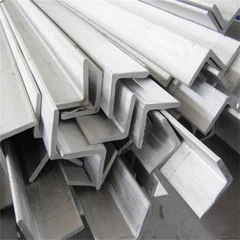
Bar and profiles: ASTM A276, ASTM A479, EN 10088-3
Forged fittings and flanges: ASTM A182, ASTM A403
Typical applications include heat exchanger tubing, process piping, pumps and valves, food and beverage contact parts, pharmaceutical clean-service pipework, marine fasteners, architectural cladding in coastal areas and pulp and paper equipment. In each case the selection logic is the same: wherever chlorides, moderate acidity or repeated chemical cleaning appear in the service environment, the molybdenum-bearing 316 family outperforms 304, while in mild inland atmospheres the lower-cost 304 remains adequate.
Frequently Asked Questions
Q: Is EN 1.4401 the same as AISI 316?
Yes. EN 1.4401 is the European numeric designation for the grade classified as AISI 316 in the American system, with equivalent chemistry of 16 to 18 percent chromium, 10 to 14 percent nickel and 2 to 3 percent molybdenum.
Q: When should 316 be replaced by 316L?
Whenever the component will be welded and cannot be fully solution annealed afterwards, and whenever the section is heavy enough to retain heat during welding. The 0.030 percent carbon limit of 316L prevents chromium carbide precipitation at grain boundaries, which is the mechanism behind intergranular corrosion.
Q: What tensile strength does 1.4401 pipe deliver?
ASTM A312 and ASME SA312 require a minimum tensile strength of 515 MPa with a minimum 0.2 percent proof stress of 205 MPa for annealed 316 pipe; EN product is typically supplied between 530 and 680 MPa tensile.
Q: Is 316 stainless steel magnetic?
Annealed 316 is essentially non-magnetic. Cold working, machining or welding introduces some martensite and increases permeability slightly, but a strongly magnetic response usually indicates a ferritic grade such as 430 rather than 316.
Q: Can 316 be used in seawater?
Type 316 resists splash-zone and flowing seawater reasonably well, but it is prone to crevice and pitting attack in stagnant seawater, especially under deposits. For continuous immersion, higher-alloyed austenitic grades or duplex stainless steels are normally specified.
Q: What is the difference between 316 and 304 in practice?
The molybdenum addition is the only significant alloying difference relevant to corrosion performance. It raises pitting resistance equivalent from about 18 to about 25, which is why 316 lasts considerably longer in chloride-bearing conditions at a moderate cost premium over 304.
Send Inquiry