







SUS316L Low-Carbon Knowledge
Dec 15, 2025
Leave a message
SUS316L is a low-carbon variant of SUS316, with carbon content limited to ≤0.03% to eliminate intergranular corrosion in welded or high-temperature applications. It retains SUS316's excellent chloride corrosion resistance, while avoiding sensitization issues, making it the top choice for welded components in marine, chemical and pharmaceutical industries.
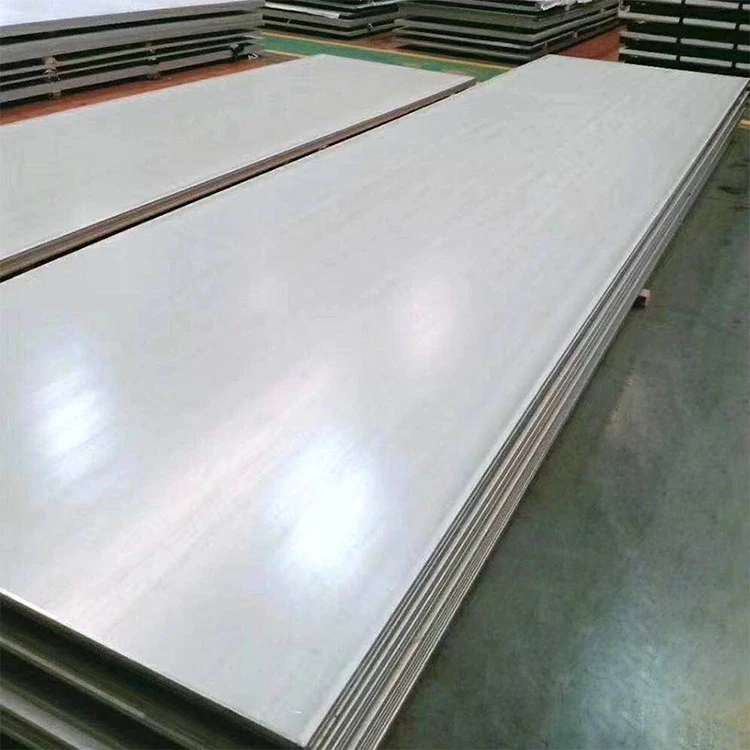
Chemical Composition (Key, % JIS G4305): C≤0.03; Cr16.0–18.0; Ni10.0–14.0; Mo2.0–3.0; Mn≤2.0
Mechanical Properties (Annealed): Tensile Strength≥485MPa; Yield Strength≥170MPa; Elongation≥40%; Hardness≤217HB
Performance Advantages: No intergranular corrosion after welding (no post-weld heat treatment); superior chloride corrosion resistance; excellent cryogenic toughness; good weldability and formability.
Applications: Welded marine structures, chemical pipelines, pharmaceutical reactors, LNG storage tanks, medical implants.
Equivalent Grades: ASTM 316L, EN 1.4404, DIN X2CrNiMo17-12-2
Comparison with SUS316: SUS316L has better weld corrosion resistance, while SUS316 offers higher high-temperature strength for non-welded applications.
FAQs
What is the role of low carbon content in SUS316L's corrosion resistance?
The low carbon content (≤0.03%) of SUS316L is the key to eliminating intergranular corrosion after welding, and its mechanism is to prevent the precipitation of chromium carbides at grain boundaries. For standard SUS316, welding will heat the heat-affected zone to the 425–815°C sensitization range, and the carbon content of ≤0.08% will promote the combination of carbon and chromium to form carbides at grain boundaries, depleting chromium in the surrounding areas and creating corrosion-vulnerable zones. SUS316L's carbon content is too low to form a large amount of chromium carbides even after welding, so the heat-affected zone maintains a uniform chromium distribution and stable protective oxide layer. This advantage makes SUS316L's weld joints as corrosion-resistant as the base metal, without the need for post-weld heat treatment. In addition, the low carbon content also improves the cryogenic toughness of SUS316L, making it suitable for applications at temperatures as low as -196°C.
Why is SUS316L the preferred material for marine welded structures?
SUS316L is widely used in marine welded structures such as ship hulls and offshore platforms, mainly due to its excellent chloride corrosion resistance and weldability. First, its 2–3% molybdenum content enhances its resistance to pitting and crevice corrosion in seawater, ensuring that the structure will not corrode rapidly in the harsh marine environment. Second, its low carbon content eliminates intergranular corrosion after welding, so large welded components do not need post-weld heat treatment, which reduces production costs and construction time. In contrast, standard SUS316 requires post-weld heat treatment to restore corrosion resistance, which is impractical for large marine structures. In addition, SUS316L has good formability and toughness, which can withstand the impact of ocean waves and extreme weather conditions, reducing the risk of structural failure. Compared with other marine materials such as nickel alloys, SUS316L also has a significant cost advantage, making it a cost-effective choice for marine engineering.
How does SUS316L perform in cryogenic applications?
SUS316L has excellent cryogenic performance and can maintain high ductility and toughness at temperatures as low as -196°C, making it suitable for cryogenic storage and transportation equipment such as LNG tanks. Its austenitic crystal structure is inherently stable at low temperatures, unlike ferritic stainless steels that become brittle when cooled. The low carbon content of SUS316L further refines its grain structure, enhancing its impact resistance at cryogenic temperatures, so it will not crack under extreme temperature changes. In practical applications, SUS316L is widely used in the storage and transportation of liquefied natural gas, liquid oxygen and liquid nitrogen, where it can withstand the pressure and temperature changes of the medium. Compared with SUS304L, SUS316L has better corrosion resistance in cryogenic chloride-containing environments, making it a better choice for LNG terminals and other coastal cryogenic facilities.
What are the limitations of SUS316L in high-temperature applications?
Although SUS316L has excellent corrosion resistance, its high-temperature strength is lower than that of standard SUS316, which is its main limitation in high-temperature applications. The low carbon content that gives it excellent corrosion resistance also reduces the number of chromium carbides that can be formed at high temperatures, and these carbides play a role in strengthening the steel structure. At temperatures above 600°C, SUS316L's yield strength decreases more significantly than SUS316, so it is not suitable for load-bearing components operating at high temperatures for a long time. For example, in industrial furnace parts or boiler superheater tubes that require high-temperature strength, SUS316 or high-carbon SUS316H is a better choice. In addition, when SUS316L is exposed to temperatures above 870°C for a long time, its austenitic structure may begin to transform into brittle phases, further reducing its mechanical properties. However, SUS316L still has better high-temperature corrosion resistance than SUS304L in chloride-containing environments.
Can SUS316L be used in medical implant applications, and why?
SUS316L is widely used in medical implant applications such as artificial joints, surgical instruments and dental implants, due to its excellent biocompatibility, corrosion resistance and mechanical properties. First, its austenitic structure is non-magnetic and has good toughness, which can match the mechanical properties of human bones, reducing the risk of implant fracture and improving patient comfort. Second, SUS316L's low carbon content and molybdenum addition ensure that it will not corrode in the human body's physiological environment, preventing the release of harmful metal ions and avoiding inflammatory reactions or tissue rejection. In addition, SUS316L has good weldability and formability, allowing manufacturers to process it into complex implant shapes to meet the needs of different patients. Compared with SUS316, SUS316L's weld joints are more corrosion-resistant, making it suitable for welded medical devices such as artificial heart valves. Although titanium alloys have better biocompatibility, SUS316L has a significant cost advantage, making it a mainstream choice for medium and low-end medical implants.
Send Inquiry