







What is 1.4086 Stainless Steel?
Apr 02, 2026
Leave a message
1.4086 stainless steel, commonly known as 431 or UNS S43100, is a martensitic stainless steel that combines high strength, good corrosion resistance, and excellent toughness. Its higher chromium content compared to other martensitic grades provides better corrosion resistance, while the addition of nickel enhances toughness and hardenability. This combination makes it suitable for high-strength structural components, fasteners, and parts exposed to mildly corrosive environments where both mechanical performance and corrosion resistance are required.
This high-strength martensitic grade is standardized under key international systems.
| Standard | Equivalent Grade |
|---|---|
| EN (Europe) | 1.4086 |
| ASTM/AISI (USA) | 431, UNS S43100 |
| JIS (Japan) | SUS431 |
| KS (Korea) | STS431 |
| Common Name | 431 |
Its composition includes chromium for corrosion resistance and nickel for toughness and improved hardenability.
| Element | C | Si | Mn | P | S | Cr | Ni |
|---|---|---|---|---|---|---|---|
| Content (%) | 0.12 - 0.20 | ≤ 1.0 | ≤ 1.0 | ≤ 0.04 | ≤ 0.03 | 15.0 - 17.0 | 1.5 - 2.5 |
It can achieve a good balance of strength and toughness through heat treatment.
| Condition | Yield Strength (Rp0.2) | Tensile Strength (Rm) | Elongation (A) | Hardness (HRC) |
|---|---|---|---|---|
| Annealed | ~ 550 MPa | ~ 740 MPa | ~ 20% | ~ 25 HRC |
| Hardened & Tempered | ≥ 690 MPa | ≥ 860 MPa | ≥ 15% | 30 - 40 HRC |
Key Characteristics and Applications of 1.4086 / 431
High Strength and Good Toughness: Offers a favorable combination of strength and impact resistance, especially in the hardened and tempered condition, making it suitable for dynamic loading applications.
Better Corrosion Resistance: Higher chromium content (15-17%) provides better corrosion resistance than many other martensitic grades like 410 or 420, approaching that of some austenitic grades in mild environments.
Magnetic and Hardenable: Strongly magnetic and responds well to heat treatment for hardening, with good through-hardening capability.
Good Fatigue Strength: Exhibits excellent fatigue resistance, important for rotating and reciprocating components.
Primary Applications:
Aerospace and Defense: High-strength fasteners, landing gear components, structural parts, and actuator components.
Oil and Gas Industry: Valve stems, pump shafts, downhole tools, and wellhead equipment requiring strength and moderate corrosion resistance.
Marine Equipment: Shafts, propeller fittings, rudder stocks, and hardware for marine environments.
General Engineering: High-stress components like gears, bolts, studs, rollers, and shafts.
Pulp and Paper: Components in paper machinery requiring strength and corrosion resistance.
Chemical Processing: Fasteners and valve components in mildly corrosive service.
How does 431 (1.4086) compare to 420 (1.4021) stainless steel?
Grade 431 contains more chromium (15-17% vs. 12-14%) and includes nickel (1.5-2.5%), giving it significantly better corrosion resistance and toughness than 420. While 420 is typically used for cutlery and wear-resistant parts where high surface hardness is the priority, 431 is chosen for structural and high-stress applications where a combination of strength, toughness, and moderate corrosion resistance is required. 431 generally achieves lower maximum hardness (40 HRC vs. 55 HRC) but much better impact resistance and corrosion performance, making it more suitable for load-bearing components in corrosive environments.
What are the heat treatment recommendations for 431 stainless steel?
For optimum properties, 431 is typically hardened by austenitizing at 980-1050°C followed by oil quenching. Preheating at 760-815°C is recommended for complex sections to minimize distortion. It is then tempered at temperatures between 540-660°C to achieve the desired balance of strength and toughness. Higher tempering temperatures increase toughness and ductility while reducing hardness and strength. Care must be taken to avoid tempering in the range of 370-540°C to prevent tempered martensite embrittlement. For applications requiring maximum strength with moderate toughness, temper at 540-600°C; for optimum toughness with good strength, temper at 620-660°C. Double tempering is often beneficial for stress relief and dimensional stability.
What are the welding considerations for 431?
431 can be welded using common methods, but care is required due to its martensitic structure. Key considerations include:
Preheating (200-300°C) is recommended to prevent cracking
Low hydrogen welding processes (TIG, MIG) are preferred
Austenitic filler metals (309L, 310L) are recommended for better ductility
Post-weld heat treatment is typically required to restore properties
For critical applications, welding should be performed in the annealed condition
Thicker sections require careful procedure qualification
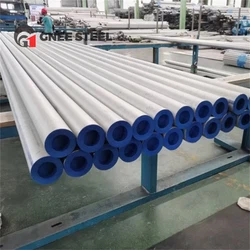
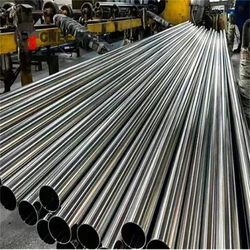
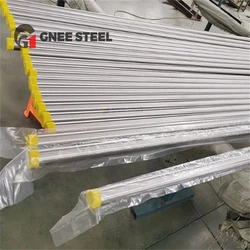
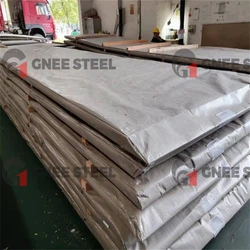
Looking for a Reliable Supplier of 1.4086 / 431 Stainless Steel?
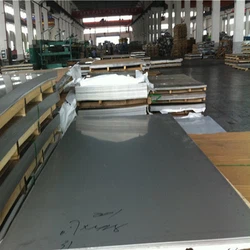
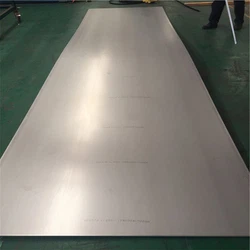
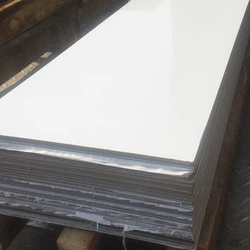
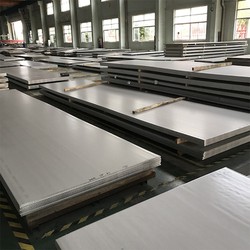
GNEE Steel supplies high-strength 431 (1.4086) stainless steel in bar, plate, forging, and wire forms, available in annealed or heat-treated conditions to meet demanding mechanical requirements. We provide full material certification (EN 10204 3.1) and processing support including cutting, machining, and heat treatment services. If you have any requirements, please feel free to contact us.
Send Inquiry