







What is 1.4125 Stainless Steel?
Mar 11, 2026
Leave a message
1.4125 stainless steel, commonly known as 440C or UNS S44004, is the highest carbon member of the 440 series martensitic stainless steels. With carbon content up to 1.20%, it achieves the highest hardness and wear resistance among standard stainless steel grades, capable of reaching 60-62 HRC through proper heat treatment. This makes it the material of choice for applications requiring maximum hardness, excellent wear resistance, and moderate corrosion resistance, such as high-end bearings, precision knives, surgical instruments, and valve components.
This premium high-hardness martensitic grade is standardized under key international systems.
| Standard | Equivalent Grade |
|---|---|
| EN (Europe) | 1.4125 |
| ASTM/AISI (USA) | 440C, UNS S44004 |
| JIS (Japan) | SUS440C |
| KS (Korea) | STS440C |
Its high carbon and chromium content are key to its extreme hardness and wear resistance, with molybdenum added to enhance properties.
| Element | C | Si | Mn | P | S | Cr | Mo |
|---|---|---|---|---|---|---|---|
| Content (%) | 0.95 - 1.20 | ≤ 1.0 | ≤ 1.0 | ≤ 0.04 | ≤ 0.03 | 16.0 - 18.0 | 0.4 - 0.8 |
It achieves very high hardness but with reduced toughness compared to lower-carbon martensitic grades.
| Condition | Yield Strength (Rp0.2) | Tensile Strength (Rm) | Elongation (A) | Hardness (HRC) |
|---|---|---|---|---|
| Annealed | ~ 450 MPa | ~ 740 MPa | ~ 12% | ~ 25 HRC |
| Hardened & Tempered | ≥ 700 MPa | ≥ 850 MPa | ≥ 2% | 58 - 62 HRC |
Key Characteristics and Applications of 1.4125 / 440C
Extreme Hardness and Wear Resistance: Capable of reaching hardness levels up to 62 HRC, providing outstanding abrasion resistance and edge retention superior to most other stainless steels.
Moderate Corrosion Resistance: Offers better corrosion resistance than many tool steels due to its high chromium content, but is not suitable for severe corrosive environments like marine or strong chemical exposure. Suitable for mild atmospheric and fresh water conditions.
Magnetic and Hardenable: Strongly magnetic and responds well to heat treatment, though the high carbon content requires careful control to avoid cracking.
Good Dimensional Stability: When properly heat treated with sub-zero treatment, offers excellent dimensional stability for precision components.
Primary Applications:
Bearings: High-precision ball bearings, roller bearings, races, and thrust washers for instruments, aerospace, and medical devices.
Cutlery and Blades: High-end knives, surgical scalpels, industrial blades, and scissors requiring maximum edge retention.
Valve Components: Seats, balls, stems, and trim in high-wear applications with mild corrosive media.
Nozzles and Orifices: Components subjected to abrasive fluids or high-velocity particulate matter.
Measuring Tools: Gauges, calipers, micrometers, and other precision instruments requiring wear resistance.
Molds and Dies: Injection molds, forming dies, and tooling for plastics and light metals.
What is the key difference between 440C (1.4125) and 440B (1.4112)?
The main difference is carbon content: 440C contains 0.95–1.20% C, while 440B contains 0.75–0.95% C. This higher carbon allows 440C to achieve greater maximum hardness (60-62 HRC vs. 55-58 HRC for 440B) and superior wear resistance, but at the cost of reduced toughness, lower ductility, and increased brittleness. 440C also requires more careful heat treatment to avoid cracking and has slightly lower corrosion resistance due to greater carbide precipitation. 440C is chosen for applications where maximum hardness and wear resistance are critical, while 440B offers a better balance of hardness and toughness for less demanding applications.
What are the heat treatment guidelines for 440C stainless steel?
To achieve maximum hardness, 440C requires careful heat treatment. Austenitizing at 1010–1065°C, with preheating at 760-815°C essential to prevent thermal shock and cracking. Soak time must be sufficient to dissolve carbides but not excessive to avoid grain growth. Oil quench is typical, though polymer quenchants may be used for complex shapes. Immediate sub-zero treatment at -70 to -80°C is highly recommended to transform retained austenite and achieve maximum hardness (adds 1-2 HRC). Tempering at 150–200°C (low temper) for maximum hardness, or 230-370°C for slightly lower hardness with improved toughness. Temperatures between 400-550°C should be avoided due to embrittlement. Double tempering is recommended for stress relief and dimensional stability. All heat treatment should be performed in protective atmospheres to prevent decarburization.


Looking for a Reliable Supplier of 1.4125 / 440C Stainless Steel?
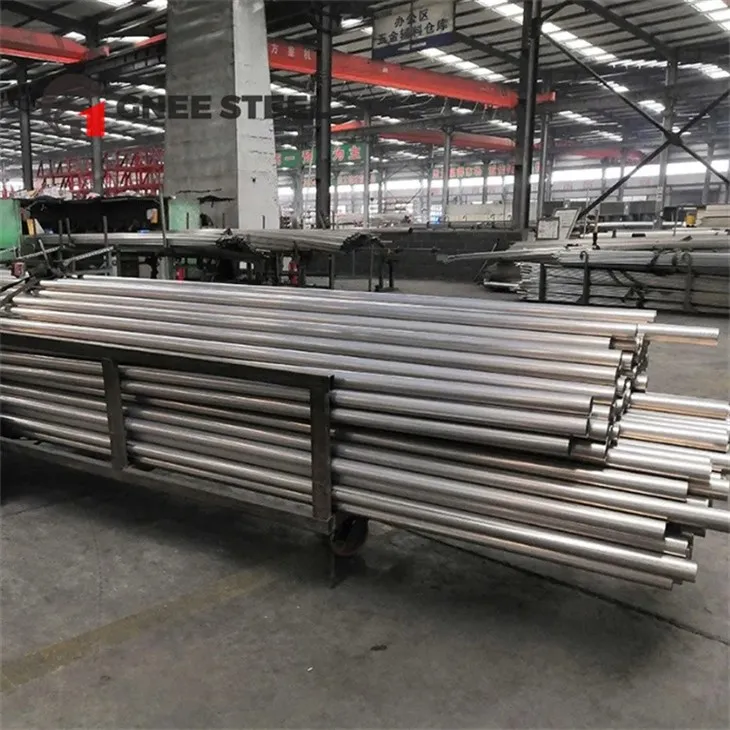
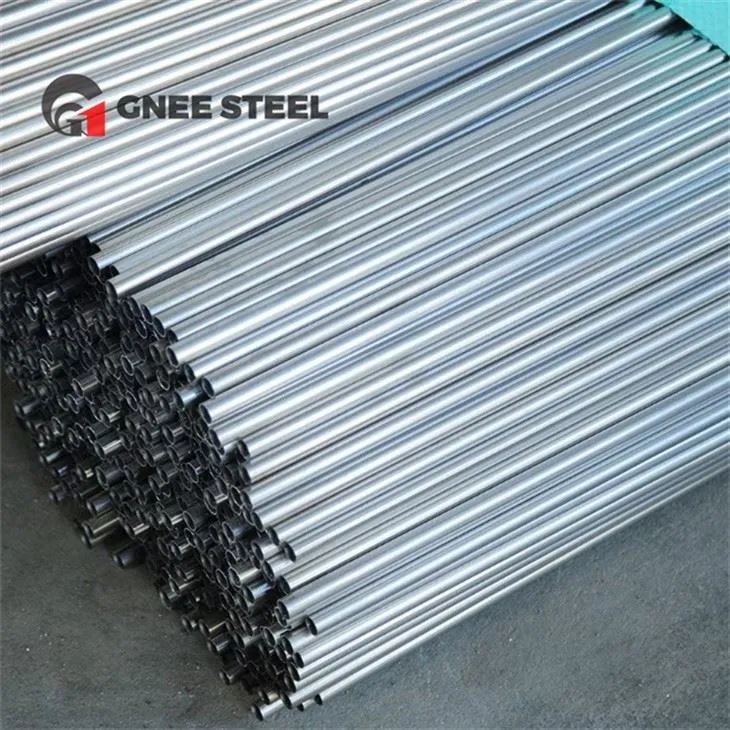
GNEE Steel supplies premium high-hardness 440C (1.4125) stainless steel in bar, wire, precision ground stock, strip, and plate forms, available in annealed condition for machining or pre-hardened to customer specifications. We provide full material certification (EN 10204 3.1) and processing support including precision cutting, grinding, and heat treatment services. If you have any requirements, please feel free to contact us.


Send Inquiry