







What is 1.4162 Stainless Steel?
Mar 18, 2026
Leave a message
1.4162 stainless steel, commonly known as LDX 2101 or UNS S32101, is a lean duplex stainless steel designed to offer an exceptional combination of high strength, good corrosion resistance, and excellent economy. With its ferritic-austenitic microstructure, it provides approximately twice the yield strength of conventional austenitic grades like 304L and 316L, while using significantly reduced nickel and molybdenum content through manganese and nitrogen alloying. This makes it one of the most cost-effective duplex grades available, ideal for applications where high strength and economy are primary considerations.
This lean duplex grade is standardized under key international systems.
| Standard | Equivalent Grade |
|---|---|
| EN (Europe) | 1.4162 |
| ASTM/AISI (USA) | LDX 2101, UNS S32101 |
| Common Name | LDX 2101 |
Its composition is optimized with manganese and nitrogen to replace more expensive nickel and molybdenum.
| Element | C | Si | Mn | P | S | Cr | Ni | Mo | N | Cu |
|---|---|---|---|---|---|---|---|---|---|---|
| Content (%) | ≤ 0.04 | ≤ 1.0 | 4.0 - 6.0 | ≤ 0.04 | ≤ 0.03 | 21.0 - 22.0 | 1.35 - 1.70 | 0.1 - 0.8 | 0.20 - 0.25 | 0.1 - 0.8 |
It offers high strength with good toughness and corrosion resistance at an economical price point.
| Property | Yield Strength (Rp0.2) | Tensile Strength (Rm) | Elongation (A) | Hardness (HB) | Impact (J) |
|---|---|---|---|---|---|
| Typical Value | ≥ 450 MPa | 650 - 850 MPa | ≥ 30% | ≤ 290 | ≥ 100 (20°C) |
Key Characteristics and Applications of 1.4162 / LDX 2101
High Strength: Offers approximately twice the yield strength of austenitic grades like 304L and 316L (450 MPa vs. 200 MPa), allowing for significant weight reduction and thinner sections in structural applications.
Excellent Economy: Very low nickel and molybdenum content, combined with manganese and nitrogen alloying, provides outstanding performance at a highly competitive and stable price point.
Good Corrosion Resistance: Provides corrosion resistance comparable to 304L in many environments, with PREN typically 25-26. Good resistance to stress corrosion cracking due to duplex structure.
Excellent Weldability: Can be welded using common techniques without preheating, with good resistance to hydrogen-induced cracking and reduced risk of hot cracking.
Primary Applications:
Structural Engineering: Bridges, storage tanks, silos, and architectural structures requiring high strength and economy.
Transportation: Truck trailers, railway wagons, shipping containers, and vehicle frames.
Water Treatment: Tanks, piping, and components in water and wastewater treatment plants.
Food Processing: Equipment for food handling where economy and moderate corrosion resistance are important.
Mining and Mineral Processing: Screens, conveyors, and handling equipment subject to abrasion.
Renewable Energy: Solar panel frames, support structures, and wind turbine components.
Architectural: Roofing, cladding, and structural supports in non-critical environments.
How does LDX 2101 (1.4162) compare to 304L (1.4307)?
LDX 2101 offers approximately twice the yield strength of 304L (450 MPa vs. 200 MPa), enabling significant weight savings and thinner material sections. Its corrosion resistance is comparable to 304L in many environments, with PREN 25-26 offering slightly better pitting resistance than 304L's PREN 18-20. It provides superior resistance to stress corrosion cracking due to its duplex structure. LDX 2101 is significantly more cost-effective and price-stable due to its very low nickel content. It is magnetic, while 304L is non-magnetic. However, 304L offers better formability for complex shapes and higher toughness at very low temperatures. LDX 2101 is an excellent choice for structural applications where high strength and economy are primary drivers, and where the material's magnetic properties are acceptable.
What are the welding considerations for LDX 2101 (1.4162) stainless steel?
LDX 2101 has excellent weldability due to its optimized composition. It can be welded using all common methods without preheating. Matching filler metals (e.g., 22.8.3.L type) are available, though austenitic fillers like 308L or 309L may also be used for less demanding applications. The high nitrogen content and manganese stabilization provide good resistance to hydrogen-induced cracking and hot cracking. Recommended heat input is 0.5-2.5 kJ/mm, with interpass temperature below 150°C. Shielding gas with nitrogen addition (typically Ar + 2-3% N2) helps maintain nitrogen content in the weld metal. The lean alloy content makes it more forgiving to weld than higher-alloyed duplex grades, with a wider processing window and excellent as-welded properties without post-weld heat treatment.
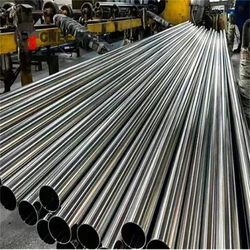
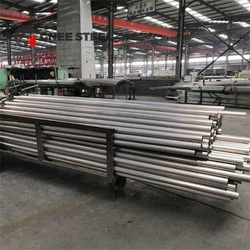

Looking for a Reliable Supplier of 1.4162 / LDX 2101 Stainless Steel?
GNEE Steel supplies cost-effective LDX 2101 (1.4162) lean duplex stainless steel in plate, sheet, bar, pipe, and structural profiles for demanding applications where economy and performance are both important. We provide full material certification (EN 10204 3.1) and processing support including cutting, bending, forming, and welding services. If you have any requirements, please feel free to contact us.


Send Inquiry