







What is 1.4438 Stainless Steel?
Mar 18, 2026
Leave a message
1.4438 stainless steel, commonly known as 317L or UNS S31703, is a low-carbon, molybdenum-alloyed austenitic stainless steel with enhanced corrosion resistance compared to 316L. With higher molybdenum and chromium content, it offers superior resistance to pitting and crevice corrosion in aggressive chloride environments, as well as improved resistance to reducing acids. Its low carbon content ensures excellent weldability without sensitization, making it the preferred choice for demanding chemical processing, pulp and paper, and pharmaceutical applications where 316L's corrosion resistance is insufficient.
This enhanced molybdenum-alloyed grade is standardized under key international systems.
| Standard | Equivalent Grade |
|---|---|
| EN (Europe) | 1.4438 |
| ASTM/AISI (USA) | 317L, UNS S31703 |
| JIS (Japan) | SUS317L |
| KS (Korea) | STS317L |
| Common Name | 317L |
The higher molybdenum and chromium content, combined with low carbon, provide enhanced corrosion resistance.
| Element | C | Si | Mn | P | S | Cr | Ni | Mo |
|---|---|---|---|---|---|---|---|---|
| Content (%) | ≤ 0.03 | ≤ 1.0 | ≤ 2.0 | ≤ 0.045 | ≤ 0.03 | 18.0 - 20.0 | 11.0 - 15.0 | 3.0 - 4.0 |
It offers good mechanical properties with enhanced corrosion resistance.
| Property | Yield Strength (Rp0.2) | Tensile Strength (Rm) | Elongation (A) | Hardness (HB) |
|---|---|---|---|---|
| Typical Value | ≥ 205 MPa | 500 - 700 MPa | ≥ 40% | ≤ 215 |
Key Characteristics and Applications of 1.4438 / 317L
Superior Pitting and Crevice Corrosion Resistance: The higher molybdenum content (3-4%) provides significantly better resistance to pitting and crevice corrosion in chloride environments compared to 316L (2-3% Mo), with PREN typically 28-30 vs. 24-26 for 316L.
Enhanced Acid Resistance: Offers improved resistance to reducing acids such as sulfuric and phosphoric acid, particularly at higher concentrations and temperatures.
Excellent Weldability: Low carbon content prevents sensitization during welding, eliminating the need for post-weld heat treatment.
Good High-Temperature Strength: Maintains good mechanical properties at elevated temperatures up to about 450°C.
Primary Applications:
Chemical Processing: Tanks, reactors, heat exchangers, and piping for aggressive chemicals, particularly in sulfuric and phosphoric acid service.
Pulp & Paper: Bleaching equipment, digesters, and handling systems for chlorine dioxide and other aggressive bleaching agents.
Pharmaceutical: High-purity equipment requiring enhanced corrosion resistance.
Textile Industry: Equipment for dyeing and bleaching with aggressive chemicals.
Pollution Control: FGD scrubbers and ducting in moderately aggressive environments.
Food Processing: Equipment handling high-chloride food products.
How does 317L (1.4438) compare to 316L (1.4404)?
317L offers enhanced corrosion resistance compared to 316L due to its higher molybdenum (3-4% vs. 2-3%) and chromium (18-20% vs. 16-18%) content. This provides approximately 15-20% better pitting resistance (PREN 28-30 vs. 24-26) and improved resistance to reducing acids. It is particularly advantageous in environments with higher chloride concentrations, elevated temperatures, or more aggressive chemical conditions. However, 317L is slightly more expensive and may have slightly reduced formability compared to 316L. The choice between them depends on the severity of the corrosive environment: 317L is selected when 316L's corrosion resistance is marginal.
What are the welding considerations for 317L?
317L has excellent weldability using all common methods including TIG, MIG, SMAW, and SAW. Matching filler metals (ER317L for TIG/MIG, E317L-16 for SMAW) are recommended to maintain corrosion resistance in the weld zone. The low carbon content eliminates the need for post-weld heat treatment, even for thick sections. Recommended heat input is typically 0.5-2.0 kJ/mm, with interpass temperature below 150°C. Shielding gas (argon or argon with 2-5% nitrogen) protects the weld pool. Post-weld cleaning and pickling/passivation are recommended to restore the passive layer and ensure optimum corrosion resistance.
What temperature range is 317L suitable for?
317L is suitable for a wide temperature range from cryogenic conditions up to about 450°C (842°F) for continuous service. Its low carbon content ensures good toughness at cryogenic temperatures, while its higher alloy content provides good strength retention at elevated temperatures. For corrosion resistance, it performs well up to about 300°C in many environments. Above 450°C, long-term exposure may lead to microstructural changes that could affect properties, so higher temperatures should be evaluated based on specific application requirements.
Looking for a Reliable Supplier of 1.4438 / 317L Stainless Steel?
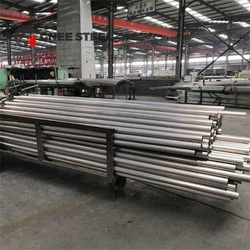
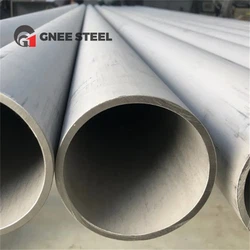
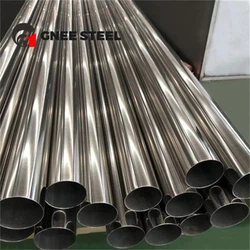
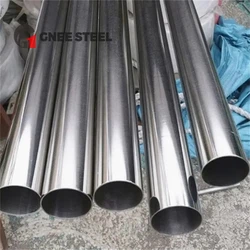
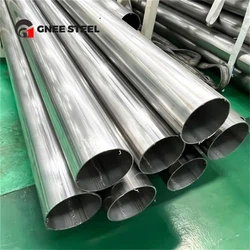
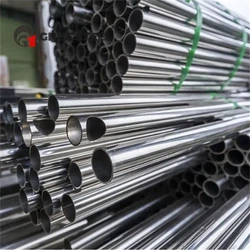
GNEE Steel supplies high-quality 317L (1.4438) stainless steel in plate, sheet, pipe, bar, and fitting forms for demanding applications requiring enhanced corrosion resistance. We provide full material certification (EN 10204 3.1) and processing support including cutting, bending, forming, and welding services. If you have any requirements, please feel free to contact us.


Send Inquiry