







What is 1.4460 Stainless Steel?
Feb 26, 2026
Leave a message
1.4460 stainless steel, commonly known as 329 or UNS S32900, is an early-generation ferritic-austenitic duplex stainless steel. It combines the strength and corrosion resistance of both ferritic and austenitic phases, offering good resistance to stress corrosion cracking and moderate pitting resistance. While largely superseded by modern duplex grades like 2205, it is still used in specific applications such as chemical processing, heat exchangers, and structural components.
This duplex grade is standardized under key international systems.
| Standard | Equivalent Grade |
|---|---|
| EN (Europe) | 1.4460 |
| ASTM/AISI (USA) | 329, UNS S32900 |
| JIS (Japan) | SUS329 |
| KS (Korea) | STS329 |
Its composition provides a mixed ferritic-austenitic microstructure.
| Element | C | Si | Mn | P | S | Cr | Ni | Mo |
|---|---|---|---|---|---|---|---|---|
| Content (%) | ≤ 0.08 | ≤ 1.0 | ≤ 2.0 | ≤ 0.04 | ≤ 0.03 | 23.0 - 28.0 | 2.5 - 5.0 | 1.0 - 2.0 |
It offers higher strength than austenitic grades but with some trade-offs in toughness and weldability.
| Property | Yield Strength (Rp0.2) | Tensile Strength (Rm) | Elongation (A) | Hardness (HB) |
|---|---|---|---|---|
| Typical Value | ≥ 450 MPa | 620 - 850 MPa | ≥ 20% | ≤ 300 |
Key Characteristics and Applications of 1.4460 / 329
High Strength and Good Stress Corrosion Cracking Resistance: Offers approximately double the yield strength of standard austenitic steels and performs well in chloride environments where stress corrosion cracking is a concern.
Moderate Corrosion Resistance: Provides better pitting and crevice corrosion resistance than 304/316 in many environments, but less than modern duplex grades like 2205.
Magnetic and Weldable: Exhibits magnetic properties due to its ferritic phase. Weldable with care, though post-weld heat treatment may be required to restore corrosion resistance.
Primary Applications:
Chemical Processing: Tanks, heat exchangers, and piping for moderate corrosive media.
Oil & Gas: Early-generation components for sour service and offshore applications.
Pulp & Paper Industry: Equipment exposed to chloride-containing liquors.
General Engineering: Structural components requiring higher strength than austenitic steels.
How does 329 (1.4460) compare to modern duplex 2205 (1.4462)?
Grade 329 is an older duplex alloy with lower alloy content, especially in nickel and molybdenum, resulting in lower corrosion resistance and toughness compared to 2205. 2205 offers better balanced microstructure, superior pitting resistance (higher PREN), and improved weldability. 2205 has largely replaced 329 in most industrial applications due to its enhanced performance.
What are the welding considerations for 329 stainless steel?
Welding 329 requires careful control to maintain a balanced microstructure and avoid excessive ferrite content in the weld metal, which can lead to reduced toughness and corrosion resistance. Use of matching or over-alloyed filler metals, controlled heat input, and possible post-weld annealing are recommended. It is less forgiving to weld than modern duplex grades.

Looking for a Reliable Supplier of 1.4460 / 329 Stainless Steel?
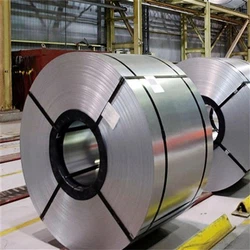
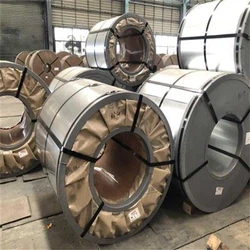
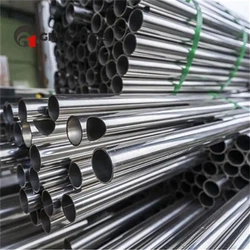
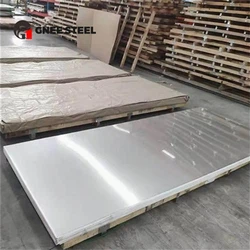
GNEE Steel supplies 329 (1.4460) duplex stainless steel in plate, bar, and pipe forms for applications where its specific combination of strength and corrosion resistance is required. We provide material certification and processing support. If you have any requirements, please feel free to contact us.

Send Inquiry