







What is 1.4464 Stainless Steel?
Jan 27, 2026
Leave a message
1.4464 stainless steel, commonly known as Super Duplex 2506 or UNS S32506, is a super duplex stainless steel with enhanced chromium and molybdenum content. It offers exceptional resistance to pitting, crevice corrosion, and stress corrosion cracking in aggressive chloride and acidic environments, making it suitable for demanding offshore, chemical, and desalination applications.
This high-performance super duplex grade is standardized under key international designations.
| Standard | Equivalent Grade |
|---|---|
| EN (Europe) | 1.4464 |
| ASTM/AISI (USA) | Super Duplex 2506, UNS S32506 |
| Common Name | Super Duplex 2506 |
Its high alloy content, particularly chromium, molybdenum, and nitrogen, provides outstanding corrosion resistance.
| Element | C | Si | Mn | P | S | Cr | Ni | Mo | N |
|---|---|---|---|---|---|---|---|---|---|
| Content (%) | ≤ 0.03 | ≤ 0.80 | ≤ 1.5 | ≤ 0.035 | ≤ 0.02 | 24.0 - 26.0 | 5.5 - 7.5 | 3.0 - 4.0 | 0.20 - 0.35 |
It provides very high strength and excellent toughness even in harsh conditions.
| Property | Yield Strength (Rp0.2) | Tensile Strength (Rm) | Elongation (A) | Hardness (HB) | Impact (J) |
|---|---|---|---|---|---|
| Typical Value | ≥ 550 MPa | 750 - 1000 MPa | ≥ 25% | ≤ 310 | ≥ 80 (20°C) |
Key Characteristics and Applications of 1.4464 / Super Duplex 2506
Exceptional Corrosion Resistance: Possesses a very high Pitting Resistance Equivalent Number (PREN > 40), offering superior resistance to pitting, crevice corrosion, and stress corrosion cracking in hot chloride-laden environments.
Very High Strength: Delivers yield strength approximately double that of standard austenitic steels, enabling significant weight and cost savings in pressure vessels and structural components.
Good Erosion and Wear Resistance: The ferritic phase contributes to good resistance against erosion-corrosion and abrasive wear.
Primary Applications:
Subsea & Offshore: Christmas trees, manifolds, flowlines, and umbilicals in deepwater oil & gas production.
Chemical Processing: Reactors, heat exchangers, and piping for highly corrosive acids and chlorides.
Desalination & FGD Plants: High-pressure RO membranes, evaporator tubes, and scrubber systems.
Pulp & Paper Industry: Digesters and bleaching equipment.
How does Super Duplex 2506 (1.4464) differ from Super Duplex 2507 (1.4410)?
While both are super duplex grades, 2506 typically has slightly lower nickel and molybdenum content compared to 2507, which may result in marginally lower corrosion resistance in some extremely aggressive environments. However, 2506 still offers excellent performance and is often chosen for applications where a balance of cost and performance is required. 2507 is generally considered the benchmark for super duplex corrosion resistance.
What are the critical factors for welding Super Duplex 2506 stainless steel?
Welding 2506 requires stringent control to maintain the optimal 50/50 ferrite-austenite balance in the weld metal and heat-affected zone (HAZ). Key practices include using over-alloyed filler metals (e.g., 25.10.4.L), strict control of heat input to avoid excessive ferrite formation or precipitation of brittle intermetallic phases, and ensuring adequate shielding gas (typically Ar + 30% N2) to maintain nitrogen levels. Post-weld cooling rates must be controlled, and the material should not be held in the critical temperature range (approx. 600-1000°C) for extended periods.

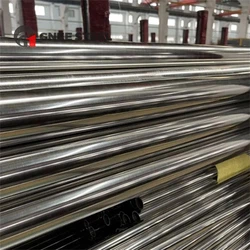
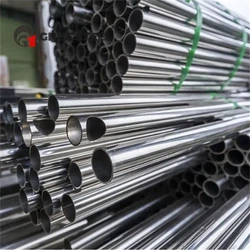
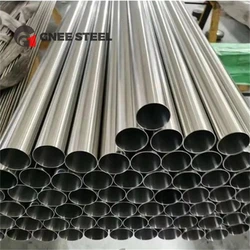
Looking for a Reliable Supplier of 1.4464 / Super Duplex 2506 Stainless Steel?
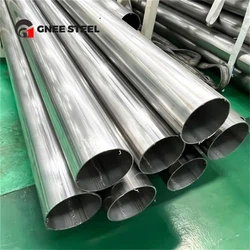
GNEE Steel supplies premium Super Duplex 2506 (1.4464) stainless steel in plate, pipe, fittings, and bar forms for challenging corrosive and high-pressure applications. We provide full material traceability and certifications to ensure performance. If you have any requirements, please feel free to contact us.


Send Inquiry