







What is 1.4510 Stainless Steel?
Jan 27, 2026
Leave a message
1.4510 stainless steel, commonly known as 439 or UNS S43035, is a titanium-stabilized ferritic stainless steel designed to offer improved corrosion resistance and weldability compared to standard 430 grades. With its enhanced resistance to intergranular corrosion and good formability, it is widely used in automotive exhaust systems, heat exchangers, and decorative applications where cost-effectiveness and moderate corrosion resistance are key.
This stabilized ferritic grade is standardized under key international systems.
| Standard | Equivalent Grade |
|---|---|
| EN (Europe) | 1.4510 |
| ASTM/AISI (USA) | 439, UNS S43035 |
| JIS (Japan) | SUS439 |
| KS (Korea) | STS439 |
Titanium is added to stabilize the material and prevent sensitization during welding.
| Element | C | Si | Mn | P | S | Cr | Ti |
|---|---|---|---|---|---|---|---|
| Content (%) | ≤ 0.03 | ≤ 1.0 | ≤ 1.0 | ≤ 0.04 | ≤ 0.03 | 17.0 - 19.0 | 0.30 - 1.00 |
It provides good ductility and moderate strength in the annealed condition.
| Property | Yield Strength (Rp0.2) | Tensile Strength (Rm) | Elongation (A) | Hardness (HB) |
|---|---|---|---|---|
| Typical Value | ≥ 240 MPa | 430 - 600 MPa | ≥ 25% | ≤ 200 |
Key Characteristics and Applications of 1.4510 / 439
Good Corrosion Resistance in Mild Environments: Performs well in indoor and automotive exhaust environments, with better resistance to intergranular corrosion than unstabilized ferritic grades.
Excellent Weldability: The titanium stabilization minimizes carbide precipitation during welding, making it suitable for welded assemblies without post-weld heat treatment.
Magnetic and Cost-Effective: Strongly magnetic and more economical than nickel-containing austenitic grades.
Primary Applications:
Automotive Exhaust Systems: Mufflers, catalytic converter housings, tailpipes, and heat shields.
Heat Exchangers: Components in automotive and HVAC systems.
Decorative Trim: Interior and exterior architectural elements where aesthetics and moderate corrosion resistance are required.
Appliances: Dishwasher interiors, oven linings, and other household equipment.
How does 439 (1.4510) compare to 430 (1.4016) stainless steel?
Grade 439 is a titanium-stabilized version of 430. The addition of titanium in 439 provides significantly better resistance to intergranular corrosion after welding or high-temperature exposure, making it more suitable for welded components like exhaust systems. While both are ferritic and magnetic, 439 offers improved weldability and corrosion performance in sensitized conditions, whereas 430 may suffer from chromium carbide formation in the heat-affected zone.
Is 439 stainless steel suitable for high-temperature applications?
439 can be used at elevated temperatures up to approximately 800°C in intermittent service and up to 750°C in continuous service, thanks to its good oxidation resistance. However, it is not as capable as high-temperature austenitic grades like 309S or 310S for prolonged exposure above 900°C. It is well-suited for automotive exhaust applications where temperatures typically remain within its operational range.
Looking for a Reliable Supplier of 1.4510 / 439 Stainless Steel?
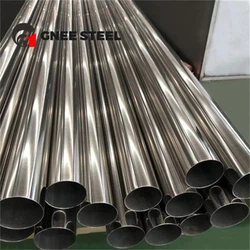
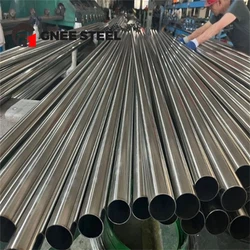
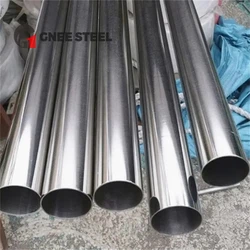
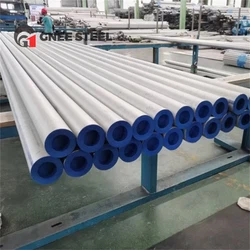
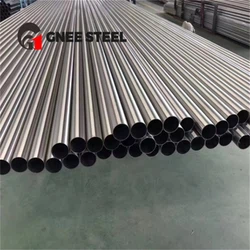
GNEE Steel supplies cost-effective and weldable 439 (1.4510) ferritic stainless steel in sheet, coil, tube, and strip forms, ideal for automotive and general industrial applications. We provide material certification and processing support. If you have any requirements, please feel free to contact us.


Send Inquiry