







EN 1.4546 Stainless Steel — Material Properties & Selection Guide
Apr 01, 2026
Leave a message
1.4546 stainless steel, commonly known as 15-5PH or UNS S15500, is a martensitic precipitation-hardening stainless steel that offers an exceptional combination of high strength, good corrosion resistance, and excellent toughness. Developed as an improvement over 17-4PH, it features a refined microstructure achieved through vacuum melting and tighter composition control, providing superior transverse toughness and more isotropic mechanical properties. This makes it the material of choice for critical aerospace, nuclear, and chemical processing applications where reliability and consistency are paramount.
Equivalent Grade for 1.4546 stainless steel
| Standard | Equivalent Grade |
|---|---|
| EN (Europe) | 1.4546 |
| ASTM/AISI (USA) | 15-5PH, UNS S15500 |
| Common Name | 15-5PH, XM-12 |
Chemical composition of 1.4546 stainless steel
| Element | C | Si | Mn | P | S | Cr | Ni | Cu | Nb+Ta |
|---|---|---|---|---|---|---|---|---|---|
| Content (%) | ≤ 0.07 | ≤ 1.0 | ≤ 1.0 | ≤ 0.04 | ≤ 0.03 | 14.0 - 15.5 | 3.5 - 5.5 | 2.5 - 4.5 | 0.15 - 0.45 |
Mechanical properties of 1.4546 stainless steel
| Condition | Yield Strength (Rp0.2) | Tensile Strength (Rm) | Elongation (A) | Hardness (HRC) |
|---|---|---|---|---|
| Solution Treated (A) | ~ 690 MPa | ~ 1000 MPa | ~ 15% | ~ 32 HRC |
| H900 (480°C age) | ~ 1170 MPa | ~ 1310 MPa | ~ 10% | ~ 44 HRC |
| H1025 (550°C age) | ~ 1070 MPa | ~ 1170 MPa | ~ 12% | ~ 38 HRC |
| H1150 (620°C age) | ~ 790 MPa | ~ 1000 MPa | ~ 12% | ~ 33 HRC |
Key Characteristics and Applications of 1.4546 / 15-5PH
Superior Toughness and Ductility: Offers significantly better transverse toughness and ductility than 17-4PH due to cleaner microstructure and optimized composition, with minimal property variation between longitudinal and transverse directions.
High Strength with Good Corrosion Resistance: Achieves tensile strengths over 1300 MPa after aging while maintaining corrosion resistance comparable to Type 304 stainless steel.
Precipitation Hardening: Can be machined in the solution-treated (softer) condition and then aged to high strength with minimal distortion, excellent for precision components.
Excellent Stress Corrosion Cracking Resistance: Better resistance to stress corrosion cracking than 17-4PH, particularly in the overaged (H1150) condition.
Primary Applications:
Aerospace: Landing gear components, turbine blades, engine mounts, actuators, fasteners, and critical structural parts.
Chemical & Petrochemical: Valves, pump shafts, fittings, and reactor components requiring high strength and corrosion resistance.
Nuclear Industry: Control rod mechanisms, valve components, and structural parts requiring consistent properties.
Oil & Gas: Downhole tools, wellhead components, and high-pressure valve parts.
Medical: Surgical instruments, orthopedic implants, and dental tools requiring biocompatibility.
Food Processing: Equipment requiring strength, cleanability, and corrosion resistance.
What is the difference between 15-5PH (1.4546) and 17-4PH (1.4542)?
How is 15-5PH typically heat treated?
What are the welding considerations for 15-5PH?
Looking for a Reliable Supplier of 1.4546 / 15-5PH Stainless Steel?
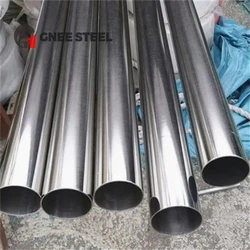
1.4546 Stainless Steel Pipe
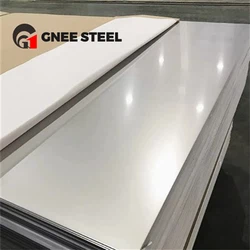
1.4546 Stainless Steel Plate

1.4546 Stainless Steel Bar
Send Inquiry