







1.4841 Stainless Steel: Properties&Applications
Apr 03, 2026
Leave a message
1.4841 stainless steel, commonly known as 310 or UNS S31000, is a high-temperature austenitic stainless steel with exceptional oxidation resistance and good creep strength at elevated temperatures. With its high chromium (24-26%) and nickel (19-22%) content, it offers superior resistance to scaling and oxidation in continuous service up to 1100°C, making it one of the most widely used materials for high-temperature applications. It is the material of choice for furnace components, heat treatment equipment, and high-temperature industrial processes where maximum oxidation resistance is required.
Equivalent specifications for 1.4841 stainless steel
| Standard | Equivalent Grade |
|---|---|
| EN (Europe) | 1.4841 |
| ASTM/AISI (USA) | 310, UNS S31000 |
| JIS (Japan) | SUS310 |
| Common Name | 310 |
Chemical composition of 1.4841 stainless steel
| Element | C | Si | Mn | P | S | Cr | Ni |
|---|---|---|---|---|---|---|---|
| Content (%) | ≤ 0.20 | ≤ 1.5 | ≤ 2.0 | ≤ 0.045 | ≤ 0.03 | 24.0 - 26.0 | 19.0 - 22.0 |
Properties of 1.4841 Stainless Steel
| Property | Yield Strength (Rp0.2) | Tensile Strength (Rm) | Elongation (A) | Hardness (HB) |
|---|---|---|---|---|
| Typical Value (Room Temp) | ≥ 205 MPa | 500 - 750 MPa | ≥ 40% | ≤ 215 |
Key Characteristics and Applications of 1.4841 / 310
Exceptional High-Temperature Oxidation Resistance: Forms a stable, adherent chromium oxide layer that protects against scaling and oxidation in continuous service up to 1100°C (2010°F) and intermittent service up to 1050°C (1920°F).
Good Creep and Rupture Strength: Maintains structural integrity under mechanical load at elevated temperatures, suitable for load-bearing high-temperature components.
Excellent Sulfur Resistance: Performs well in sulfur-containing atmospheres, where many other stainless steels would rapidly degrade.
Good Thermal Fatigue Resistance: Withstands repeated heating and cooling cycles without significant degradation.
Primary Applications:
Heat Treatment Furnaces: Radiant tubes, muffles, retorts, baskets, furnace rolls, and annealing covers.
Chemical & Petrochemical: Reformers, pyrolysis tubes, and catalyst support grids in high-temperature processes.
Power Generation: Boiler components, superheater supports, and heat recovery systems.
Glass & Ceramic Manufacturing: Hot handling equipment and kiln furniture.
Cement Industry: Preheater cyclones and ducting.
Waste Incineration: Combustion chambers and heat exchangers.
Welding Filler Metal: Used for high-temperature applications and joining dissimilar metals.
How does 310 (1.4841) compare to 310S (1.4845) and 309 (1.4828)?
What are the welding considerations for 310?
What are the limitations of 310 stainless steel?
Looking for a Reliable Supplier of 1.4841 / 310 Stainless Steel?
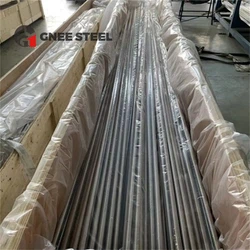
1.4841 Stainless Steel Pipe
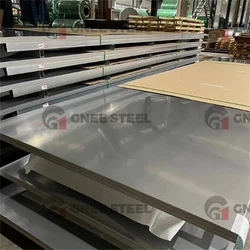
1.4841 Stainless Steel Plate

1.4841 Stainless Steel Bar
Send Inquiry