







What is 20Cr13 stainless steel hot-rolled plate?
Jul 16, 2026
Leave a message
| Element | GB/T 1220 20Cr13 / 2Cr13 |
ASTM A276 420 (S42000) |
JIS G4303 SUS420J1 |
EN 10088-1 X20Cr13 (1.4021) |
GOST 5632 20X13 |
|---|---|---|---|---|---|
| Carbon (C) | 0.16 – 0.25 | 0.15 min | 0.16 – 0.25 | 0.16 – 0.25 | 0.16 – 0.25 |
| Silicon (Si) | ≤ 1.00 | ≤ 1.00 | ≤ 1.00 | ≤ 1.00 | ≤ 0.80 |
| Manganese (Mn) | ≤ 1.00 | ≤ 1.00 | ≤ 1.00 | ≤ 1.50 | ≤ 0.80 |
| Phosphorus (P) | ≤ 0.040 | ≤ 0.040 | ≤ 0.040 | ≤ 0.040 | ≤ 0.030 |
| Sulfur (S) | ≤ 0.030 | ≤ 0.030 | ≤ 0.030 | ≤ 0.015 | ≤ 0.025 |
| Chromium (Cr) | 12.00 – 14.00 | 12.00 – 14.00 | 12.00 – 14.00 | 12.00 – 14.00 | 12.00 – 14.00 |
| Nickel (Ni) | ≤ 0.60 | ≤ 0.75 | ≤ 0.60 | - | ≤ 0.60 |


Mechanical Properties:
| empering Temperature (°C) | Tensile Strength (MPa) | Yield Strength 0.2% Proof (MPa) |
Elongation (% in 50mm) |
Hardness Brinell (HB) |
|---|---|---|---|---|
| Annealed * | 655 | 345 | 25 | 241 max |
| 399°F (204°C) | 1600 | 1360 | 12 | 444 |
| 600°F (316°C) | 1580 | 1365 | 14 | 444 |
| 800°F (427°C) | 1620 | 1420 | 10 | 461 |
| 1000°F (538°C) | 1305 | 1095 | 15 | 375 |
| 1099°F (593°C) | 1035 | 810 | 18 | 302 |
| 1202°F (650°C) | 895 | 680 | 20 | 262 |
| Process | Temperature (°C) | Holding Time | Cooling Method | Typical Result |
|---|---|---|---|---|
| Annealing | 800 – 900 | 1 h per 25 mm wall thickness | Furnace cool to ~600 °C, then air | ≤ 223 HB, good machinability |
| Hardening (Austenitizing) | 920 – 980 | 30 – 60 min at temperature | Oil quench or forced air | Full martensitic structure, high hardness |
| Tempering (low-temperature) | 200 – 300 | 2 h minimum | Air cool | High hardness (40–50 HRC), wear-resistant |
| Tempering (high-temperature) | 600 – 750 | 2 h minimum per 25 mm | Air cool | Good toughness, moderate strength, ≥ 192 HB |
Applications of 20Cr13 Stainless Steel Hot-Rolled Plate:
20Cr13 plate is commonly subjected to cutting, machining, and heat treatment for the manufacture of various components and parts, including:
Industrial components (e.g., valve seats, pump shafts, and steam turbine blades)
Cutlery and tools (e.g., kitchen knives, scissors, and hand tools)
Medical instruments (e.g., surgical and dental instruments)
Mechanical components (e.g., gears, cams, and various automotive or machinery parts)
If you are planning to source or machine this material, let me know:What thickness or dimensions do you need?What specific environment or application will this plate be used for?I can help clarify if this grade is the best fit or compare it to alternatives like 304 or 430.
20Cr13 Stainless Steel Hot-Rolled Plate Per kg
The current bulk price for 20Cr13 (equivalent to AISI 420 or X20Cr13) hot-rolled stainless steel plate ranges from $1.50 to $2.13 per kg. For retail quantities or specialty sizes, prices can range from $3.00 to $5.50 per kg depending on the minimum order quantity, thickness, and finish.
Procurement Tips for 20Cr13 Hot-Rolled Plates:
Verify Surface Quality: Since it's hot-rolled, check for any deep pitting or excessive scale if you plan to machine it thin.
MTR (Material Test Report): Always ask for the chemical analysis to ensure the Carbon and Chromium levels meet your specific hardness requirements.
Annealed State: Confirm the plate is delivered in the annealed condition; otherwise, it will be too hard to cut or machine.
All products are certified by ISO 9001, SGS, and BV, and are supplied with EN 10204 3.1 Material Test Certificates.

Quality Inspection
Inspection of 20Cr13 focuses on ensuring the material meets chemical composition standards, is free from internal defects, and possesses the appropriate hardness in the annealed state (to facilitate subsequent processing).
1. Chemical Composition Analysis: Performed using a spectrometer (PMI) or wet chemical analysis.
2. Mechanical Properties and Hardness Testing.
3. Ultrasonic Testing (UT): Mandatory for hot-rolled medium-to-heavy plates (typically >10 mm).
4. Surface and Dimensional Inspection: For hot-rolled 20Cr13 plates (No. 1 finish), slight scale and pickling marks are permissible, but cracks, scabs, folds, or severe pitting are not allowed.


Packaging Specifications
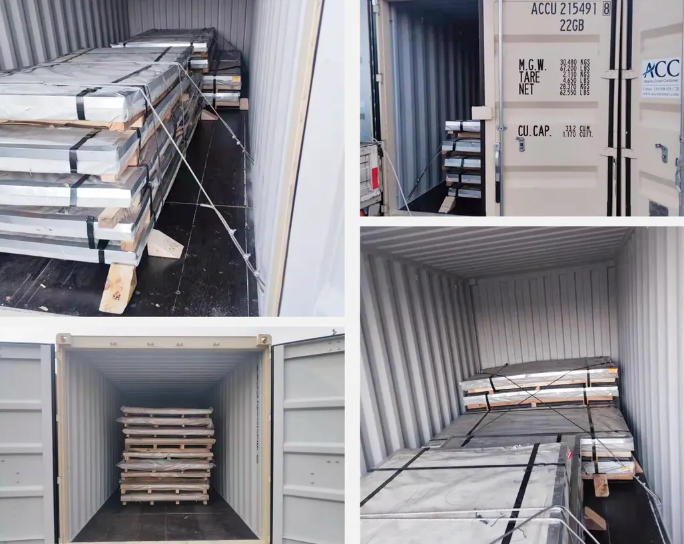
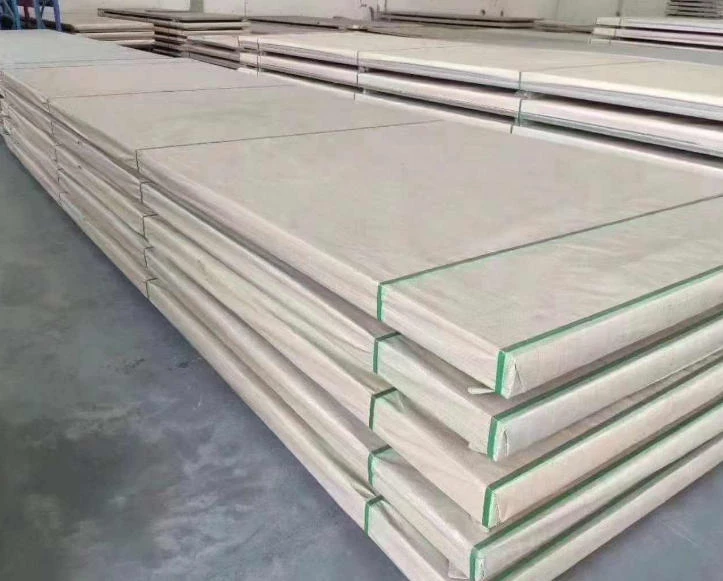
Waterproof Paper/Woven Fabric: The outer layer is covered with waterproof plastic sheeting or kraft paper to prevent corrosion from rain or seawater.
Standard Bundling: For thicker plates or large quantities, high-strength steel straps are used for both transverse and longitudinal binding.
Palletized: Fumigation-free wooden pallets or welded iron pallets are used at the base to facilitate forklift loading and unloading.
Edge Protection: Metal or rigid edge protectors are applied at steel strapping contact points to prevent the straps from damaging the plate edges.
FAQ
What is the difference between 20Cr13 and 30Cr13?
30Cr13 has a higher carbon content (0.26%–0.35%) than 20Cr13 (0.16%–0.25%). After quenching, 30Cr13 achieves higher hardness (HRC 50–52), whereas 20Cr13 has relatively lower hardness (HRC 48–50). 20Cr13 is suitable for components requiring toughness and moderate hardness (such as valves and shafts), while 30Cr13 is more commonly used to manufacture cutting tools and surgical instruments.
Is 20Cr13 magnetic?
Yes. Like all martensitic stainless steels, 20Cr13 is ferromagnetic in all conditions.
Is 20Cr13 stainless steel rust-proof?
Moderately. It has good corrosion resistance in "mild" environments (fresh water, steam, soap, and weak acids). However, its corrosion resistance is lower than 304 or 316 because it has less chromium and no nickel. It must be polished and hardened to reach its maximum corrosion resistance.
How does 20Cr13 compare to 304 stainless steel?
20Cr13 (a martensitic steel equivalent to AISI 420) is designed for high hardness and wear resistance, whereas 304 (an austenitic steel) excels in corrosion resistance and formability. 20Cr13 is magnetic and heat-treatable, while 304 is non-magnetic and cannot be hardened by heat treatment.
Send Inquiry