







316L Stainless Steel Suitable for Welding and Annealing
Apr 09, 2026
Leave a message


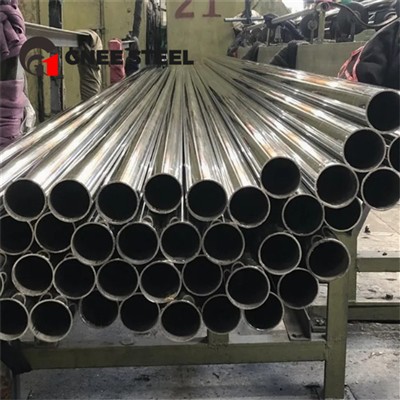
Benefits of using Type 316L Stainless Steel
Benefits of using 316L stainless steel include:
Low carbon content eliminates carbon precipitation in the welding process
Can be used in severe corrosive environments
Improved anti–corrosion scope due to added Molybdenum
Weld annealing only required in high stress applications
Very similar to Grade 316 in chemical composition and mechanical properties
316 & 316L steel plate and pipes have common properties and are often stocked with Dual Certification, where it is determined that both have properties and composition which comply with both steel types. Type 316H is excluded from this scenario by virtue of the fact that unlike 316 & 316L, 316H is engineered to work in elevated working temperatures.
Chemical Composition of Type 316L Stainless Steel
The chemical composition of Type 316L Stainless Steel is provided in the table below.
| UNS NO | Grade | C | Si | Mn | P | S | Cr | Mo | Ni | N |
| S31603 | 316L | 0.08 | 0.75 | 2.00 | 0.045 | 0.030 | 16.00/18.00 | 2.00/3.00 | 10.00/14.00 | 0.10 |
Mechanical Properties of Type 316L Stainless Steel
The mechanical properties of Type 316L Stainless Steel are provided in the table below.
| UNS No | Grade | Proof Stress 0.2% (MPa) | Tensile Strength (MPa) | Elongation A5(%) | Hardness Max | |
| HB | HRB | |||||
| S31603 | 316L | 170 | 485 | 40 | 217 | 95 |
Send Inquiry