







440C Stainless Steel: High-Carbon Martensitic Grade For Ultra-High Wear Resistance
Dec 23, 2025
Leave a message
440C is a high-carbon variant in the 440 series (C=0.95%-1.20%, Cr=16.0%-18.0%), with the highest hardness and wear resistance in the series. After heat treatment, its hardness can reach 60-62HRC, with excellent edge retention, suitable for high-wear and high-precision components.
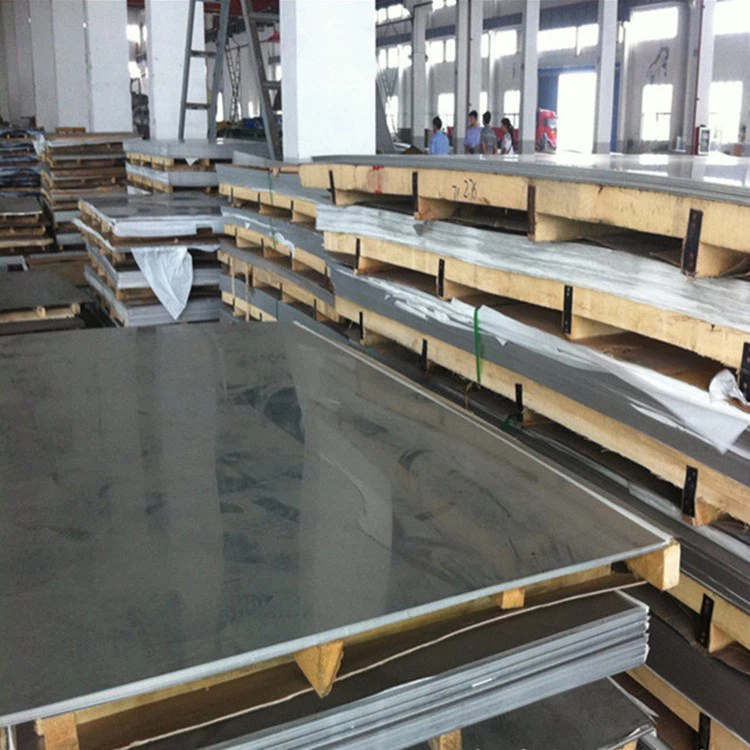
Core Parameters
Chemical Composition (wt%): C=0.95-1.20, Si≤1.00, Mn≤1.00, P≤0.040, S≤0.030, Cr=16.00-18.00, Fe=Balance
Mechanical Properties (Quenched & Tempered): Tensile Strength ≥950MPa, Yield Strength ≥700MPa, Elongation ≥10%, Hardness 60-62HRC
Service Temperature: -20℃ to 250℃ (continuous service)
Equivalent Grades: SUS440C (JIS), EN 1.4125, UNS S44004
Performance Advantages: Ultra-high hardness and excellent wear resistance; excellent edge retention, suitable for cutting tools; good dimensional stability after heat treatment; moderate corrosion resistance in dry environments; magnetic.
Typical Applications: High-end professional knives, surgical scalpels, bearing balls, high-precision mold cores, valve seats for high-pressure equipment, measuring tools, aerospace components requiring wear resistance.

Practical Q&A
Q1: What heat treatment process is required for 440C to achieve ultra-high hardness? A1: Quenching at 1050-1090℃, oil cooling + tempering at 150-200℃, air cooling. This process maximizes hardness (60-62HRC) and wear resistance. Note that the tempering temperature must not exceed 200℃ to avoid hardness reduction.
Q2: Is 440C suitable for making professional knives? A2: Yes. Its ultra-high hardness (60-62HRC) and excellent edge retention make it the preferred material for high-end chef's knives, hunting knives and tactical knives. It can maintain sharpness after long-term use.
Q3: What is the wear resistance of 440C compared to 440B? A3: The wear resistance of 440C is 1.5-2 times that of 440B. In the abrasive wear test, the wear loss of 440C is only 0.01g after 1000 cycles, while that of 440B is 0.018g.
Q4: Why is 440C not suitable for components subject to impact loads? A4: Its ultra-high hardness leads to low toughness (impact toughness ≤15J), making it prone to chipping or cracking under impact loads. For components requiring both wear resistance and impact resistance, 440B or SUS420J2 is recommended.
Q5: How to grind 440C components? A5: Use diamond grinding wheels for grinding, as ordinary alumina grinding wheels have low efficiency and fast wear. The grinding speed should be controlled at 15-20m/s, and sufficient coolant should be used to avoid overheating and hardness reduction.
Send Inquiry