

ASTM A240 TP304 Stainless Steel Standard: Grade Equivalents and Properties
What ASTM A240 Covers
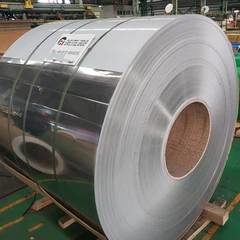
ASTM A240 is the standard specification for chromium and chromium-nickel stainless steel plate, sheet and strip for pressure vessels and for general applications. It is a product specification for flat-rolled material: sheet and strip are supplied under 4.8 mm (3/16 in.) in thickness, while plate is supplied at 4.8 mm and heavier. That distinction matters commercially, because the same grade may be ordered as coil, cut length sheet or plate and the applicable thickness tolerances, edges and finishes follow from the product form.
ASTM A240 TP304 is the austenitic 18-8 grade within that specification. TP304 is the designation used for flat-rolled and tubular product made to ASTM pressure-vessel type specifications, and it corresponds to UNS S30400. The material is used for pressure vessel shells, heads and internals, storage tanks, process equipment, architectural cladding, food and pharmaceutical contact surfaces, and general fabrication where good corrosion resistance and formability are required.
Grade Equivalents for ASTM A240 TP304
TP304 is an internationally traded grade, and the equivalents below allow drawings written to different systems to be matched. The chemistry behind each designation is the same; only the designation and the permissible tolerance rules differ.
| Standard system | Equivalent designation |
|---|---|
| UNS | S30400 |
| EN / DIN | 1.4301 |
| JIS (Japan) | SUS 304 |
| ISO | X5CrNi18-10 |
| GB (China) | 06Cr19Ni10 |
Chemical Composition of ASTM A240 TP304
Chemical requirements under ASTM A240 for UNS S30400 are given below. The specification uses a 0.07% maximum carbon for the flat-rolled product, with nickel held to 8.0-10.5%, which is the range that keeps the alloy fully austenitic after processing.
| Element | Content (mass %) |
|---|---|
| Chromium (Cr) | 18.0 - 20.0 |
| Nickel (Ni) | 8.0 - 10.5 |
| Carbon (C) | 0.07 max |
| Manganese (Mn) | 2.00 max |
| Phosphorus (P) | 0.045 max |
| Sulfur (S) | 0.030 max |
| Silicon (Si) | 0.75 max |
| Nitrogen (N) | 0.10 max |
| Iron (Fe) | Balance |
Mechanical Properties and Product Forms
| Property | Minimum value |
|---|---|
| Tensile strength | 515 MPa (75 ksi) |
| Yield strength, 0.2% offset | 205 MPa (30 ksi) |
| Elongation, in 50 mm (2 in.) | 40% |
ASTM A240 material is produced hot-rolled or cold-rolled and is normally supplied annealed and pickled, or in a bright annealed, polished or patterned finish. Common finishes for TP304 include the 2B cold-rolled bright finish, 2D, No. 4 polished, and hairline or mirror finishes. Dimensional tolerances, flatness and finish requirements for flat-rolled A240 product are generally governed by ASTM A480, which is the companion general-requirements specification and should be referenced on the purchase order together with A240.
Fabrication behaviour is the reason TP304 remains the default austenitic plate and sheet grade. It can be deep drawn, stretch formed, bent and welded by all common processes, and it work-hardens rather than losing toughness. Annealing is carried out at roughly 1040 C followed by rapid cooling, and the grade is non-magnetic in the annealed condition and becomes slightly magnetic after heavy cold work.
TP304 Compared with 304, A182 and Other Specifications
| Item compared | ASTM A240 TP304 | Comment |
|---|---|---|
| 304 grade designation | AISI 304 | A general reference to the 18-8 austenitic grade, which can apply to bar, wire, sheet or plate depending on the product standard. |
| TP prefix | TP304 | The TP prefix marks the pressure-vessel and tube-oriented specifications such as A240, A249 and A312, and identifies material made to those product requirements rather than to a generic grade label. |
| ASTM A182 | Forged or rolled parts | A182 covers forged and rolled flanges, fittings, valves and bar for high-pressure piping, so it is selected when the component is forged rather than flat-rolled. |
| Product form under A240 | Plate, sheet and strip | A240 is limited to flat-rolled product. Pipe, tube and bar require their own specifications even when the grade is the same. |
| Common companion grades | 304, 316, 310, 321 | Higher-alloy austenitic grades are specified in the same specification when enhanced corrosion resistance or elevated-temperature strength is needed, for example 316L for chloride service. |
Ordering, Cost Drivers and Quality Documentation
The delivered cost of ASTM A240 TP304 sheet and plate depends on thickness, width, surface finish, alloy surcharge for nickel and chromium, and the quantity per size. Thin cold-rolled 2B sheet, wide heavy plate and polished finishes sit at different points in the range, and price is normally quoted against the prevailing alloy surcharge rather than held for long periods. Buyers should place thickness and finish requirements, plus tolerance class and edge condition, on the enquiry so that the material is produced to the correct A240 and A480 requirement rather than being substituted with a lower-grade equivalent.
Material is commonly supplied with mill test certificates showing heat number, chemical analysis and mechanical results, and plate and sheet are protected with film or interleaving when a polished finish must arrive undamaged. Shipping is in export packing suited to container or break-bulk transport, with lead times that vary mainly with finish and size availability.
FAQ
Q: What does ASTM A240 TP304 mean?
It means 304 stainless steel supplied as plate, sheet or strip under the ASTM A240 specification. A240 sets the chemical composition, mechanical properties and product requirements for flat-rolled chromium and chromium-nickel stainless steel, and TP304 identifies the 18-8 grade within that specification.
Q: Is ASTM A240 TP304 the same as 304 stainless steel sheet?
The grade is the same, but the specification is not. Ordering to A240 means the material must meet the A240 chemical limits, mechanical properties and testing regime, which is stricter and better documented than a generic 304 sheet supply.
Q: What is the difference between TP304 and 304?
304 is the general AISI grade reference, which can apply to bar, wire, sheet or plate. TP304 is the designation used in the pressure-vessel and tube-oriented specifications, so it identifies material made to those product requirements, such as A240 flat-rolled product or A249 welded tube.
Q: How does ASTM A240 relate to ASTM A182?
A240 covers flat-rolled plate, sheet and strip. A182 covers forged and rolled flanges, fittings, valves and bar for high-pressure piping. A project therefore uses A240 for the vessel shell and internals and A182 for the forged piping components, both often in the same 304 or 316 grade.
Q: What thickness separates sheet from plate in ASTM A240?
Sheet and strip are material thinner than 4.8 mm (3/16 in.), and plate is 4.8 mm and heavier. The distinction affects tolerances, edge condition and testing requirements, so it should be stated clearly when ordering.
Q: Which standard covers tolerances and finishes for A240 material?
ASTM A480 is the general-requirements specification for flat-rolled stainless and heat-resisting steel, and it provides the dimensional tolerances, flatness limits and finish definitions used with A240. Purchase orders normally reference both specifications.
Send Inquiry