







ASTM A479 type 316 equivalent material
Apr 25, 2025
Leave a message
What is ASTM A479 Type 316 material?
ASTM A479 316 is a specification for molybdenum-containing austenitic stainless steel bars and profiles designed for pressure vessels, boilers, and high-temperature environments. Compared to 304 stainless steel, it offers superior corrosion resistance (especially resistance to chloride pitting) and high strength, with a chromium content of 16-18%, a nickel content of 10-14%, and a molybdenum content of 2-3%.

What is ASTM A479 type 316 equivalent material?
ASTM A479 Type 316 (UNS S31600) is a type of stainless steel used for boiler/pressure vessel components, often replacing EN 1.4401 or DIN X5CrNiMo17-12-2. It is typically dual-certified with 316L (UNS S31603/1.4404), which has a lower carbon content and is closely related to ASME SA479, JIS SUS316, and ASTM A276 Type 316.
🔹ASTM A479 Type 316 Stainless Chemical Composition
| Element (wt%) | ASTM A479 Type 316 | EN 1.4401 | JIS SUS316 | GB 06Cr17Ni12Mo2 |
|---|---|---|---|---|
| Carbon (C) | ≤ 0.08% | ≤ 0.07% | ≤ 0.08% | ≤ 0.08% |
| Chromium (Cr) | 16.0–18.0% | 16.5–18.5% | 16.0–18.0% | 16.0–18.5% |
| Nickel (Ni) | 10.0–14.0% | 10.0–13.0% | 10.0–14.0% | 10.0–14.0% |
| Molybdenum (Mo) | 2.00–3.00% | 2.00–2.50% | 2.00–3.00% | 2.00–3.00% |
| Manganese (Mn) | ≤ 2.00% | ≤ 2.00% | ≤ 2.00% | ≤ 2.00% |
| Silicon (Si) | ≤ 1.00% | ≤ 1.00% | ≤ 1.00% | ≤ 1.00% |
| Phosphorus (P) | ≤ 0.045% | ≤ 0.045% | ≤ 0.045% | ≤ 0.035% |
| Sulfur (S) | ≤ 0.030% | ≤ 0.015% | ≤ 0.030% | ≤ 0.030% |
🔹Mechanical Properties:
|
Property |
ASTM A479 316 | Chinese 06Cr17Ni12Mo2 | European X5CrNiMo17-12-2 | Japanese SUS316 |
|---|---|---|---|---|
| Tensile Strength | ≥515 MPa | ≥520 MPa | 490-700 MPa | 490-700 MPa |
| Yield Strength | ≥205 MPa | ≥205 MPa | ≥190 MPa | ≥190 MPa |
| Elongation | ≥40% | ≥40% | ≥30% | ≥40% |
| Hardness (HB) | ≤217 | ≤187 | ≤215 | ≤217 |
🔹Differences between ASTM A479 316 SS bars and EN 1.4401 stainless steel bars:
ASTM A479 316 stainless steel round bars are suitable for high-temperature and high-pressure environments (e.g., boilers, pressure vessels) and require ASME certification.
EN 1.4401 stainless steel bars have stricter controls on phosphorus (P) and sulfur (S) impurities (P≤0.045%, S≤0.030%), making them suitable for high-precision machining.
🔹What is the main difference between ASTM A276 316 and ASTM A479 316?
Answer: ASTM A276 is a general specification for stainless steel bars and shapes for structural or general machining purposes. ASTM A479 is specifically designed for boilers and pressure vessels, enforcing stricter heat treatment protocols and full compliance with ASME Boiler and Pressure Vessel Code (BPVC) standards.
🔹Corrosion Resistance:
Commonality: All equivalent materials contain molybdenum (2-3%), offering significantly better resistance to chloride ions (Cl⁻), sulfuric acid, phosphoric acid, and other reducing acids compared to 304 stainless steel. For example, in seawater environments with 19,000 ppm Cl⁻, both ASTM A479 316 and SUS316 have a corrosion rate of less than 0.1 mm/year.
🔹High-Temperature Performance:
ASTM A479 316 Stainless steel bar :Can be used intermittently up to 870°C and continuously up to 925°C, with good oxidation resistance.
06Cr17Ni12Mo2 Stainless steel bar : Can withstand temperatures up to 1200-1300°C, but prolonged use between 427-857°C may cause performance degradation.
SUS316 Stainless steel bar : Heat-resistant to approximately 800-900°C, with slightly lower high-temperature strength than ASTM standards, but better corrosion resistance.
🔹 A479 316 vs a182 f316:
ASTM A479 316 and A182 F316 are both 316-series stainless steels used for pressure-retaining components but differ in application. A479 covers stainless bars/shapes for boilers/pressure vessels, while A182 F316 is for forged fittings, flanges, and valves. Both offer similar corrosion resistance, but A182 requires forging.
🔹Key Applications for ASTM A479 316 Bar Stock
Pressure Vessels & Boilers: Shell rings, nozzles, tie rods, and flanges certified under ASME Section VIII.
Valves & Pump Shafts: Machined valve stems, bodies, pump impellers, and trim components operating in corrosive media.
Oil, Gas & Petrochemical: Marine offshore rigs, sour gas manifolds, and refinery heat exchanger headers.
Pharmaceutical & Chemical Processing: Agitator shafts, reaction vessel supports, and sanitary fluid handling components.
🔹Is ASTM A479 Type 316 magnetic?
Answer: In the fully solution-annealed state, ASTM A479 Type 316 is non-magnetic (austenitic). However, heavy machining or cold drawing can induce slight magnetic permeability due to localized deformation martensite.
ASTM A479 Type 316 Round Bar Supplier
GNEE offers ASTM A479 316/316L dual-certified material. This ensures a low carbon content (C < 0.030%) for optimal weldability without compromising the mechanical yield strength associated with Grade 316.
Surface Condition: Surface finishes such as hot-rolled, cold-drawn, centerless ground, or turned/peeled (tolerance classes K12/h9) are available based on processing requirements.
Additionally, we provide a Material Test Certificate (MTC) compliant with EN 10204 3.1; the MTC explicitly confirms compliance with ASTM A479 and ASME SA479 standards and includes details on the solution annealing temperature (> 1040°C, followed by rapid water quenching).
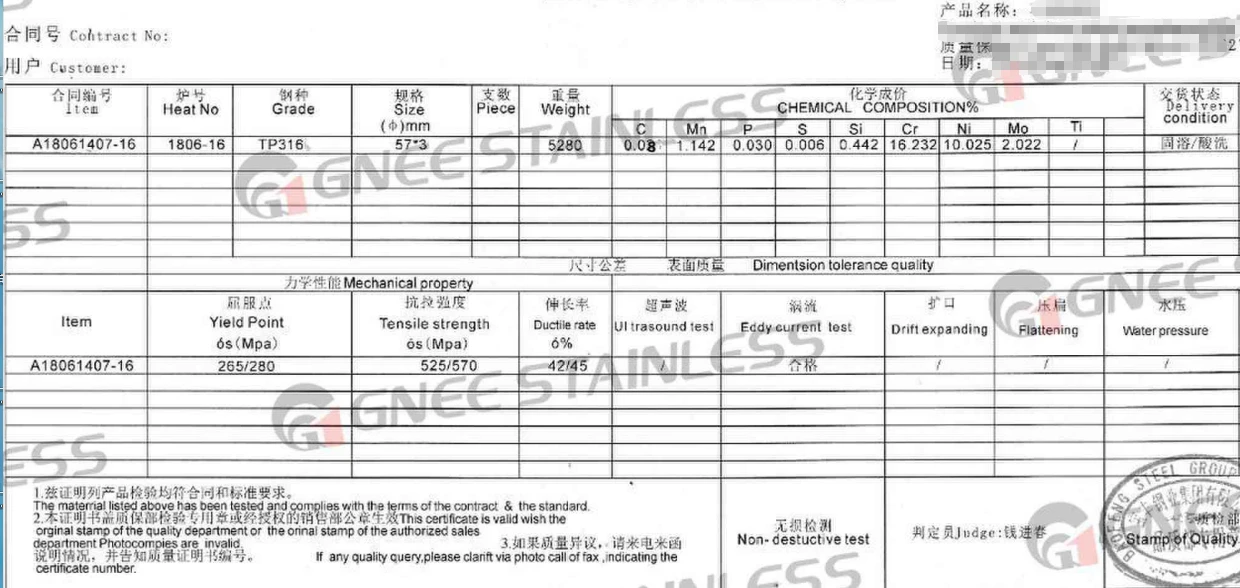
Non-Destructive Testing (NDT): For critical components such as valve stems or rotating shafts, ultrasonic testing (UT, per ASTM A388) is required to detect internal voids or inclusions.
ASTM A479 Type 316 Stainless Steel Round Bar Specifications
| Surface Finish | Visual Appearance | Common Tolerance / Surface Roughness (Ra) | Primary Applications |
|---|---|---|---|
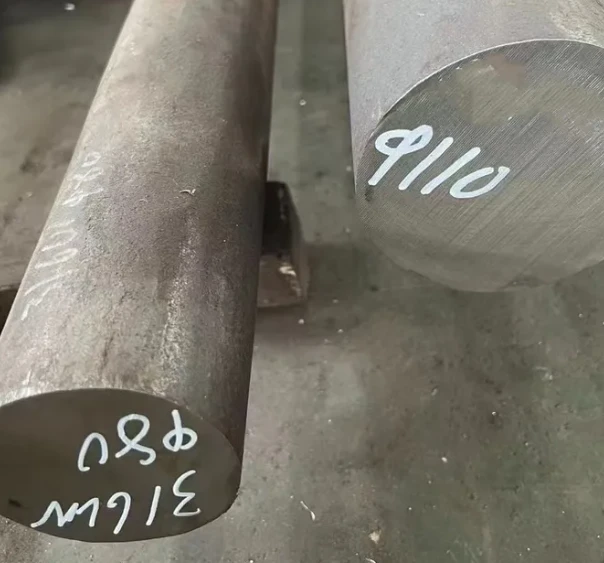
| Hot Rolled / Black Bar | Dark oxide scale surface with rough and non-reflective appearance | ISO h11–h13 Ra 6.3–12.5 μm |
Heavy machinery components, structural parts, and applications requiring further forging or machining |
| Peeled / Turned Bar | Silver-gray metallic surface with light machining marks and removal of oxide scale | ISO h9–h11 Ra 1.6–3.2 μm |
Standard bolts, bearing blanks, valve components, and general machining applications |
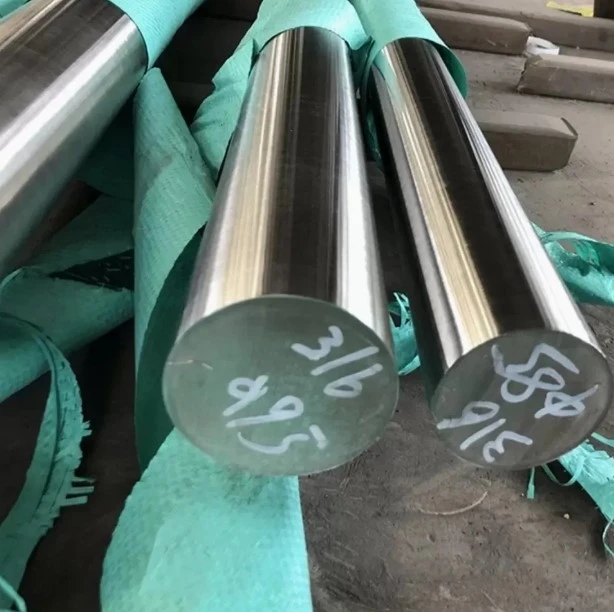
| Cold Drawn Bar | Smooth and bright surface with high dimensional accuracy and improved straightness | ISO h8–h10 Ra 0.8–1.6 μm |
Automatic lathe machining parts, fasteners, precision mechanical components, and pneumatic parts |
| Centerless Ground Bar | Mirror-like smooth surface with extremely high precision and excellent finish quality | ISO h6–h8 Ra 0.2–0.4 μm |
Pump shafts, precision valve stems, medical equipment components, and high-accuracy mechanical parts |
| Polished / Bright Mirror Bar | Highly reflective surface with excellent appearance (typically 240#–600# polishing) | ISO h7–h9 Ra ≤0.1 μm |
Sanitary equipment shafts, architectural decoration, marine hardware, and high-cleanliness applications |

To provide more targeted information, could you please specify:
What is the specific product form or shape you are using (e.g., round bar, hexagonal bar, angle steel, etc.)?
What kind of operating environment or temperature will the material be exposed to?
Send Inquiry