

What is the difference between 1.4057 QT800 and QT900?
Oct 28, 2026
Leave a message
If you are sourcing 1.4057 stainless steel round bars for the manufacture of shafts, pump components, valve stems, or other load-bearing parts, choosing between the QT800 and QT900 tempers will affect the material's strength, toughness, and machinability, as well as the reliability of the final components.
What is 1.4057 QT800 stainless steel bar?
1.4057 QT800 is a martensitic stainless steel that has undergone a quench-and-temper (QT) heat treatment. According to the property tables in the reference standard EN 10088-3, its tensile strength is specified in the range of 800–950 MPa. It is widely used for components such as pump shafts, valve stems, spindles, piston rods, and various general mechanical parts subject to mechanical loading.
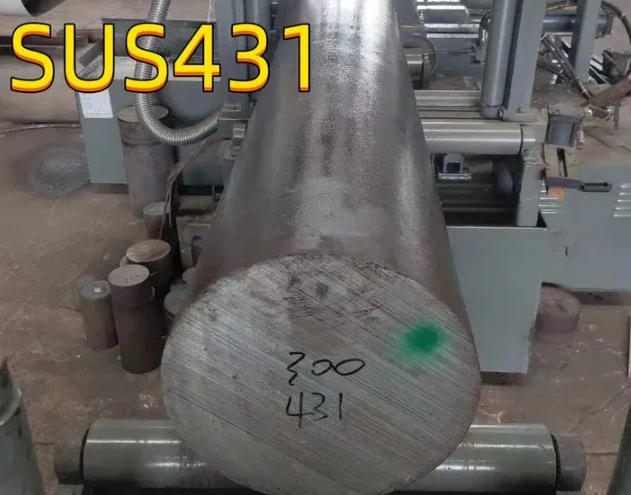
Based on the reference standard, the typical properties for 1.4057 QT800 are as follows:
Tensile strength: 800–950 MPa
0.2% proof strength (minimum): 600 MPa
Elongation after fracture (minimum): 14% for product diameters up to 60 mm; 12% for diameters greater than 60 mm and up to 160 mm
Longitudinal Charpy impact energy (minimum): 25 J for product diameters up to 60 mm; 20 J for diameters greater than 60 mm and up to 160 mm
The values above are for reference only and do not constitute guaranteed performance specifications for all diameter ranges or supply conditions. Before procurement, please verify the applicable product standards and consult the actual Material Test Certificate (MTC).
What is 1.4057 QT900 stainless steel bar?
1.4057 QT900 refers to a specific condition of this stainless steel grade, achieved through a quench-and-temper (QT) heat treatment process to attain higher strength. According to the EN 10088-3 standard, the QT900 condition features a tensile strength range of 900–1,050 MPa and a 0.2% proof strength (yield strength) of at least 700 MPa. It is suitable for applications such as shafts, spindles, valve components, and other parts that require high resistance to yielding or the ability to withstand greater mechanical loads.
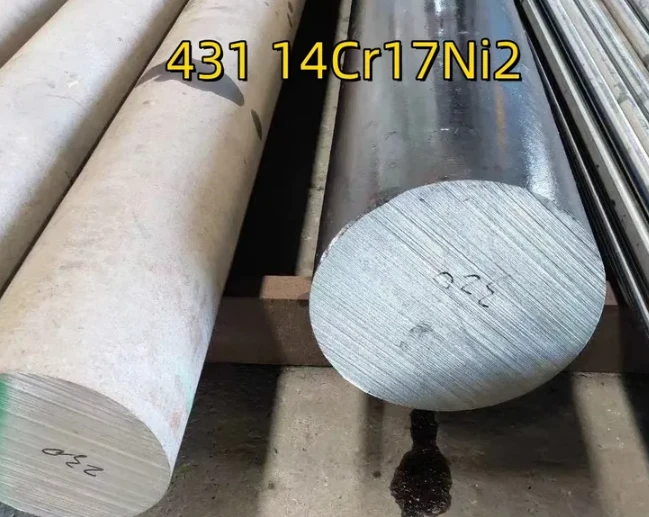
Typical reference performance specifications include:
Tensile strength: 900–1,050 MPa
0.2% proof strength (minimum): 700 MPa
Minimum elongation: 12% for product diameters up to 60 mm; 10% for diameters greater than 60 mm and up to 160 mm
Minimum longitudinal Charpy impact energy: 16 J for product diameters up to 60 mm; 15 J for diameters greater than 60 mm and up to 160 mm
For products with larger dimensions, performance requirements must be confirmed with the supplier and explicitly specified in the purchase order.
1.4057 QT800 vs. QT900: Key Differences
| Property | 1.4057 QT800 | 1.4057 QT900 |
|---|---|---|
| Material designation | EN 1.4057 / X17CrNi16-2 | EN 1.4057 / X17CrNi16-2 |
| Heat-treatment condition | Quenched and tempered | Quenched and tempered |
| Tensile strength, Rm | 800–950 MPa | 900–1,050 MPa |
| Minimum 0.2% proof strength, Rp0.2 | 600 MPa | 700 MPa |
| Minimum elongation, A5, diameter ≤60 mm | 14% | 12% |
| Minimum elongation, A5, diameter >60–160 mm | 12% | 10% |
| Minimum longitudinal Charpy impact energy, diameter ≤60 mm | 25 J | 16 J |
| Minimum longitudinal Charpy impact energy, diameter >60–160 mm | 20 J | 15 J |
| Typical application considerations | General loaded shafts, pump parts, valve stems | Components requiring higher strength, subject to toughness verification |
1.4057 QT800 vs. QT900:Heat Treatment
Both conditions use hardening followed by tempering, but the tempering schedule differs to achieve the required mechanical properties.
| Heat-Treatment Stage | QT800 | QT900 |
|---|---|---|
| Typical hardening temperature | Approximately 950–1,050°C | Approximately 950–1,050°C |
| Typical hardening cooling | Air or oil, depending on the approved process | Air or oil, depending on the approved process |
| Typical tempering schedule | 750–800°C followed by a second temper at 650–700°C in the referenced guidance | 600–650°C in the referenced guidance |
| Primary objective | Achieve the QT800 strength range with the specified ductility and toughness | Achieve the higher QT900 strength range |
Is QT900 stronger than QT800?
Yes. Under the referenced EN 10088-3 property table, QT900 has a tensile strength range of 900–1,050 MPa and a minimum 0.2% proof strength of 700 MPa, compared with 800–950 MPa and 600 MPa for QT800.
Is QT800 tougher than QT900?
The cited EN 10088-3 table specifies higher minimum longitudinal Charpy impact energy for QT800. For diameters up to 60 mm, the listed minimum is 25 J for QT800 and 16 J for QT900. Actual toughness requirements vary by specification and supplier, so confirm the test temperature, test direction, and acceptance value.
Is 1.4057 QT900 more difficult to machine than QT800?
Yes, slightly. Because 1.4057 QT900 has higher yield strength and hardness, it generates slightly higher cutting forces and tool wear during turning, milling, or drilling compared to the softer, more ductile QT800 state.
Supplier of 1.4057 QT800 and QT900 Stainless Steel Bars
GNEE supplies stainless steel round bars in grade 1.4057 (in QT800 and QT900 conditions), suitable for industrial applications such as pump shafts, valve stems, spindles, and various mechanical components. We can provide specifications tailored to your requirements regarding diameter, length, surface finish, and dimensional tolerances. Available processing methods include rolling, peeling, turning, or forging (to be confirmed based on specific needs).

GNEE provides Material Test Certificates (MTC), heat number traceability, and dimensional inspection, while ensuring compliance with mutually agreed-upon mechanical property testing requirements. Upon request, we can also supply EN 10204 3.1 quality documentation or facilitate third-party inspections.

Please let us know the required steel grade, QT condition, dimensions (diameter × length), quantity, and delivery destination. We will provide a customized quotation and confirm the availability of the requested specifications.
Send Inquiry