

304 Stainless Steel Coil: Grades, Surfaces, Dimensions and Inspection
Feb 09, 2026
Leave a message
What Is 304 Stainless Steel Coil?
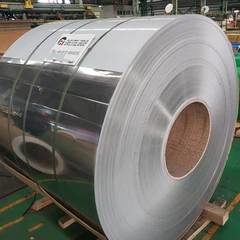
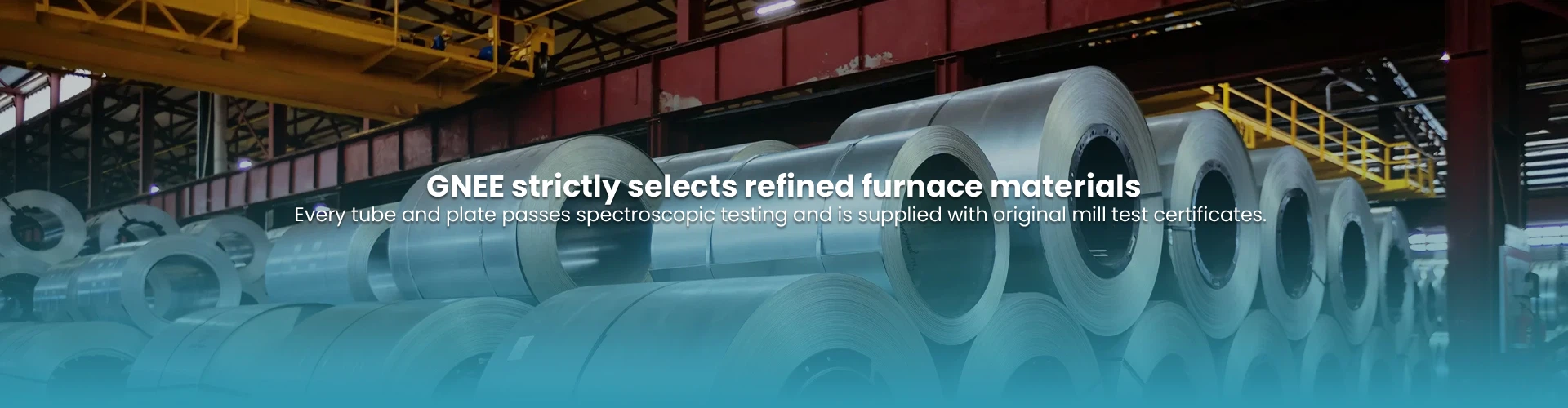
304 stainless steel coil is cold-rolled or hot-rolled strip supplied in coil form for subsequent slitting, blanking, stamping and roll-forming operations. The material is the classic 18-8 austenitic grade, standardized as UNS S30400 under ASTM A240, SUS304 under JIS G4304 (hot-rolled) and JIS G4305 (cold-rolled), and 06Cr19Ni10 under GB/T 3280. After rolling, the coil is solution annealed, pickled and skin-passed, which restores the corrosion-resistant passive film and produces the flat, bright surface required by downstream processors.
Chemical Composition and Mechanical Properties
Chemical composition (weight percent)
| Element | ASTM A240 UNS S30400 | JIS G4305 SUS304 |
|---|---|---|
| Carbon (C) | ≤ 0.08 | ≤ 0.08 |
| Silicon (Si) | ≤ 0.75 | ≤ 1.00 |
| Manganese (Mn) | ≤ 2.00 | ≤ 2.00 |
| Phosphorus (P) | ≤ 0.045 | ≤ 0.045 |
| Sulfur (S) | ≤ 0.030 | ≤ 0.030 |
| Chromium (Cr) | 18.0 - 20.0 | 18.00 - 20.00 |
| Nickel (Ni) | 8.0 - 10.5 | 8.00 - 10.50 |
Mechanical properties in the annealed condition (per JIS G4305)
| Property | Value |
|---|---|
| Tensile strength, min (MPa) | 520 |
| Yield strength 0.2%, min (MPa) | 205 |
| Elongation, min (%) | 40 |
| Hardness, max (HB) | 187 |
Typical Dimensions and Tolerances
304 coil is commercially available in a wide range of sizes. Cold-rolled coil is commonly supplied in thicknesses from 0.3 mm up to 3.0 mm, while hot-rolled coil covers the heavier range above 3.0 mm. The most common widths are 1000 mm, 1219 mm, 1250 mm and 1500 mm, and coils are often slit to narrower widths for specific stamping and forming lines. Dimensional tolerances - thickness, width, camber and flatness - are governed by the applicable standard: ASTM A480 for products ordered to ASTM A240, and JIS G4304/G4305 for products ordered to the Japanese standards. Coil weight and inner and outer diameters are commercial parameters agreed between buyer and mill and are confirmed on the mill certificate.
Surface Finishes: 2B, BA and Beyond
Surface designation follows the standard definitions used in ASTM A480 and JIS G4305. The most common finish for 304 coil is 2B: cold rolled, heat treated, pickled and finally skin-passed on a temper mill, giving a smooth, uniform, moderately reflective surface. BA (bright annealed) coil is annealed in a protective atmosphere without pickling, producing a mirror-like surface used in decorative and kitchenware applications. For brushed or satin textures, coil can be delivered in No. 4 or other mechanically finished surfaces on special order. The surface condition must be matched to the end use: food-contact and medical parts normally specify 2B or BA, while structural applications often accept 2D or No. 1.
Inspection, Certification and Packaging
Each coil delivered against a mill order is accompanied by a mill test certificate, typically issued to EN 10204 type 3.1, which states the heat number, the chemical analysis of the cast, the mechanical test results and the applicable standard. Buyers should verify that the certificate references the correct standard and grade, and that the test values meet the specified minima. For food-contact applications, the material should also comply with GB 4806.9-2016.
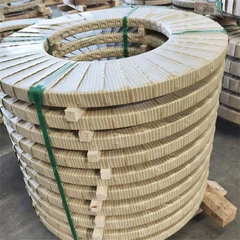
Export packaging follows established commercial practice rather than any single standard: coils are wrapped in moisture-resistant paper or polyethylene, protected at the edges and bore, banded on steel or wooden pallets or in steel frames, and containerized with desiccant where needed. Proper packaging prevents edge damage, scratching and condensation staining during sea transport, which is the most common source of surface claims on arrival.
FAQ
What thickness and width ranges are typical for 304 coil?
Cold-rolled coil is commonly supplied from 0.3 mm to 3.0 mm thick; hot-rolled coil covers thicker gauges. Common widths are 1000 mm, 1219 mm, 1250 mm and 1500 mm, with slitting available for narrower strips.
What is the difference between 2B and BA surfaces?
2B is cold rolled, annealed, pickled and skin-passed, with a smooth satin-like finish. BA is bright annealed in a protective atmosphere, giving a reflective, mirror-like finish. BA is preferred for decorative and kitchenware uses.
Is 304 coil food grade?
Grade 304 is widely used for food-contact surfaces, and compliance with GB 4806.9-2016 should be verified for food applications. The surface finish and cleanliness are as important as the grade.
What documents are supplied with 304 coil?
A mill test certificate per EN 10204 type 3.1, stating heat number, chemical composition and mechanical properties, is the standard document accompanying the material.
Why do coils arrive with a protective film?
A self-adhesive PE film is applied to the 2B or BA surface to prevent scratches and contamination during handling and forming. The film should be removed before heat treatment or welding.
What is the difference between 304 and 304L coil?
304L (UNS S30403) limits carbon to 0.030% to improve weld-zone corrosion resistance. For heavily welded fabrication without post-weld annealing, 304L is often specified instead of 304.
Send Inquiry