







What Are The Equivalent Materials For Inox 1.4301?
Oct 28, 2026
Leave a message
If you are sourcing stainless steel sheet, plate, coil, pipe or bar and your drawing specifies Inox 1.4301, the most commonly referenced equivalent is AISI 304 stainless steel, also identified as UNS S30400 in the American system and SUS304 in the Japanese JIS system.
In the European EN system, 1.4301 is designated X5CrNi18-10. It is an austenitic chromium-nickel stainless steel containing approximately 17.5–19.5% chromium and 8.0–10.5% nickel under the relevant EN composition requirements. Its combination of general corrosion resistance, formability, weldability and availability makes it widely used in food-processing equipment, architectural components, tanks and general industrial fabrication.
Is Inox 1.4301 the same as AISI 304?
They are commonly regarded as corresponding grades. EN 1.4301 is designated X5CrNi18-10, while AISI 304 is commonly identified as UNS S30400. However, their respective standards can differ in chemical limits, mechanical acceptance requirements and product specifications. Confirm compliance against the standard stated in the purchase order.
inox 1.4301 Equivalent Materials Table
|
Standard / Region |
Material Designation |
|---|---|
|
European EN |
1.4301 |
|
European EN |
X5CrNi18-10 |
|
American AISI |
AISI 304 |
|
American UNS |
S30400 |
|
Japanese JIS |
SUS304 |
|
Chinese GB |
06Cr19Ni10 |
|
German industry |
1.4301 / X5CrNi18-10 |
Inox 1.4301 Chemical Composition
The following table provides representative composition limits for 1.4301 under EN requirements. Exact limits, particularly for sulfur and nitrogen, can vary with the applicable product standard and product form.
|
Chemical Element |
Representative Content (wt.%) |
|---|---|
|
Carbon |
≤ 0.07 |
|
Chromium |
17.5–19.5 |
|
Nickel |
8.0–10.5 |
|
Manganese |
≤ 2.00 |
|
Silicon |
≤ 1.00 |
|
Phosphorus |
≤ 0.045 |
|
Sulfur |
Product-standard dependent |
|
Nitrogen |
Product-standard dependent |
Reference basis: EN 10088 material data. The final acceptance limits must be checked against the specified standard, product type and edition.
Inox 1.4301 Mechanical Properties and Physical Data
|
Property |
Typical / Specified Value |
Unit |
|---|---|---|
|
0.2% proof strength, Rp0.2 |
Approximately 210–230 minimum, depending on product condition |
MPa |
|
Tensile strength, Rm |
Approximately 520–750 |
MPa |
|
Elongation at fracture |
Approximately 45 minimum for relevant flat-product requirements |
% |
|
Brinell hardness |
≤ 215 |
HB |
|
Density |
Approximately 7.9 |
g/cm³ |
|
Young's modulus |
Approximately 200 |
GPa |
|
Thermal conductivity near 20°C |
Approximately 15 |
W/(m·K) |
Is 1.4301 Stainless Steel Magnetic?
Annealed 1.4301 is generally non-magnetic or only weakly magnetic. However, cold rolling, bending, drawing and other cold-working processes can produce measurable magnetic response.
What are the welding procedures for 1.4301?
1.4301 (X5CrNi18-10) supports TIG, MIG, MMA and laser welding without preheating. ER308L / E308L-16 is the preferred filler metal; interpass temperature shall be controlled below 150 °C with low heat input. Argon root purging is required for hygienic piping. Post-weld pickling and passivation removes heat tint, while long weldments over 6 mm may need solution annealing to avoid intergranular sensitization at 425–850 °C.
How does 1.4301 resist corrosion in acids?
1.4301 relies on a self-healing chromium oxide passive film (17.5–19.5 wt% Cr). It performs well in oxidizing nitric acid up to 65 wt% below 60 °C and 86 wt% phosphoric acid below 50 °C with corrosion rate under 0.13 mm/year. It has limited tolerance to non-oxidizing dilute sulfuric acid and poor performance in hydrochloric acid; welded zones without passivation show higher susceptibility to grain boundary attack.
What is the max service temperature for 1.4301?
1.4301 delivers stable oxidation resistance at a continuous maximum service temperature of 870 °C in air, while intermittent exposure can reach 925 °C. Its allowable mechanical stress drops rapidly above 500 °C. Long dwell between 425–850 °C triggers chromium carbide precipitation, causing sensitization; pressure-containing designs must follow ASME code derating and avoid prolonged holding inside this temperature window.
What is the difference between 1.4301 and 1.4307?
The main difference is carbon content. EN 1.4301 permits up to 0.07% carbon, while 1.4307 has a maximum of 0.03% under the relevant standard. The lower carbon content of 1.4307 makes it an important option for welded components where intergranular corrosion is a concern.
Inox 1.4301 Applications
Inox 1.4301 is widely used because it combines general-purpose corrosion resistance with good fabrication characteristics.
|
Product Form |
Common Finish / Specification Considerations |
Typical Applications |
|---|---|---|
|
Stainless steel sheet |
2B, BA, No. 4; thickness and flatness requirements |
Kitchen equipment, appliances, enclosures |
|
Stainless steel plate |
Thickness tolerance, surface condition and applicable plate standard |
Tanks, structural components, industrial fabrication |
|
Stainless steel coil |
Cold-rolled or hot-rolled condition, width, thickness and coil ID |
Stamping, roll forming and fabrication |
|
Stainless steel pipe and tube |
Seamless or welded; OD, wall thickness and manufacturing standard |
Fluid transfer, equipment and industrial piping |
|
Stainless steel bar |
Round, flat or other specified sections; dimensional tolerances |
Shafts, machined components and fasteners |
|
Stainless steel fittings |
Grade, dimensions, connection type and applicable fitting standard |
Piping systems and industrial assemblies |
If you have a specific project in mind, tell me:
• What environment the part will face (indoors, outdoors, chemicals, high heat)?
• How it will be manufactured (welded, bent, machined)?
I can let you know if 1.4301 is the right choice or if you should look at 1.4307 (304L) or 1.4404 (316).
Inox 1.4301 / AISI 304 Supplier
GNEE Stainless Steel provides procurement support, assisting buyers in identifying the appropriate steel grade, standards, product dimensions, and inspection requirements tailored to their specific application needs. Based on confirmed product specifications and order requirements, we offer 1.4301 / 304 stainless steel in various forms, including sheets, coils, pipes (tubing), and bars.
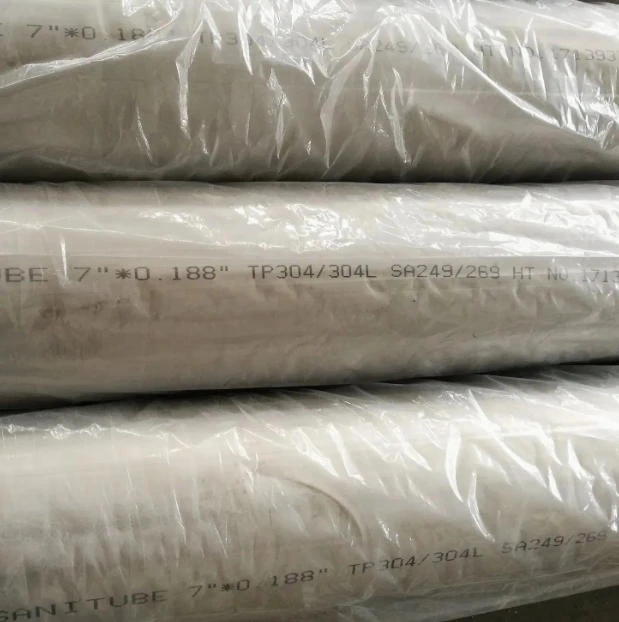
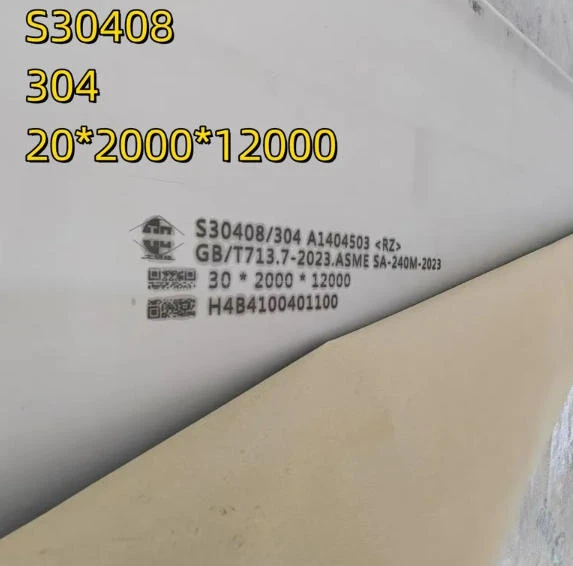
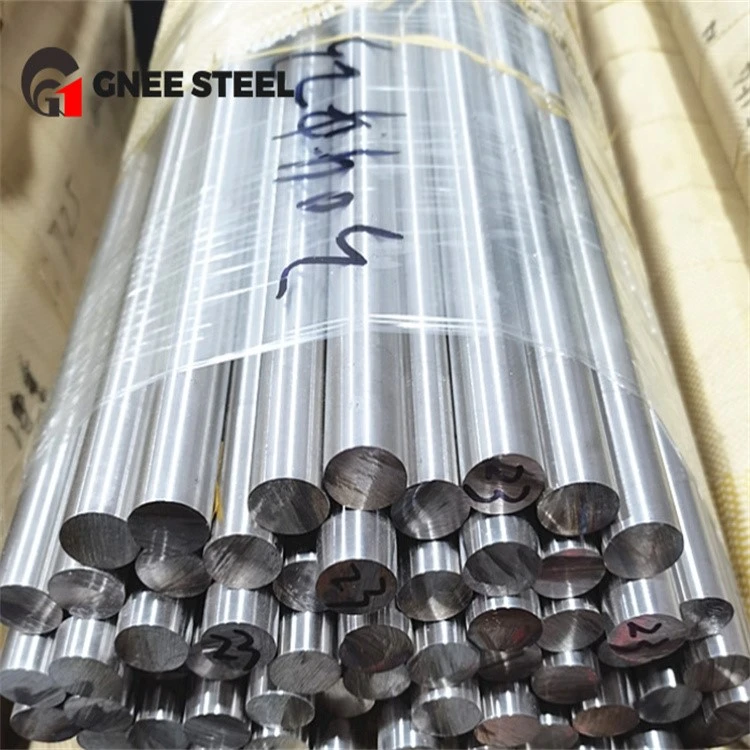
For project quotations, buyers can specify thickness, width, length or pipe dimensions, surface finish, quantity, delivery destination and required documentation. Material test certificates (MTCs), including EN 10204 3.1 documentation where specified and applicable, can be arranged according to the agreed order requirements. PMI and third-party inspection can also be discussed before order confirmation.
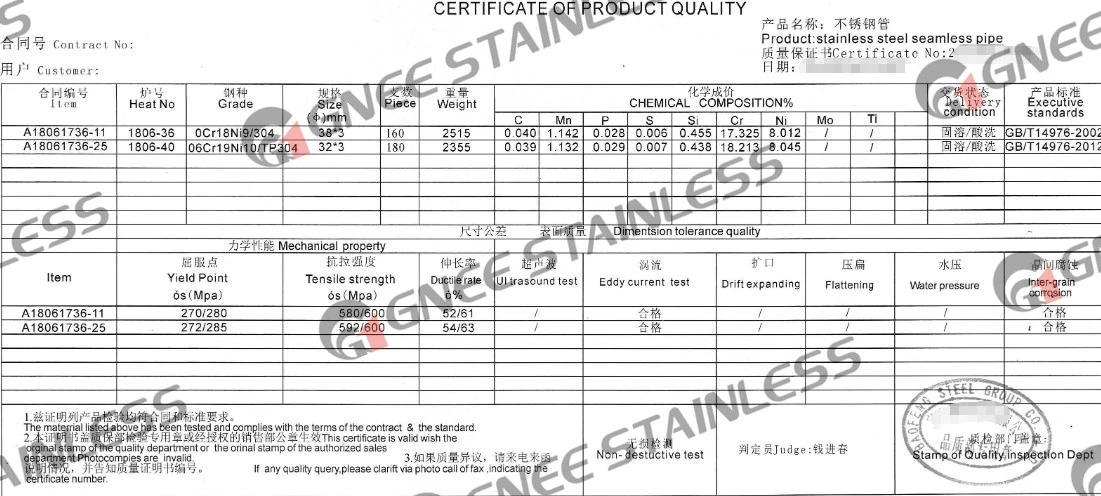
Please send your specifications or technical drawings to GNEE so that we can confirm the appropriate materials, available product forms, required documentation, and quotation terms.
Send Inquiry