







What is 1.4436 Stainless Steel?
Apr 02, 2026
Leave a message
1.4436 stainless steel, commonly known as 316 or UNS S31600, is a molybdenum-alloyed austenitic stainless steel that offers superior corrosion resistance compared to 304, particularly in chloride-containing environments. The addition of 2.5-3.0% molybdenum significantly enhances its resistance to pitting and crevice corrosion, making it the standard choice for applications where exposure to chlorides, industrial chemicals, or saline environments is expected. This grade features higher molybdenum content than standard 316, providing enhanced corrosion resistance for demanding applications.
This molybdenum-enhanced grade is standardized across all major international systems.
| Standard | Equivalent Grade |
|---|---|
| EN (Europe) | 1.4436 |
| ASTM/AISI (USA) | 316, UNS S31600 |
| JIS (Japan) | SUS316 |
| KS (Korea) | STS316 |
| Common Name | 316 |
Higher molybdenum content is the key feature that provides enhanced corrosion resistance.
| Element | C | Si | Mn | P | S | Cr | Ni | Mo |
|---|---|---|---|---|---|---|---|---|
| Content (%) | ≤ 0.07 | ≤ 1.0 | ≤ 2.0 | ≤ 0.045 | ≤ 0.03 | 16.5 - 18.5 | 10.5 - 13.0 | 2.5 - 3.0 |
It offers good strength and excellent ductility, typical of austenitic stainless steels.
| Property | Yield Strength (Rp0.2) | Tensile Strength (Rm) | Elongation (A) | Hardness (HB) |
|---|---|---|---|---|
| Typical Value | ≥ 205 MPa | 500 - 700 MPa | ≥ 40% | ≤ 215 |
Key Characteristics and Applications of 1.4436 / 316
Superior Corrosion Resistance: The higher molybdenum content (2.5-3.0%) provides significantly better resistance to pitting and crevice corrosion in chloride-containing environments (e.g., seawater, de-icing salts, brine) compared to standard 316 with lower molybdenum (2.0-2.5%).
Good Acid Resistance: Offers improved resistance to a wide range of acids, including sulfuric, phosphoric, and acetic acids, making it suitable for chemical processing applications.
Excellent Formability and Weldability: Maintains the good forming and welding characteristics of austenitic stainless steels, though 316L is preferred for heavy welded sections.
Excellent Toughness: Maintains excellent impact resistance down to cryogenic temperatures, suitable for low-temperature applications.
Primary Applications:
Marine & Coastal: Boat fittings, underwater components, offshore platforms, and architectural cladding in salt-laden atmospheres.
Chemical Processing: Tanks, pipes, valves, pumps, and reactors for handling corrosive chemicals.
Pharmaceutical & Food: Equipment requiring high cleanliness, sterilization resistance, and resistance to cleaning agents.
Pulp & Paper: Process equipment in bleaching and chemical recovery areas.
Desalination: Components in seawater desalination plants.
Textile Industry: Dyeing and finishing equipment.
How does 1.4436 differ from other 316 grades like 1.4401?
The main difference lies in the molybdenum content. 1.4436 has a higher molybdenum range (2.5-3.0%) compared to 1.4401 (2.0-2.5%). This higher molybdenum content provides enhanced resistance to pitting and crevice corrosion in chloride environments, making 1.4436 particularly suitable for more aggressive marine and chemical applications. The nickel content is also slightly higher (10.5-13.0% vs. 10.0-13.0%). 1.4436 is often specified for offshore, marine, and desalination applications where maximum corrosion resistance is required. For standard applications with moderate chloride exposure, 1.4401 is usually sufficient.
What is the primary advantage of 316 (1.4436) over 304 (1.4301)?
The main advantage is the addition of 2.5-3.0% molybdenum, which dramatically improves resistance to localized corrosion-especially pitting and crevice corrosion-in environments containing chloride ions. This makes 316 the preferred choice for applications in marine environments, coastal areas, chemical processing plants using chlorides, and anywhere exposure to salt, brine, de-icing salts, or halogen compounds is expected. 316 also offers improved strength at elevated temperatures and better resistance to reducing acids. While 304 is suitable for general-purpose applications, 316 offers extended service life in more aggressive conditions.
What are the welding considerations for 1.4436?
316 has good weldability using all common methods including TIG, MIG, SMAW, and SAW. Key considerations include:
Matching filler metals (ER316 for TIG/MIG, E316-16 for SMAW) are recommended
For heavy welded sections or applications requiring maximum corrosion resistance, 316L filler may be preferred
Low carbon versions (316L) eliminate sensitization risk without post-weld heat treatment
Recommended heat input: 0.5-2.0 kJ/mm
Interpass temperature should be kept below 150°C
Post-weld cleaning and pickling/passivation are recommended for optimum corrosion resistance
Looking for a Reliable Supplier of 1.4436 / 316 Stainless Steel?
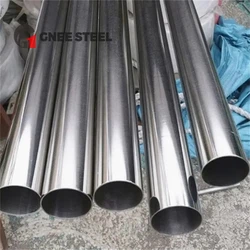
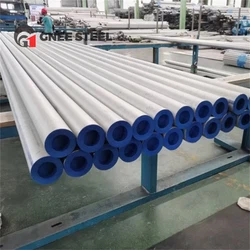
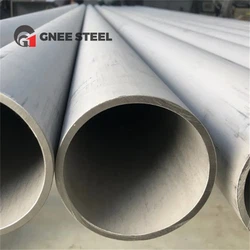
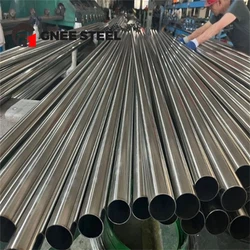
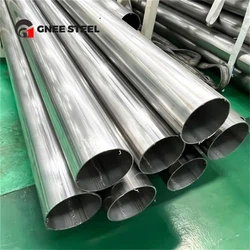
GNEE Steel supplies premium 316 (1.4436) stainless steel in all standard forms-plate, sheet, coil, pipe, bar, wire, and fittings-tailored for corrosive environments. This grade features higher molybdenum content for enhanced corrosion resistance. We provide full material certification (EN 10204 3.1) and comprehensive processing services including cutting, bending, forming, and surface finishing. If you have any requirements, please feel free to contact us.


Send Inquiry