







What is 1.4571 Stainless Steel?
Apr 02, 2026
Leave a message
1.4571 stainless steel, commonly known as 316Ti or UNS S31635, is a titanium-stabilized version of the standard 316 molybdenum-alloyed austenitic stainless steel. The addition of titanium enhances resistance to intergranular corrosion after welding or exposure to high temperatures, combining the excellent corrosion resistance of 316 with the stabilization benefits of titanium. This makes it ideal for welded components in chemical, pharmaceutical, and high-temperature applications where post-weld heat treatment is impractical.
This stabilized molybdenum-alloyed grade is standardized under key international systems.
| Standard | Equivalent Grade |
|---|---|
| EN (Europe) | 1.4571 |
| ASTM/AISI (USA) | 316Ti, UNS S31635 |
| JIS (Japan) | SUS316Ti |
| KS (Korea) | STS316Ti |
| Common Name | 316Ti |
Titanium is added to bind with carbon and prevent chromium depletion at grain boundaries, while molybdenum enhances pitting resistance.
| Element | C | Si | Mn | P | S | Cr | Ni | Mo | Ti |
|---|---|---|---|---|---|---|---|---|---|
| Content (%) | ≤ 0.08 | ≤ 1.0 | ≤ 2.0 | ≤ 0.045 | ≤ 0.03 | 16.5 - 18.5 | 10.5 - 13.5 | 2.0 - 2.5 | ≥ 5xC |
It maintains the good mechanical properties of the 316 family with excellent corrosion resistance.
| Property | Yield Strength (Rp0.2) | Tensile Strength (Rm) | Elongation (A) | Hardness (HB) |
|---|---|---|---|---|
| Typical Value | ≥ 200 MPa | 500 - 700 MPa | ≥ 40% | ≤ 215 |
Key Characteristics and Applications of 1.4571 / 316Ti
Intergranular Corrosion Resistance: Titanium prevents chromium carbide formation at grain boundaries during exposure to temperatures between 450-850°C, maintaining corrosion resistance in welded structures.
Enhanced Pitting Resistance: The molybdenum content (2-2.5%) provides superior resistance to chloride-induced pitting and crevice corrosion compared to non-molybdenum grades.
Good High-Temperature Performance: Suitable for intermittent service up to about 850°C and continuous service to around 750°C with good oxidation resistance.
Excellent Formability and Weldability: Can be welded by all common methods without the need for post-weld heat treatment, making it ideal for heavy welded fabrications.
Primary Applications:
Chemical & Petrochemical: Welded vessels, heat exchangers, and piping systems handling corrosive chemicals at elevated temperatures.
Pharmaceutical: Equipment that undergoes frequent heat sterilization and requires high purity.
Marine & Coastal: Components exposed to seawater or salt-laden atmospheres where welding is required.
Power Generation: Boiler components, superheater parts, and feedwater heaters.
Automotive: Exhaust systems and components exposed to high temperatures.
Food Processing: Equipment requiring sterilization and corrosion resistance.
What is the main advantage of using 316Ti (1.4571) over standard 316 (1.4401) for welded applications?
The primary advantage is its stabilization against sensitization during welding. Standard 316 can experience chromium carbide precipitation in the heat-affected zone during welding, potentially leading to intergranular corrosion. The titanium in 316Ti forms stable carbides, preventing chromium depletion and maintaining corrosion resistance without requiring post-weld heat treatment. This makes 316Ti the preferred choice for heavy welded sections and components that will operate in the sensitization temperature range (450-850°C) or in corrosive environments after welding.
Is 316Ti stainless steel suitable for high-chloride environments like seawater?
316Ti offers good resistance to chloride attack, significantly better than 304 grades, due to its molybdenum content. However, for continuous immersion in seawater or highly aggressive chloride environments at elevated temperatures, more highly alloyed materials like super duplex (2507) or super austenitic (904L, 6% Mo grades) may be recommended. 316Ti performs well in splash zones, coastal atmospheres, and mildly aggressive chloride conditions, especially in welded applications where its stabilization provides additional protection. For fully immersed seawater applications at ambient temperatures, 316Ti can be used but with careful design to avoid crevices.
What are the welding considerations for 316Ti?
316Ti has excellent weldability using all common methods including TIG, MIG, SMAW, and SAW. Key considerations include:
Matching filler metals (ER316Ti or ER316L) are recommended
No post-weld heat treatment is required due to titanium stabilization
Recommended heat input: 0.5-2.0 kJ/mm
Interpass temperature should be kept below 150°C
Shielding gas (argon or argon with 2-5% nitrogen) protects the weld pool
Post-weld cleaning and pickling/passivation are recommended for optimum corrosion resistance
Looking for a Reliable Supplier of 1.4571 / 316Ti Stainless Steel?
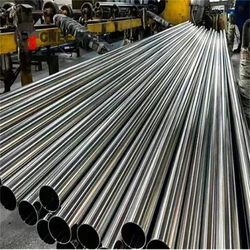
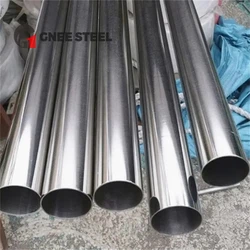
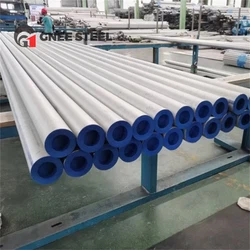
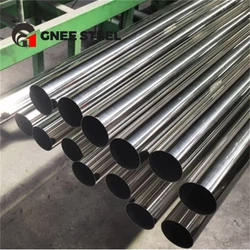
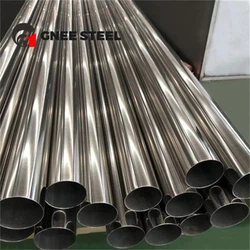
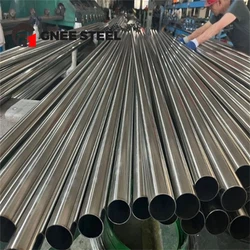
GNEE Steel supplies high-quality 316Ti (1.4571) stainless steel in plate, sheet, pipe, tube, bar, and fitting forms, ideal for welded applications requiring enhanced corrosion resistance. We provide full material certification (EN 10204 3.1) and comprehensive processing services including cutting, bending, forming, and welding. If you have any requirements, please feel free to contact us.

Send Inquiry