







What are the properties of grade 1.4462 stainless steel?
Mar 17, 2026
Leave a message
Introduction to 1.4462 Stainless Steel
1.4462 (Duplex 2205 / UNS S32205) duplex stainless steel has a well‑balanced austenitic‑ferritic dual‑phase microstructure and ranks among the most widely‑used standard duplex stainless steels. Its yield strength is approximately twice that of 316L austenitic stainless steel. With a PREN value ranging from 34 to 36, it exhibits excellent resistance to pitting corrosion, crevice corrosion and chloride‑induced stress‑corrosion cracking. Compared with 316L, it delivers superior overall corrosion resistance in medium‑to‑high corrosive chloride‑containing service environments.
Specification of 1.4462 stainless steel
Equivalent Grades of 1.4462 stainless steel
| Standard | Grade |
|---|---|
| EN European | 1.4462 / X2CrNiMoN22‑5‑3 |
| ASTM / UNS | 2205 / UNS S32205 |
| JIS | SUS329J3L |
| Chinese GB | 022Cr22Ni5Mo3N |
| Common Name | Duplex 2205 |
Note: UNS S31803 is the old‑version designation; S32205 is the updated modern specification.
Chemical Composition (mass fraction %, EN 10088‑3) of 1.4462 stainless steel
| Element | C | Si | Mn | P | S | Cr | Ni | Mo | N |
|---|---|---|---|---|---|---|---|---|---|
| Content | ≤0.030 | ≤1.00 | ≤2.00 | ≤0.035 | ≤0.015 | 21.0‑23.0 | 4.5‑6.5 | 2.5‑3.5 | 0.10‑0.22 |
PREN ≈34‑38. Ultra‑low carbon avoids intergranular corrosion risk after welding. Balanced austenite‑ferrite dual‑phase structure; nitrogen enhances both strength and pitting‑corrosion resistance. Corrosion performance far exceeds 316L in chloride‑containing environments.
Mechanical Properties of 1.4462 stainless steel
| Property | Value |
|---|---|
| Tensile Strength Rm | 640‑840 MPa |
| 0.2% Offset Yield Strength Rp0.2 | ≥460 MPa |
| Elongation A | ≥25 % |
| Brinell Hardness HBW | ≤290 |
Yield strength is roughly twice that of 316L austenitic steel, enabling thinner‑wall design for weight‑saving. Not hardenable by heat treatment. Avoid long‑term service between 300‑950 ℃ to prevent sigma‑phase embrittlement. Solution annealing range: 1020‑1100 ℃ followed by rapid water quenching.
Physical Properties (20 ℃) of 1.4462 stainless steel
| Item | Parameter |
|---|---|
| Density | 7.80 g/cm³ |
| Modulus of Elasticity | 200 GPa |
| Coefficient of Linear Expansion | 13.7×10⁻⁶ /℃ (20‑100℃) |
| Thermal Conductivity | 15.0 W/(m·K) |
| Melting range | 1380‑1430 ℃ |
| Microstructure | 50/50 austenitic‑ferritic duplex, magnetic |
| Max continuous service temperature | ≤280 ℃ |
Key Characteristics of 1.4462 / Duplex 2205
What are the mechanical advantages of 1.4462 duplex stainless steel?
1.4462 features high strength and excellent fatigue resistance. The unique duplex microstructure delivers superior yield strength, enabling thinner and lighter structural components. This effectively reduces overall weight and lowers material costs for engineering projects.
How is 1.4462 corrosion resistance in harsh chloride environments?
1.4462 provides outstanding comprehensive corrosion resistance. With a typical PREN value above 34, it exhibits excellent resistance to pitting corrosion, crevice corrosion, and chloride-induced stress corrosion cracking (SCC), ensuring stable service in high-chloride corrosive conditions.
Does 1.4462 have reliable welding performance?
Yes, 1.4462 has good weldability and supports conventional welding techniques. During welding, only reasonable process control is required to maintain the balanced ferrite-austenite microstructure of the weld seam and heat-affected zone, ensuring stable post-weld performance.
What advantages does 1.4462 have for heat exchange applications?
1.4462 owns excellent thermal conductivity. Compared with traditional austenitic stainless steels, it has higher heat transfer efficiency, which is highly suitable for heat exchangers and thermal conductivity industrial equipment.
Applications of 1.4462 / Duplex 2205
1.Oil & Gas: Pressure vessels, pipelines, flowlines, heat exchangers, and offshore platform components.
2.Chemical & Petrochemical: Tanks, reactors, columns, and piping systems handling corrosive media including chlorides and acids.
3.Pulp & Paper Industry: Digesters, bleaching equipment, and handling systems for chloride-containing liquors.
4.Marine & Offshore: Seawater piping systems, propeller shafts, desalination plants, and marine hardware.
5.Pollution Control: FGD scrubbers, ducting, and chimney liners.
6.Structural Engineering: Bridges, storage tanks, and architectural features in corrosive environments.
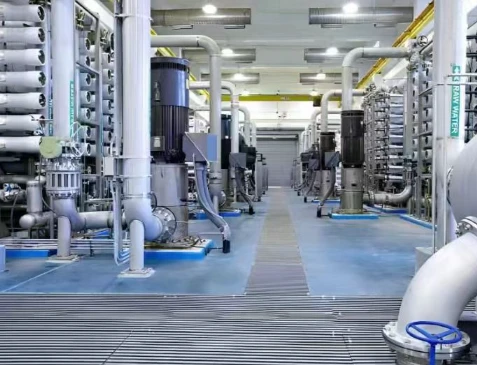
Seawater desalination piping

offshore oil‑gas platforms

high‑pressure process piping
Supplier Introduction of 1.4462 stainless steel

1.4462 stainless steel tubes

1.4462 stainless steel plates

1.4462 stainless steel coils
We support sample supply, trial orders and custom deep‑processing services. Should you require project‑related technical support, material selection confirmation or project quotation, please feel free to contact us, and we will provide you with professional solutions.
FAQ
How does Duplex 2205 (1.4462) compare to 316L (1.4404) in terms of performance?
Duplex 2205 offers approximately twice the yield strength of 316L (450 MPa vs. 200 MPa), providing significant weight-saving potential in structural designs and allowing for thinner wall sections in pressure-containing equipment. It also demonstrates superior resistance to stress corrosion cracking (SCC) in chloride environments, where 316L may fail. With a PREN of 34-35 vs. 316L's PREN of 24-26, 2205 offers better pitting and crevice corrosion resistance, making it suitable for more aggressive conditions. However, 316L has better formability and is more readily available in thin sections. The choice depends on specific application requirements, with 2205 selected where its higher strength and corrosion resistance justify the cost premium.
What are the key considerations when welding 1.4462 duplex stainless steel?
The primary goal is to preserve the balanced 50/50 ferrite-austenite microstructure in the weld and heat-affected zone to maintain corrosion resistance and mechanical properties. This requires using matching or over-alloyed filler metals (typically with higher nickel content), controlling heat input to avoid excessive ferrite formation or precipitation of brittle intermetallic phases, and ensuring proper shielding gas (typically Ar + 2-5% N2) to maintain nitrogen levels. Heat input should be controlled between 0.5-2.5 kJ/mm, with interpass temperature below 150°C. Post-weld cooling rate must be controlled, and the material should not be held in the critical temperature range (approx. 600-1000°C) for extended periods to avoid sigma phase formation.
Send Inquiry