







What is 1.4521 Stainless Steel?
Apr 03, 2026
Leave a message
1.4521 stainless steel, commonly known as 444 or UNS S44400, is a molybdenum-alloyed ferritic stainless steel that offers excellent corrosion resistance, particularly against chloride-induced pitting and crevice corrosion. With its addition of molybdenum (1.8-2.5%) and titanium/niobium stabilization, it provides performance approaching that of 316L austenitic stainless steel in many environments, while maintaining the lower cost and favorable physical properties of ferritic grades. This makes it an ideal choice for water heaters, heat exchangers, and food processing equipment where both corrosion resistance and economy are important.
This high-performance ferritic grade is standardized under key international systems.
| Standard | Equivalent Grade |
|---|---|
| EN (Europe) | 1.4521 |
| ASTM/AISI (USA) | 444, UNS S44400 |
| JIS (Japan) | SUS444 |
| KS (Korea) | STS444 |
| Common Name | 444 |
Its composition includes molybdenum for enhanced chloride resistance and titanium/niobium for stabilization against sensitization.
| Element | C | Si | Mn | P | S | Cr | Mo | Ti+Nb |
|---|---|---|---|---|---|---|---|---|
| Content (%) | ≤ 0.025 | ≤ 1.0 | ≤ 1.0 | ≤ 0.04 | ≤ 0.03 | 17.0 - 20.0 | 1.8 - 2.5 | ≥ 0.20+4(C+N) |
It offers good mechanical properties combined with excellent corrosion resistance.
| Property | Yield Strength (Rp0.2) | Tensile Strength (Rm) | Elongation (A) | Hardness (HB) |
|---|---|---|---|---|
| Typical Value | ≥ 280 MPa | 420 - 640 MPa | ≥ 20% | ≤ 200 |
Key Characteristics and Applications of 1.4521 / 444
Excellent Chloride Resistance: The molybdenum addition (1.8-2.5%) provides significantly better resistance to pitting and crevice corrosion in chloride-containing environments than standard ferritic grades, approaching that of 316L austenitic stainless steel.
Stress Corrosion Cracking Resistance: Being ferritic, it offers inherent resistance to chloride stress corrosion cracking, which can affect austenitic grades like 304 and 316 in hot chloride environments.
Stabilized Structure: Titanium and niobium stabilization prevents sensitization during welding, maintaining corrosion resistance in welded areas without requiring post-weld heat treatment.
Low Thermal Expansion: Lower coefficient of thermal expansion than austenitic grades (approximately 30% less), beneficial for applications with thermal cycling and for joining to carbon steel.
Primary Applications:
Water Heaters: Storage tanks, heat exchanger tubes, flue pipes, and internal components in residential and commercial water heaters.
Heat Exchangers: Tubing for heat recovery systems, solar water heaters, industrial heat exchangers, and condensers.
Food Processing: Equipment for handling food products with moderate chloride content, brewing tanks, and wine processing equipment.
Architectural: Roofing, cladding, gutters, and downspouts in coastal or industrial environments.
Automotive: Exhaust components requiring higher corrosion resistance than 409/439, particularly in regions using road de-icing salts.
Electrical Enclosures: Cabinets and enclosures in coastal or industrial environments.
Solar Water Heaters: Absorber plates and collector components.
How does 444 (1.4521) compare to 316L (1.4404) and 304 (1.4301)?
444 offers corrosion resistance comparable to 316L in many environments, particularly against chloride pitting and general corrosion, while providing superior resistance to chloride stress corrosion cracking. It has higher thermal conductivity (approximately 25% higher), lower thermal expansion (approximately 30% lower), and is magnetic, whereas 316L is non-magnetic. 444 is typically more cost-effective and price-stable due to its lower nickel content (no nickel addition), avoiding nickel price volatility. Compared to 304, 444 offers significantly better pitting resistance and is immune to stress corrosion cracking. However, 316L and 304 offer better formability, higher toughness at cryogenic temperatures, and better weldability for complex fabrications. 444 is often chosen as a cost-effective alternative to 316L for applications like water heaters and heat exchangers where its properties are well-suited and the cost savings are significant.
What are the welding considerations for 444 stainless steel?
444 has good weldability due to its stabilization with titanium and niobium, which prevents chromium carbide precipitation and sensitization. Key considerations include:
Low heat input welding techniques are recommended to minimize grain growth in the heat-affected zone
Matching filler metals are available (e.g., ER444), though austenitic fillers like 309L or 316L are often used for dissimilar welds to carbon steel or for improved weld pool fluidity
Preheating is generally not required for thin sections
Post-weld cleaning and pickling/passivation are important to restore corrosion resistance
The stabilized composition prevents sensitization, so post-weld heat treatment is not necessary
For optimum corrosion performance in severe environments, consideration should be given to filler metal selection to match or exceed the base metal's corrosion resistance
What are the limitations of 444 stainless steel?
While 444 offers excellent corrosion resistance in many environments, it has several limitations:
Lower toughness at room temperature compared to austenitic grades
Not suitable for cryogenic applications due to ductile-to-brittle transition
Limited formability compared to austenitic grades, particularly for complex shapes
Can be susceptible to 475°C embrittlement after prolonged exposure in the 400-500°C range
Lower strength at elevated temperatures compared to austenitic grades
Magnetic properties may be undesirable for some applications
Not suitable for applications requiring high strength at temperatures above 400°C
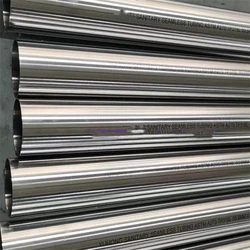
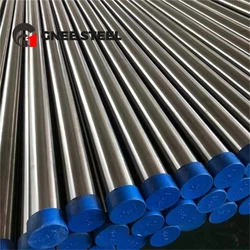
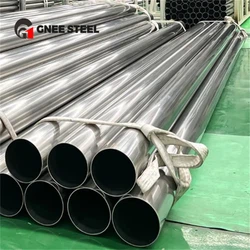
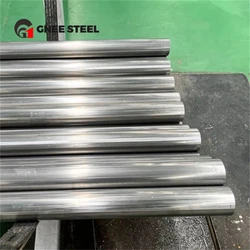
Looking for a Reliable Supplier of 1.4521 / 444 Stainless Steel?
GNEE Steel supplies high-performance 444 (1.4521) stainless steel in sheet, coil, plate, tube, and strip forms, ideal for water heater, heat exchanger, and food processing applications. We provide full material certification (EN 10204 3.1) and processing support including cutting, bending, welding, and surface finishing services. If you have any requirements, please feel free to contact us.

Send Inquiry