







1.4563 Stainless Steel: Material Selection for Seawater Systems
Mar 18, 2026
Leave a message
1.4563 stainless steel, commonly known as Alloy 28 or UNS N08028, is a high-performance, molybdenum-enhanced austenitic stainless steel designed for extreme corrosion resistance, particularly in sulfuric acid and phosphoric acid environments. With its high chromium, nickel, and molybdenum content, combined with copper addition, it offers outstanding resistance to both oxidizing and reducing acids. It is widely used in chemical processing, acid production, and offshore applications where standard grades like 316L or even 904L are insufficient.
Equivalent Grade for 1.4563 stainless steel
| Standard | Equivalent Grade |
|---|---|
| EN (Europe) | 1.4563 |
| ASTM/AISI (USA) | Alloy 28, UNS N08028 |
| Common Name | Alloy 28, Sanicro 28 |
Chemical composition of 1.4563 stainless steel
| Element | C | Si | Mn | P | S | Cr | Ni | Mo | Cu |
|---|---|---|---|---|---|---|---|---|---|
| Content (%) | ≤ 0.02 | ≤ 0.7 | ≤ 2.5 | ≤ 0.03 | ≤ 0.01 | 26.0 - 28.0 | 29.0 - 32.0 | 3.0 - 4.0 | 0.6 - 1.4 |
properties of 1.4563 stainless steel
| Property | Yield Strength (Rp0.2) | Tensile Strength (Rm) | Elongation (A) | Hardness (HB) |
|---|---|---|---|---|
| Typical Value | ≥ 220 MPa | 500 - 700 MPa | ≥ 35% | ≤ 220 |
Key Characteristics and Applications of 1.4563 / Alloy 28
Excellent Acid Resistance: Particularly resistant to sulfuric acid across a wide range of concentrations and temperatures, as well as phosphoric, nitric, and organic acids. It is the preferred material for phosphoric acid evaporators and sulfuric acid handling equipment.
High Chloride Resistance: Offers good resistance to pitting and crevice corrosion in chloride-containing environments, including seawater and brine, with PREN typically 32-35.
Good Stress Corrosion Cracking Resistance: The high nickel content provides excellent resistance to chloride stress corrosion cracking.
Good Weldability and Formability: Can be welded using common techniques and exhibits good ductility for forming operations.
Primary Applications:
Chemical Processing: Reactors, heat exchangers, and piping for sulfuric acid, phosphoric acid, and other aggressive media.
Fertilizer Industry: Phosphoric acid evaporators, concentrators, and handling systems.
Pollution Control: Scrubbers, ducts, and chimney liners in flue gas desulfurization (FGD) systems.
Oil & Gas: Downhole tubing, wellhead components, and offshore platforms in sour service.
Pharmaceutical: Equipment requiring high purity and resistance to corrosive cleaning agents.
Pulp & Paper: Bleaching equipment and digesters.
How does Alloy 28 (1.4563) compare to 904L (1.4539)?
What are the welding considerations for Alloy 28 (1.4563) stainless steel?
What temperature range is Alloy 28 suitable for?
Looking for a Reliable Supplier of 1.4563 / Alloy 28 Stainless Steel?
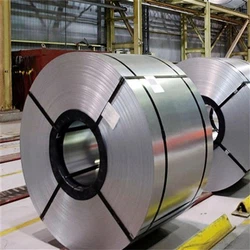
1.4563 Stainless Steel Coil
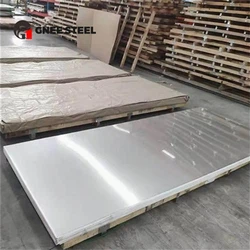
1.4563 Stainless Steel Plate

1.4563 Stainless Steel Pipe
Send Inquiry