







What are typical industrial applications of 1.4537?
Mar 18, 2026
Leave a message
1.4537 stainless steel, commonly known as Alloy 27-7Mo or UNS S31277, is a premium super austenitic stainless steel with exceptionally high molybdenum and nitrogen content. It represents the highest performance tier among 6% molybdenum super austenitic grades, offering outstanding resistance to pitting, crevice corrosion, and stress corrosion cracking in the most aggressive chloride environments. With its optimized composition, it bridges the performance gap between standard super austenitic grades and expensive nickel-based alloys, making it ideal for the most demanding seawater desalination, offshore, chemical processing, and pollution control applications.
Equivalent Grade for 1.4537 stainless steel
| Standard | Equivalent Grade |
|---|---|
| EN (Europe) | 1.4537 |
| ASTM/AISI (USA) | Alloy 27-7Mo, UNS S31277 |
| Common Name | Alloy 27-7Mo, S31277 |
Chemical composition of 1.4537 stainless steel
| Element | C | Si | Mn | P | S | Cr | Ni | Mo | N |
|---|---|---|---|---|---|---|---|---|---|
| Content (%) | ≤ 0.02 | ≤ 0.8 | ≤ 1.0 | ≤ 0.03 | ≤ 0.01 | 20.0 - 22.0 | 26.0 - 28.0 | 6.5 - 8.0 | 0.30 - 0.40 |
properties of 1.4537 stainless steel
| Property | Yield Strength (Rp0.2) | Tensile Strength (Rm) | Elongation (A) | Hardness (HB) |
|---|---|---|---|---|
| Typical Value | ≥ 350 MPa | 700 - 900 MPa | ≥ 35% | ≤ 260 |
Key Characteristics and Applications of 1.4537 / Alloy 27-7Mo
Exceptional Pitting and Crevice Corrosion Resistance: With a PREN (Pitting Resistance Equivalent Number) > 45, it offers superior resistance in aggressive chloride environments, including hot seawater up to 60°C and hypochlorite solutions.
Excellent Stress Corrosion Cracking (SCC) Resistance: Performs exceptionally well under tensile stress in corrosive environments where standard austenitic and even many super austenitic grades may fail.
High Strength and Good Formability: Provides higher yield strength than standard austenitic grades while maintaining good ductility and weldability.
Improved Weldability: Optimized composition with controlled nitrogen levels ensures good weldability while maintaining corrosion resistance in the weld zone.
Primary Applications:
Seawater Desalination: Reverse osmosis (RO) membranes, high-pressure piping, evaporator tubes, and brine heater systems.
Offshore & Marine: Heat exchangers, pumps, valves, subsea components, and seawater cooling systems.
Chemical Processing: Equipment for handling aggressive acids, chlorides, and oxidizing media in the most severe environments.
Pollution Control: FGD (Flue Gas Desulfurization) systems, scrubbers, and ducting in high-chloride environments.
Pulp & Paper: Bleaching equipment and digesters in chlorine dioxide environments.
Oil & Gas: Topside and subsea equipment in highly corrosive sour service.
How does Alloy 27-7Mo (1.4537) compare to 254 SMO (1.4547) and other 6% Mo grades?
What are the critical factors for welding Alloy 27-7Mo?
What temperature range is Alloy 27-7Mo suitable for?
Looking for a Reliable Supplier of 1.4537 / Alloy 27-7Mo Stainless Steel?

1.4537 stainless steel plate
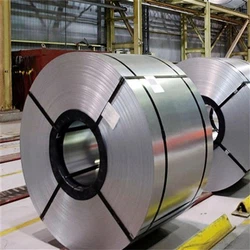
1.4537 stainless steel coil
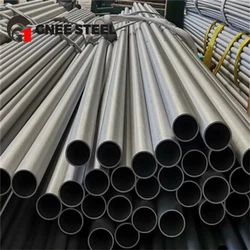
1.4537 stainless steel pipe
Send Inquiry