







What material is equivalent to X2CrNi18-9?
Apr 03, 2026
Leave a message
What material is X2CrNi18-9?
X2CrNi18-9 (material number 1.4307) is a low-carbon austenitic stainless steel, widely recognized as the European standard equivalent of AISI 304L. This material exhibits excellent weldability, good corrosion resistance (especially in the welded state), and is suitable for high-temperature applications up to 550°C. It can be processed into various practical product forms, including plates, coils, pipes, bars, and wires.
What material is equivalent to X2CrNi18-9?
X2CrNi18-9 (material number 1.4307) is equivalent to AISI 304L. It is a low-carbon, austenitic stainless steel often referred to as 304L or SUS304L (Japanese standard). It is used for enhanced corrosion resistance (especially after welding) compared to 304/1.4301, and is often double-certified with 304L.
X2CrNi18-9 Chemical Composition (%)
| Element | C | Si | Mn | P | S ① | Cr | Ni | N |
|---|---|---|---|---|---|---|---|---|
| min | - | - | - | - | - | 17.5 | 8 | - |
| max | 0.03 | 1 | 2 | 0.045 | 0.03 | 19.5 | 10 | 0.11 |
X2CrNi18-9 Mechanical Properties
| Diameter d (mm) | Heat Treatment or Condition | Tensile Strength σb MPa |
Yield Point σs MPa |
Elongation at Fracture (or Elongation) δ % |
Impact energy absorbed KV2 J |
|---|---|---|---|---|---|
| d≤160* | +AT | 450~680 | ≥175 | ≥45 | ≥100 |
| d≤35* | +C700 | 700~850 | ≥350 | ≥20 | ≥80 |
| d≤25** | +C800 | 800~1000 | ≥500 | ≥12 | ≥80 |
X2CrNi18-9 Physical Properties
| Static Elastic Modulus at Various Temperatures (°C) | Coefficient of Thermal Expansion Between 20°C and Various Temperatures | Thermal conductivity | Specific Heat Capacity | Resistivity | |||||||||||||
| 20 | 100 | 200 | 300 | 400 | 500 | 600 | 700 | 800 | 100°C | 200°C | 300°C | 400°C | 500°C | 600°C | 20°C | 20°C | 20°C |
| GPa | 10-6 K-1 | W/m.K | J/kg.K | Ω.mm2/m | |||||||||||||
| 200 | 194 | 186 | 179 | 172 | 165 | - | - | - | 16 | 16.5 | 17 | 18 | 18 | n.a. | 15 | 500 | 0.73 |
| n.a.: no values available |
Minimum Yield Strength at Elevated Temperatures (in the as-delivered condition)
| Material designation | Heat treatment condition |
Diameter d mm |
Minimum 0.2%-proof strength Rp0.2 in MPa at a temperature (in°C) of: | |||||||||||||
| Name | Number | 50 | 100 | 150 | 200 | 250 | 300 | 350 | 400 | 450 | 500 | 550 | 600 | 650 | ||
| X2CrNi18-9 | 1.4307 | +AT | d≤160 | 164 | 145 | 130 | 118 | 108 | 100 | 94 | 89 | 85 | 81 | 80 | - | - |
Minimum Tensile Strength at High Temperature in the As-Delivered Condition
| Material designation | Heat treatment condition |
Diameter d mm |
Minimum tensile strength Rm in MPa at a temperature (in°C) of: | |||||||||||||
| Name | Number | 50 | 100 | 150 | 200 | 250 | 300 | 350 | 400 | 450 | 500 | 550 | 600 | 650 | ||
| X2CrNi18-9 | 1.4307 | +AT | d≤160 | 440 | 410 | 380 | 360 | 350 | 340 | 340 | 330 | - | - | - | - | - |
Minimum Impact Absorption Energy at Low Temperature (Longitudinal)
| Material designation | Heat treatment condition |
Diameter d mm |
Minimum fracture energy in shock bending (in J) (ISO-V specimens) at a temperature (in ℃) of: | ||||||||||||||||
| Name | Number | -270 | -196 | -160 | -140 | -120 | -110 | -100 | -90 | -80 | -70 | -60 | -50 | -40 | -20 | 0 | +20 | ||
| X2CrNi18-9 | 1.4307 | +C700 | d≤35 | - | 50 | - | - | - | - | - | - | - | - | - | - | - | - | - | 80 |
Heat treatment of products conforming to this European Standard
| Material designation | Heat treatment condition |
Normalizing,quenching or solution annealing temperature °C |
Type of cooling① |
Tempering or precipitation treatment (and time) °C |
|
| Name | Number | ||||
| X2CrNi18-9 | 1.4307 | +AT | 1000 to 1100 | w,a② | - |
How is the corrosion resistance of 1.4307?
1.4307 is an ultra-low carbon austenitic stainless steel. Its primary advantage lies in its exceptional resistance to intergranular corrosion; notably, it maintains a very high level of corrosion resistance even after welding, without the need for subsequent heat treatment. It effectively prevents corrosion in most industrial and urban atmospheric environments, ranking as a common stainless steel with outstanding corrosion resistance.
1.4307 stainless steel exhibits good weldability
1.4307 stainless steel is specifically designed to achieve exceptional weldability, making it particularly suitable for thick-plate applications. Its extremely low carbon content (≤ 0.03%) minimizes the precipitation of chromium carbides during welding, thereby ensuring excellent resistance to intergranular corrosion without the need for post-weld heat treatment.
Machinability of 1.4307 stainless steel
1.4307 (AISI 304L) stainless steel is a low-carbon austenitic stainless steel that exhibits moderate to good machinability. Due to its low work-hardening tendency, it is easier to cut than standard 304 stainless steel; however, to prevent surface hardening, machining still requires the use of sharp tools, a steady feed rate, and a high flow rate of cutting fluid.
Is 1.4307 stainless steel magnetic?
1.4307 (AISI 304L) stainless steel is non-magnetic in its standard annealed condition because it is an austenitic alloy. However, it can become slightly magnetic after cold working (like drawing or bending) or welding, as these processes can induce a phase change, increasing its magnetic permeability slightly.
What is the difference between 1.4307 and 1.4306 stainless steel?
1.4306 (X2CrNi19-11) and 1.4307 (X2CrNi18-9) are both low-carbon, austenitic stainless steels (304L type) with excellent weldability. The primary difference is that 1.4306 is more highly alloyed, containing higher nickel and slightly higher chromium, resulting in superior corrosion resistance and better deep-drawing properties.
Applications
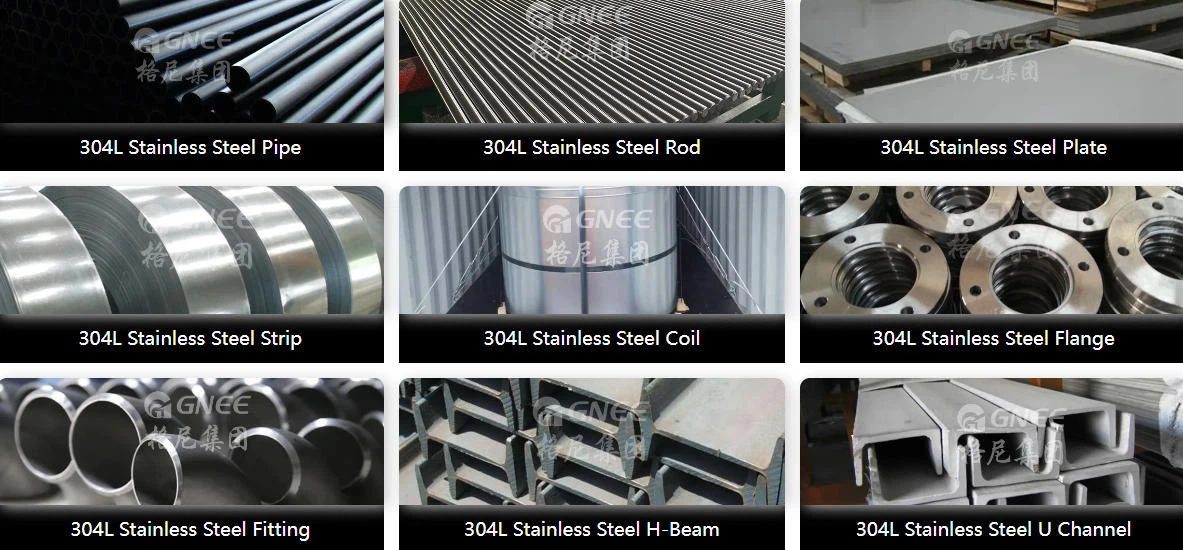
Food & Beverage Industry: Brewing equipment, dairy processing machinery, food production lines.
Chemical Industry: Storage tanks, piping systems, heat exchangers.
Pharmaceutical Industry: Reactors, cleanroom piping.
Architecture & Decoration: Handrails, curtain wall brackets, elevator interiors.
Household Appliances: Kitchen sinks, tableware, cookware.
1.4307 Stainless Steel Supplier
Plates: Cold-rolled coils, hot-rolled medium-to-heavy plates (thickness: 0.3 mm – 100 mm).
Bars: Round bars, hexagonal bars, square bars (black finish or bright drawn).
Tubes: Seamless tubes, welded tubes.
Profiles: Angle bars, channel bars, flat bars.
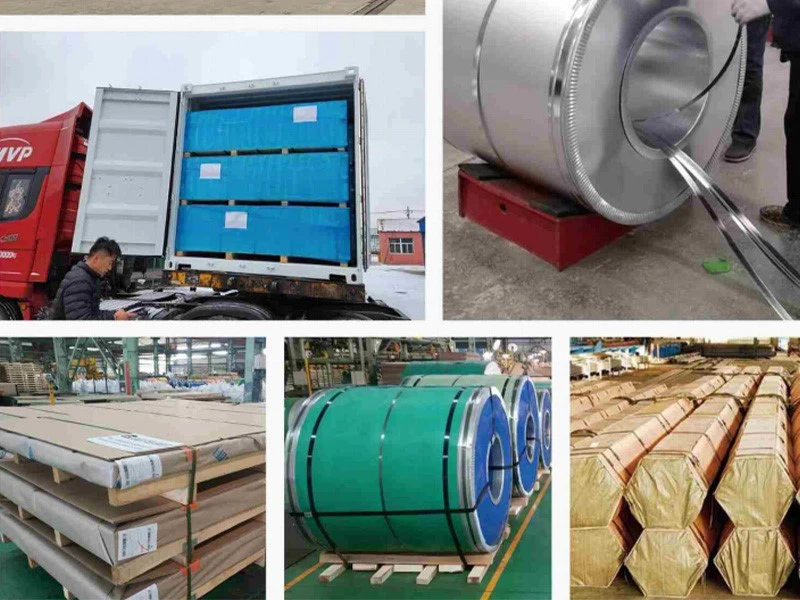
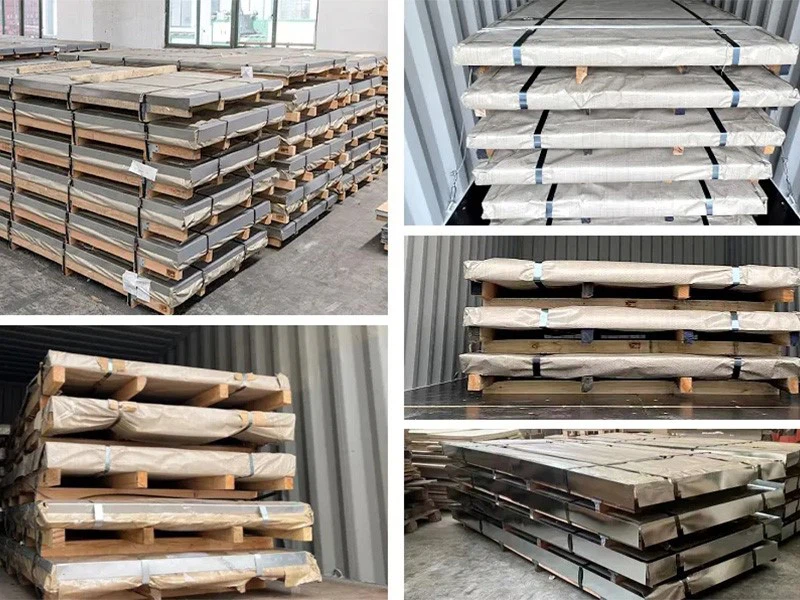
GNEE possesses extensive experience in international shipping, with a service network spanning over 70 countries worldwide. We utilize professional packaging-including wooden crates, iron frames, or pallets-that complies with maritime transport standards. All products are accompanied by a Material Test Certificate (MTC) in accordance with the EN 10204 3.1 standard.
Send Inquiry