







What is 316 Stainless Steel and Its Core Chemical Composition
Mar 30, 2026
Leave a message

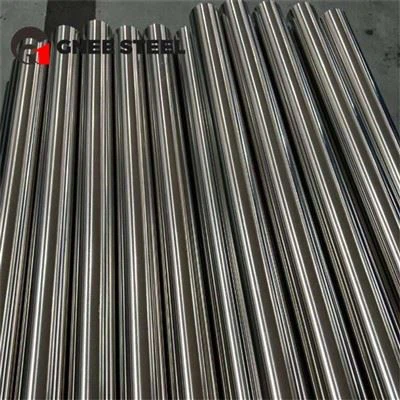
 Q1: What are the main chemical components of 316 stainless steel? A1: The main components are 16%-18% chromium (Cr), 10%-14% nickel (Ni), 2%-3% molybdenum (Mo), with carbon (C) content ≤0.08% and other trace elements such as silicon and manganese.
Q2: Why is molybdenum added to 316 stainless steel? A2: Molybdenum can form a MoO₄²⁻ passive film with chloride ions, which blocks chloride ion erosion and significantly improves the pitting corrosion resistance of 316 stainless steel, especially in high-chloride environments.
Q3: What is the difference in chemical composition between 316 and 304 stainless steel? A3: 304 stainless steel has a composition of 18Cr-8Ni without molybdenum, while 316 adds 2%-3% molybdenum on the basis of 304, and its nickel content is slightly higher (10%-14% vs 8%).
Q4: Does the carbon content of 316 stainless steel affect its performance? A4: Yes, the carbon content (≤0.08%) affects its welding performance and corrosion resistance; lower carbon content (such as 316L, ≤0.03%) can better avoid intergranular corrosion after welding.
Q5: What is the national standard code corresponding to 316 stainless steel in China? A5: The Chinese national standard code for 316 stainless steel is 0Cr17Ni12Mo2, and for 316L it is 022Cr17Ni12Mo2.
Send Inquiry