

Schedule 20 Stainless Steel Pipe: Meaning, Dimensions and Availability
Jun 04, 2025
Leave a message
What the Schedule Number Tells You
A pipe schedule is a wall thickness designation, not a pressure class. For a given nominal pipe size, the outside diameter is fixed by the dimensional standard, and the schedule number sets how thick the wall is. A higher schedule number means a thicker wall and therefore a heavier, stronger and more expensive pipe.
Two standards govern the numbers. ASME B36.10M covers welded and seamless wrought steel pipe, including carbon and alloy steel, and tabulates a long list of schedules in which Schedule 20 appears alongside 10, 30, 40, 60, 80, 100, 120, 140 and 160. ASME B36.19M covers stainless steel pipe and tabulates only four schedules: 5S, 10S, 40S and 80S, where the letter S marks the stainless series.
This is the key point for buyers. Schedule 20 is a recognised schedule for carbon and alloy steel pipe in ASME B36.10M, but it is not a tabulated stainless steel schedule in ASME B36.19M. Where Schedule 20 stainless pipe is offered, it is a non-standard or made-to-order item, and the wall thickness must be stated in millimetres on the purchase order rather than implied by the schedule number.
Nominal Size and Outside Diameter
Nominal pipe size is a label rather than a measurement. For sizes from NPS 1/8 up to NPS 12, the outside diameter is larger than the nominal figure, and for sizes NPS 14 and above the outside diameter equals the nominal size. Outside diameter is the fixed reference for every schedule.
| NPS | Outside diameter (mm) | SCH 10S wall (mm) | SCH 40S wall (mm) |
|---|---|---|---|
| 1/2 | 21.3 | 2.11 | 2.77 |
| 3/4 | 26.7 | 2.11 | 2.87 |
| 1 | 33.4 | 2.77 | 3.38 |
| 1 1/4 | 42.2 | 2.77 | 3.56 |
| 1 1/2 | 48.3 | 2.77 | 3.68 |
| 2 | 60.3 | 2.77 | 3.91 |
| 3 | 88.9 | 3.05 | 5.49 |
| 4 | 114.3 | 3.05 | 6.02 |
| 6 | 168.3 | 3.40 | 7.11 |
| 8 | 219.1 | 3.76 | 8.18 |
| 10 | 273.1 | 4.19 | 9.27 |
| 12 | 323.9 | 4.57 | 9.53 |
Values are nominal and the current edition of the dimensional standard governs. Schedule 20 sits between the two columns shown above for the same nominal size, which is why it is bought mainly for weight saving and cost reduction on low-pressure duties.
Wall Thickness, Weight and Working Pressure
The theoretical mass of a stainless steel pipe is calculated from the wall thickness and outside diameter using a density of approximately 7.9 grams per cubic centimetre:
Mass per metre in kilograms = 0.0248 x wall thickness in millimetres x (outside diameter in millimetres - wall thickness in millimetres).
Worked example: NPS 2 pipe with a 60.3 mm outside diameter and a 2.77 mm wall gives 0.0248 x 2.77 x 57.53, which is approximately 3.95 kilograms per metre.
Worked example: NPS 6 pipe with a 168.3 mm outside diameter and a 3.40 mm wall gives approximately 13.9 kilograms per metre.
Internal cross sectional area, and therefore flow capacity, increases as the wall thins, so a lighter wall delivers more flow at the same pressure drop.
Pressure rating follows the wall thickness, the allowable stress of the grade at design temperature and the applicable design code; it must never be estimated from the schedule number alone.
The practical trade-off is straightforward. A thinner wall reduces material cost, transport weight and weld volume, but it lowers the pressure rating, reduces stiffness against thermal and mechanical loads and leaves less corrosion allowance where the pipe may be attacked internally.
Availability of Schedule 20 Stainless Pipe
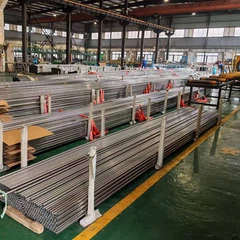
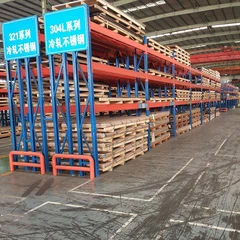
Because the schedule is absent from ASME B36.19M, mills rarely hold stainless stock in Schedule 20 and usually schedule production only for a confirmed order quantity.
Common grades produced on request are Type 304/304L and Type 316/316L, with duplex grades available on enquiry.
Substitution practice varies. Suppliers sometimes quote the nearest standard stainless wall, which is frequently the Schedule 10S dimension, and describe it as Schedule 20; the delivered wall must therefore be confirmed in writing as a millimetre figure before the order is placed.
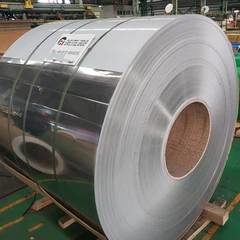
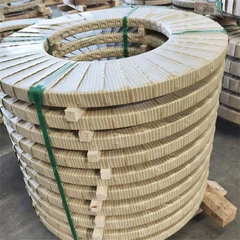
Availability improves for welded pipe, which can be made from strip of almost any thickness, and is much more restricted for seamless pipe.
Small quantities in special sizes typically carry minimum order quantities and longer lead times than standard schedules.
Specifying the Order Correctly
State the nominal pipe size and the required outside diameter, then give the wall thickness in millimetres with the tolerance band, such as 2.77 mm with a plus or minus 10% tolerance.
Name the grade using its standard designation, for example ASTM A312 TP304L or EN 10216-5 1.4404, rather than a trade description.
Name the product standard: ASTM A312 or A312M for seamless and welded austenitic pipe, ASTM A269 for general service tubing, ASTM A249 for welded heat exchanger tube, ASTM A554 for ornamental and mechanical tube.
Add the general requirements standard, ASTM A999 or A1016, which controls dimensional tolerances, straightness, end finish and testing.
Specify the length and end finish, whether plain end, bevelled or threaded, and whether the pipe is supplied annealed and pickled or bright annealed.
Require a mill test certificate to EN 10204 3.1 and, for wet chloride service, consider adding an eddy current test or a hydrostatic test to the purchase order.
Typical Applications
Low-pressure water supply, drainage and utility lines where a thick wall is unnecessary.
Chemical and food processing lines with modest pressure but a requirement for corrosion resistance and cleanable surfaces.
Instrumentation and control runs that benefit from reduced weight and easier support spacing.
Architectural and decorative pipework, handrails and structural cladding frames in stainless grades.
Pump skids, filtration packages and skid-mounted process units where weight reduction lowers transport cost.
Replacement pipe on existing low-pressure systems where matching the original non-standard wall avoids reworking supports and fittings.
Frequently Asked Questions
Q: Is Schedule 20 a standard stainless steel pipe schedule?
No. ASME B36.19M for stainless steel pipe tabulates only Schedules 5S, 10S, 40S and 80S. Schedule 20 is tabulated in ASME B36.10M for carbon and alloy steel pipe, so stainless pipe described as Schedule 20 is a non-standard or custom order.
Q: Is Schedule 20 thinner or thicker than Schedule 40?
Thinner. The schedule number rises with wall thickness, so for the same nominal size Schedule 20 has a lighter wall than Schedule 40 and a heavier wall than Schedule 10.
Q: How should a Schedule 20 stainless pipe order be written?
Give the nominal size, the outside diameter, the wall thickness in millimetres with its tolerance, the grade designation, the product standard, the length and end finish, and the required tests and certification. Stating the wall in millimetres removes the ambiguity created by the non-standard schedule number.
Q: Why is Schedule 20 used at all?
It saves material and weight on low-pressure duties where a heavier wall adds cost without benefit. Lighter pipe is easier to handle, cheaper to transport and quicker to weld, which matters on large fabrication packages.
Q: Which grades are available in this wall thickness?
Type 304/304L and Type 316/316L are the usual choices, since they combine adequate strength with corrosion resistance for water, food and general chemical service. Duplex and higher alloy grades are normally supplied only against a specific order.
Q: What is the difference between Schedule 20 and Schedule 20S?
Schedules carrying the letter S belong to the stainless steel series in ASME B36.19M, and 20S is not a listed schedule there. The suffix S does not describe a different wall thickness for small sizes; it simply identifies the stainless schedule series.
Send Inquiry