







316L Stainless Steel Flange Prices – Latest (October 2026)
Oct 08, 2026
Leave a message
What Is 316L Stainless Steel Flange?
316L stainless steel flange is a forged pipe connection component manufactured mainly according to ASTM A182 F316L / ASME B16.5 standards. The "L" represents low carbon content (C ≤0.03%), which improves welding performance and reduces the risk of intergranular corrosion after welding.
Compared with 304L stainless steel flanges, 316L contains 2–3% molybdenum (Mo), providing superior resistance to pitting and crevice corrosion, especially in chloride-containing environments such as seawater, chemical processing, and offshore applications.
Common 316L flange types include:
- Welding Neck Flange (WNRF)
- Slip On Flange (SORF)
- Blind Flange (BLRF)
- Socket Weld Flange (SW)
- Threaded Flange
- Lap Joint Flange
Standard pressure ratings include CL150, CL300, CL600, CL900, CL1500 and CL2500.
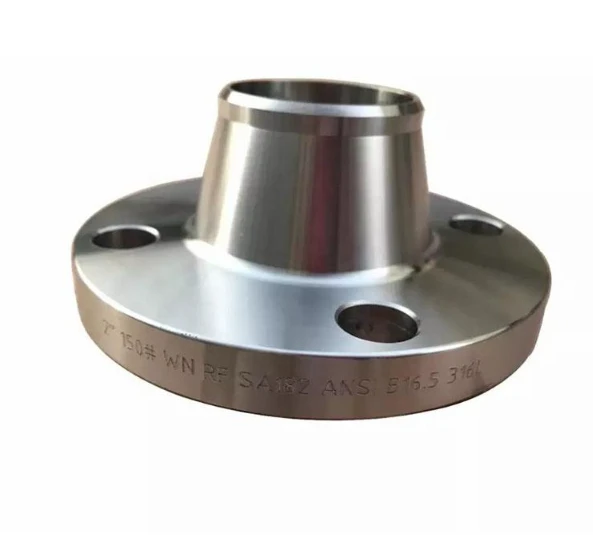
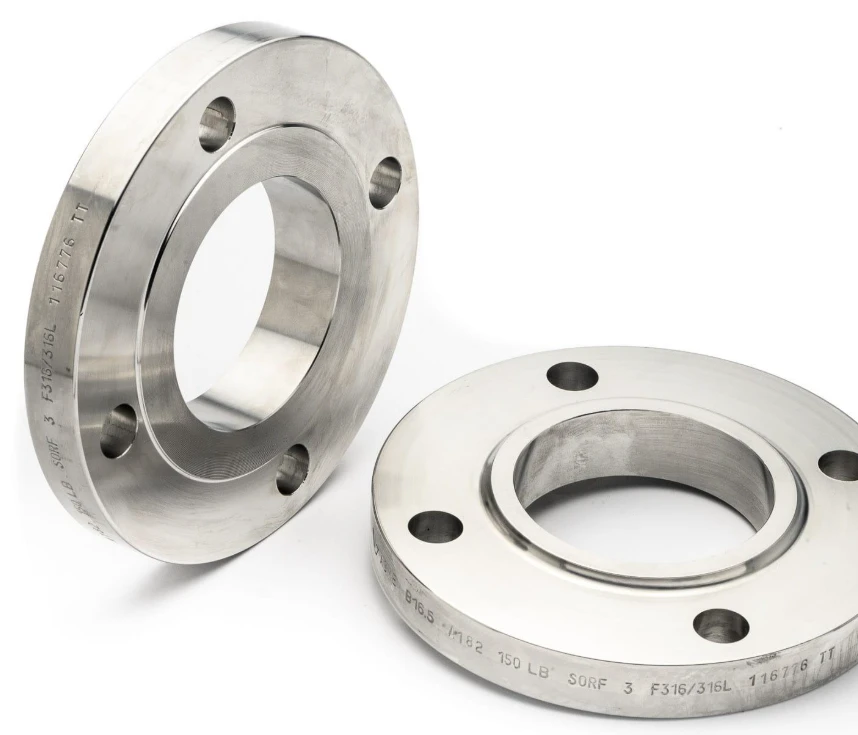
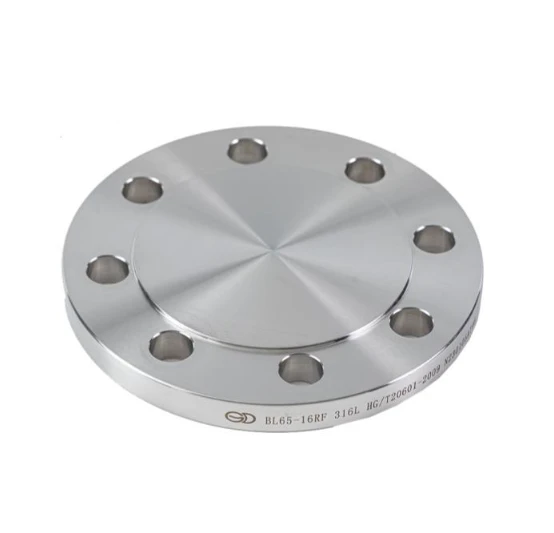
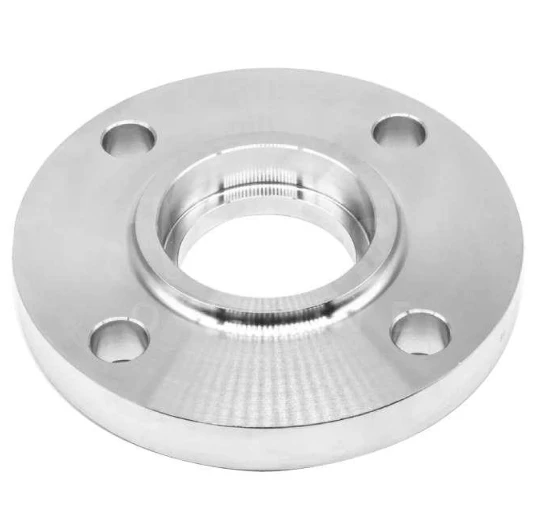
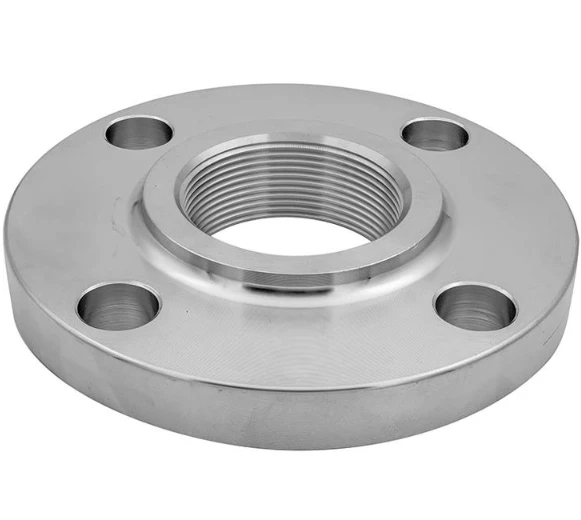

316L Stainless Steel Flange Price October 2026 (FOB China Reference)
The price of ASTM A182 F316L flanges depends on flange type, size, pressure class, forging weight, machining requirements, and raw material cost. Current market references show 316L flange prices commonly range around USD 3.2–8.5/kg, with high-pressure and large-diameter products priced higher. Huitong Pipeline Equipment
| Flange Type | Abbrev. | Size Range | Class 150 ($/pc) | Class 300 ($/pc) | Class 600 ($/pc) | Trend (vs. Sep 2026) |
|---|---|---|---|---|---|---|
| Weld Neck | WN | 1/2"–24" | $3 – $180 | $5 – $280 | $8 – $420 | ↑ +3.2% |
| Slip On | SO | 1/2"–24" | $2 – $150 | $4 – $230 | $6 – $350 | ↑ +2.8% |
| Blind | BL | 1/2"–24" | $2 – $120 | $3 – $190 | $5 – $290 | ↑ +2.1% |
| Socket Weld | SW | 1/2"–4" | $3 – $35 | $5 – $55 | $8 – $85 | ↑ +3.5% |
| Threaded | THD | 1/2"–4" | $3 – $40 | $5 – $60 | $8 – $95 | ↑ +2.5% |
| Lap Joint | LJ | 1/2"–24" | $2.5 – $160 | $4 – $250 | $7 – $380 | ↑ +3.0% |
Note: Prices are indicative China FOB ranges for standard ASME B16.5 RF (Raised Face) flanges. Actual quotes vary by MOQ, surface finish, and certification requirements.
If you can share:
• The pipe size (e.g., 2-inch, 4-inch)
• The flange type (slip-on, weld neck, blind, threaded)
• The pressure rating (150# or 300#)
I can give you a more specific price and vendor recommendation.
316L Flange Prices by Type & Size
Weld Neck Flange (WNRF) Prices – Class 150
Weld Neck flanges carry the highest per-piece cost among standard types due to the tapered hub requiring additional machining and material. They are preferred for high-pressure, high-temperature, and critical applications.
| NPS (inch) | Weight (kg/pc) | Small Qty ($/pc) | Bulk 500+ ($/pc) | India FOB ($/pc) | U.S. Domestic ($/pc) |
|---|---|---|---|---|---|
| 1/2" | 0.5 | $3–$5 | $2–$3 | $3.5–$5.5 | $8–$14 |
| 1" | 0.8 | $4–$7 | $2.5–$4 | $4.5–$7.5 | $10–$18 |
| 2" | 2.0 | $6–$10 | $4–$6 | $7–$11 | $16–$28 |
| 3" | 3.5 | $9–$15 | $5.5–$9 | $10–$16 | $24–$40 |
| 4" | 5.5 | $12–$20 | $7.5–$12 | $13–$22 | $30–$52 |
| 6" | 12.0 | $22–$38 | $14–$22 | $24–$40 | $55–$95 |
| 8" | 22.0 | $38–$60 | $24–$38 | $40–$64 | $90–$150 |
| 10" | 34.0 | $55–$85 | $35–$55 | $58–$90 | $130–$210 |
| 12" | 48.0 | $75–$115 | $48–$75 | $80–$120 | $180–$280 |
| 14" | 62.0 | $90–$140 | $58–$90 | $95–$145 | $220–$340 |
| 16" | 82.0 | $115–$170 | $75–$115 | $120–$180 | $280–$420 |
| 18" | 105.0 | $140–$210 | $90–$140 | $145–$220 | $340–$520 |
| 20" | 135.0 | $165–$250 | $105–$165 | $170–$260 | $400–$620 |
| 24" | 195.0 | $210–$320 | $135–$210 | $220–$330 | $520–$800 |
Slip-On & Blind Flange Prices – Class 150
Slip-On flanges are the most economical option for low-to-moderate pressure applications. Blind flanges cap pipe ends and are typically priced between Slip-On and Weld Neck equivalents.
| NPS (inch) | Slip-On Bulk ($/pc) | Blind Bulk ($/pc) | Lap Joint Bulk ($/pc) | Socket Weld ($/pc) | Threaded ($/pc) |
|---|---|---|---|---|---|
| 1/2" | $2.0 | $2.0 | $2.5 | $3–$5 | $3–$4 |
| 1" | $2.5 | $2.5 | $3.0 | $4–$6 | $4–$5 |
| 2" | $3.5 | $3.0 | $4.0 | $5–$8 | $5–$7 |
| 3" | $5.0 | $4.5 | $5.5 | $8–$12 | - |
| 4" | $7.0 | $6.0 | $7.5 | $10–$16 | - |
| 6" | $13 | $11 | $14 | - | - |
| 8" | $22 | $18 | $24 | - | - |
| 10" | $32 | $27 | $35 | - | - |
| 12" | $45 | $38 | $48 | - | - |
| 14" | $55 | $46 | $58 | - | - |
| 16" | $70 | $58 | $74 | - | - |
| 18" | $85 | $70 | $90 | - | - |
| 20" | $100 | $82 | $106 | - | - |
| 24" | $135 | $110 | $142 | - | - |
Market Factors Analysis – What Drives 316L Flange Prices?

1. Nickel Prices-The Primary Cost Driver
Nickel represents the largest cost component of 316L stainless steel, accounting for 65%–75% of raw material costs. LME (London Metal Exchange) nickel prices have risen from an average of approximately $15,200/tonne to a projected range of $15,500–$18,500/tonne for 2026; spot prices in October approached $16,800/tonne. Every $1,000/tonne increase in nickel prices drives up 316L raw material costs by approximately $500–$700/tonne, with a 2–4 week lag before this is reflected in the price of finished flanges.
2. Molybdenum-A Key Differentiating Element in 316L
Molybdenum content (2%–3%) is the key factor distinguishing 316L from 304 stainless steel and is responsible for its superior pitting corrosion resistance. Ferromolybdenum prices have risen by approximately 8.5% year-on-year, reaching roughly RMB 320,000–340,000/tonne. For every RMB 10,000/tonne fluctuation in the price of ferromolybdenum, the cost of 316L changes by approximately RMB 350–450/tonne. This makes molybdenum the second most significant factor influencing price, following nickel.
3. Tariffs and Trade Policies
Major Tariff Impacts: US "Section 232" tariffs impose a 25% duty on imported steel, while "Section 301" tariffs levy an additional 7.5%–25% duty on stainless steel products originating in China. The cumulative effect of these tariffs can increase the landed cost of Chinese-made 316L flanges in the US by 32.5%–50%, effectively narrowing the gap between the Chinese FOB price and the domestic US price.
4. Supply and Demand Dynamics
As of the third quarter of 2026, global stainless steel capacity utilization remained in the range of approximately 78%–82%. Chinese stainless steel producers maintained high output levels, keeping FOB prices competitive. However, consolidation among European steel mills and environmental compliance costs (associated with Phase II of the CBAM) led to tightened supply in Europe, driving up regional prices. Regarding 316L flanges, demand from chemical processing, LNG infrastructure, and seawater desalination projects remained the primary market drivers.
Regional Price Comparison
The chart below compares 316L raw material and finished flange pricing across major producing regions. All figures reflect October 2026 market conditions.
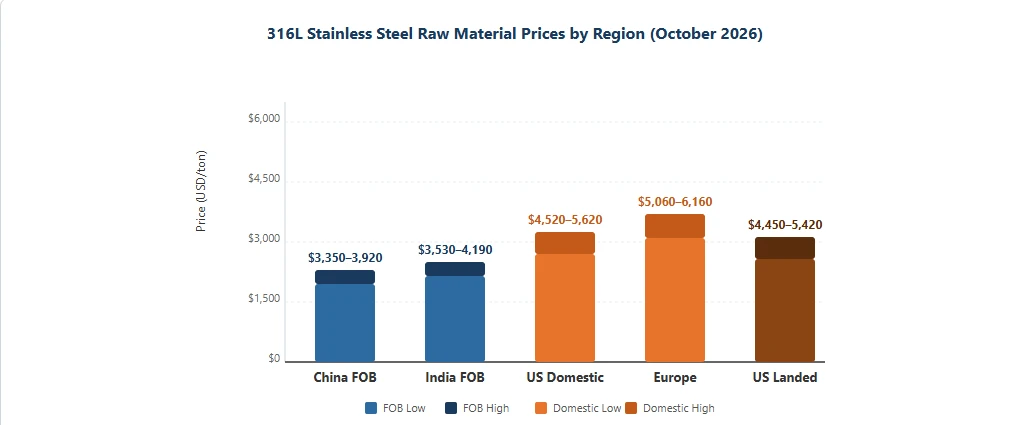
| Region | Raw Material ($/lb) | Raw Material ($/ton) | 4" WN Flange Bulk ($/pc) | Landed in U.S. ($/pc) | Lead Time |
|---|---|---|---|---|---|
| China (FOB) | $1.42–$1.68 | $3,350–$3,920 | $7.5–$12 | $12–$20* | 25–45 days |
| India (FOB) | $1.55–$1.80 | $3,530–$4,190 | $8–$13 | $13–$21* | 30–50 days |
| U.S. Domestic | $2.05–$2.55 | $4,520–$5,620 | $16–$28 | $16–$28 | 5–15 days |
| Europe | $2.30–$2.80 | $5,060–$6,160 | $18–$32 | $20–$35 | 20–40 days |
Why are 316L flanges more expensive than 304 flanges?
316L flanges cost 25%–40% more than 304 flanges, primarily due to the addition of 2%–3% molybdenum, which enhances resistance to pitting and crevice corrosion. Nickel content (10%–14%) is another cost factor, as nickel accounts for 65%–75% of the raw material cost for 316L stainless steel. The cost premium associated with molybdenum fluctuates with the market price of ferromolybdenum.
Where can I source 316L stainless steel flanges at the lowest price?
China offers the lowest FOB prices for 316L flanges, with raw material costs around $1.42–$1.68/lb, compared to $2.05–$2.55/lb in the US and $2.30–$2.80/lb in Europe. However, US tariffs under Section 232 (25%) and Section 301 (7.5%–25%) on Chinese stainless steel can increase landed costs by 32.5%–50%, significantly narrowing the price advantage. GNEE Stainless Steel offers the most competitive prices!
How to Reduce 316L Flange Purchasing Cost?
For international buyers, the following methods can reduce procurement costs:
1. Select standard ASME B16.5 dimensions instead of customized designs.
2. Purchase multiple sizes together to reduce machining and packing costs.
3. Choose CL150/CL300 where pressure requirements allow.
4. Request mill certificates and inspection documents before shipment.
5. Compare suppliers based on quality traceability, not only unit price.
316L Stainless Steel Flange Supplier - GNEE
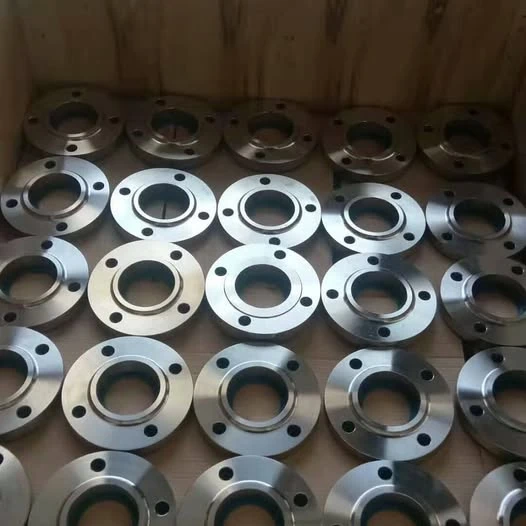
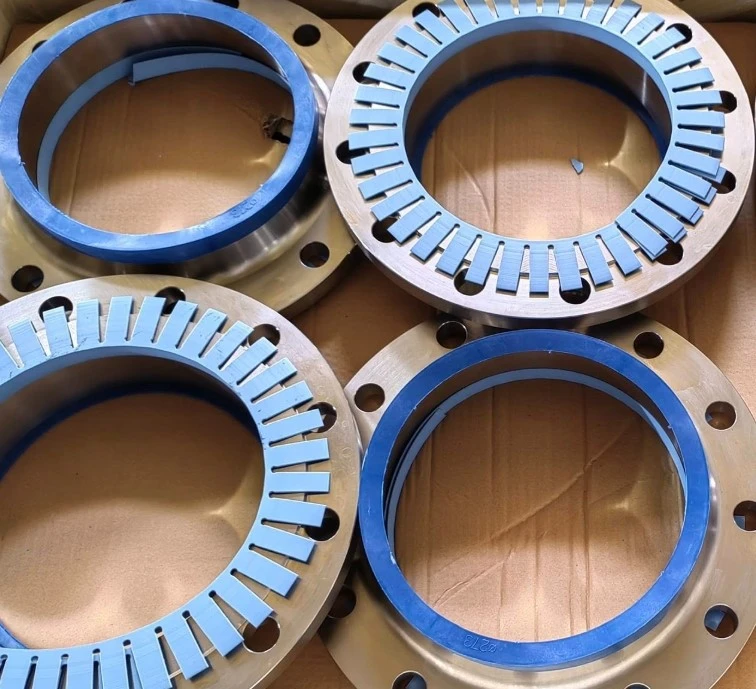
GNEE supplies ASTM A182 F316L stainless steel flanges, including Weld Neck (WN), Slip-On (SO), Blind (BL), and Socket Weld (SW) types, with pressure ratings from CL150 to CL2500 and sizes ranging from DN15 to DN1200. Manufactured using a forging process and compliant with ASTM A182 and ASME B16.5/B16.47 standards, these flanges support RF, FF, and RTJ sealing face configurations.
Each batch comes with EN 10204 3.1 MTC, PMI material verification, dimensional inspection, pressure testing, and third-party inspection services to ensure heat number traceability and consistent quality.
FAQ
Which standards apply to 316L stainless steel flanges?
Key standards include ASME B16.5 (USA, Class 150–2500), EN 1092-1 (Europe, PN6–PN260), and JIS B2220 (Japan, 10K–150K). The material specification is ASTM A182 F316L (UNS S31603). For large-diameter flanges exceeding 24 inches, ASME B16.47 Series A and Series B standards apply. Please be sure to specify the applicable standard in your purchase order.
What is the difference between 316 and 316L stainless steel flanges?
Compared to 316 (carbon content ≤0.08%), 316L has a lower carbon content (≤0.035%). This improves weldability and reduces carbide precipitation in the heat-affected zone during welding. 316L is the ideal choice for applications involving welding and for corrosive environments where resistance to intergranular corrosion is required. The price difference between 316 and 316L is usually less than 5%; however, the cost of 316L can be slightly higher due to the stricter carbon content controls required during the refining process.
What certifications should I request for 316L flanges?
At a minimum, you should request a Material Test Certificate (MTC) compliant with EN 10204 3.1, which must include data on chemical composition and mechanical properties. For critical applications (such as pressure vessels, the nuclear industry, or offshore facilities), you should request a certificate compliant with EN 10204 3.2, which includes a third-party inspection report.
What is the lead time for sourcing 316L flanges from China?
For large-volume orders of standard sizes, the typical lead time from GNEE is 25–45 days. Stock items can usually be shipped within 7–15 days. Custom flanges or large-diameter flanges (over 12 inches) may require 45–60 days. Ocean freight to US ports adds another 15–30 days. The total door-to-door delivery time from China to the US is typically 40–75 days.
Send Inquiry