

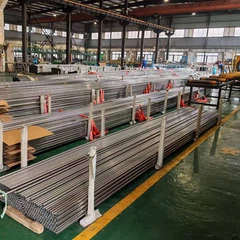
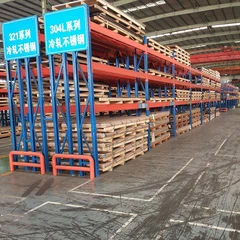
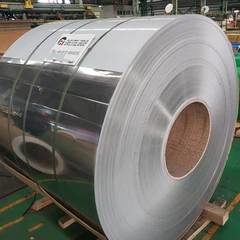
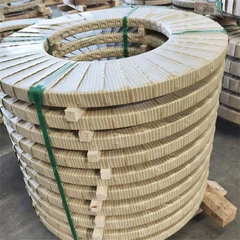

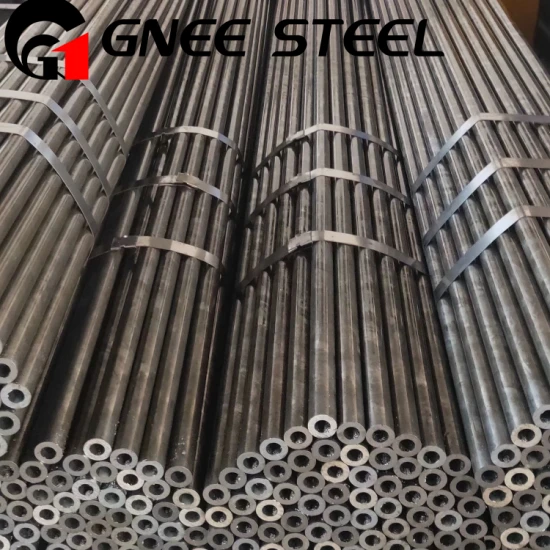

AISI 201 304 316 Pickled Stainless Steel Welded Pipe
Standards:ASTM A312/ ASTM A358/ASTM A269/EN 10217-7
Welding Type:TIG Welded / ERW / High-Frequency Welded
Outer Diameter (OD):6–630 mm; larger sizes available on request
Wall Thickness:0.5–30 mm; customized according to OD and standard
Length:5.8 m / 6 m / 11.8 m / 12 m; cut-to-length available
Surface Finish:Pickled / Acid Pickled / Pickled & Passivated
Heat Treatment:Solution Annealed / As Welded
Pipe Ends:Plain End / Beveled End / Threaded End
Weld Treatment:Weld Bead Removed / Welded & Pickled / Internal Weld Polishing available
Material Certificate:EN 10204 3.1 / 3.2 MTC
Marking:Grade, Size, Heat No., Standard, Manufacturer and Batch No.
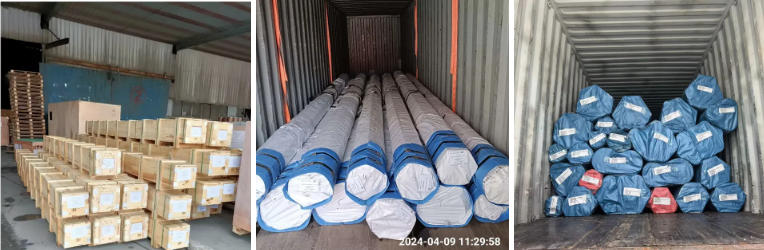
Packaging:Plastic Caps + Waterproof Paper + PVC/PE Film + Steel Bundles
If you are sourcing pickled stainless steel welded pipes in AISI 201, 304, or 316 grades for chemical, food and beverage, water treatment, architectural, marine, or general industrial applications, the key lies in selecting the right grade, wall thickness, surface finish, and inspection level based on your operating environment. Gnee supplies stainless steel welded pipes in 201, 304, 316, 304L, and 316L, covering outer diameters from approximately 1/2 inch to 24 inches and wall thicknesses from 0.8 to 20 mm. Products come complete with EN 10204 3.1 Material Test Certificates (MTC) and Positive Material Identification (PMI) reports, including hydrostatic testing as standard, alongside optional Radiographic (RT), Ultrasonic (UT), or Liquid Penetrant (PT) inspection services.


In terms of manufacturing, pipes can be produced using welding processes such as ERW and EFW, with quality risks like lack of fusion, inclusions, and residual oxides mitigated through weld bead shape control, internal/external surface treatment, and pickling. The typical surface roughness Ra is approximately 1.2–2.5 μm, with no distinct rolling direction texture visible on the surface. Regarding surface treatment, Pickled / HFD surfaces are typically hot-rolled or welded, solution-annealed, and pickled to remove scale, oxidation from the heat-affected zone, and surface contaminants, giving the pipe a uniform silver-white metallic appearance.
Manufacturing Process
Steel strip receipt and heat number verification → Slitting/strip preparation → Roll forming → Welding (ERW/TIG/Laser) → Weld bead scarfing and treatment → Sizing and straightening → Solution annealing (stress relief + restoration of corrosion resistance) → Pickling and passivation → Cut-to-length → Inspection and testing → Marking, packaging, and issuance of Material Test Certificate (MTC)

What is AISI 201 stainless steel pipe?
AISI 201 stainless steel pipe belongs to economical austenitic stainless steel, with a typical chemical composition of Cr 16–18%, Ni 3.5–5.5%, Mn 5.5–7.5%, and C ≤ 0.15%. It reduces material costs through higher Mn and lower Ni content, offering a significant price advantage over 304. It is suitable for indoor ventilation ducts, decorative pipes, furniture structural parts, and mildly corrosive environments.
What is AISI 304 stainless steel pipe?
AISI 304 stainless steel pipe is the most widely used general-purpose austenitic stainless steel, with Cr 18–20%, Ni 8–12%, C ≤ 0.08%, and a PREN of approximately 18–20. 304 features good formability, weldability, and atmospheric corrosion resistance, making it suitable for food and beverage, low-pressure chemical piping, architectural decoration, and general industrial structures.


What is AISI 316 stainless steel pipe?
AISI 316 stainless steel pipe has a chemical composition of Cr 16.5–18.5%, Ni 10–14%, Mo 2–3%, C ≤ 0.08%, and a PREN of approximately 24–26. The addition of Mo gives 316 superior local corrosion resistance compared to 304 in environments containing Cl⁻, seawater, chlorinated wastewater, and certain acidic condensates; it is suitable for marine engineering, chemical media piping, seawater cooling systems, and pharmaceutical equipment.
201, 304, and 316 Stainless Steel Specifications
| Product | Pickled & passivated stainless steel welded pipe / tube (round) |
|---|---|
| Grades | AISI 201, 304, 304L, 316, 316L (also 321, 310S, 2205 on request) |
| Standards | ASTM A554, ASTM A312/A312M, ASTM A249, ASTM A269, EN 10217-7, JIS G3448, GB/T 12771 |
| Welding process | ERW (HF), TIG / GTAW, laser welded |
| Heat treatment | Solution annealed (bright annealed or atmosphere annealed) after welding |
| Surface finish | Pickled & passivated (standard); mill, brushed, polished #180/#320/#400, mirror available |
| Outer diameter |
6 mm – 610 mm (round) · square 10×10 – 150×150 mm · rectangular 20×10 – 200×100 mm |
| Wall thickness | 0.5 mm – 20 mm |
| Length | 3 m / 6 m standard, or cut to custom length (up to 12 m) |
| Certificate | EN 10204 3.1 Mill Test Certificate per heat number (3.2 with third-party witness on request) |
| MOQ | [ 1 × 20 ft container ] for standard sizes; small trial orders accepted for samples |
Chemical Composition (Standard Requirement % max, unless stated otherwise)
| Element | AISI 201 | AISI 304 | AISI 316 |
| Carbon (C) | 0.15 | 0.08 | 0.08 |
| Chromium (Cr) | 16.0 - 18.0 | 18.0 - 20.0 | 16.0 - 18.0 |
| Nickel (Ni) | 3.5 - 5.5 | 8.0 - 10.5 | 10.0 - 14.0 |
| Manganese (Mn) | 5.5 - 7.5 | 2.0 | 2.0 |
| Molybdenum (Mo) | - | - | 2.0 - 3.0 |
| Silicon (Si) | 1.0 | 1.0 | 1.0 |
| Phosphorus (P) | 0.06 | 0.045 | 0.045 |
| Sulfur (S) | 0.03 | 0.03 | 0.03 |
Mechanical Properties (Typical Values)
| Grade | Tensile Strength (MPa) | Yield Strength (MPa) | Elongation (%) | Hardness (HB) |
| AISI 201 | ≥ 515 | ≥ 275 | ≥ 40 | ≤ 217 |
| AISI 304 | ≥ 515 | ≥ 205 | ≥ 40 | ≤ 201 |
| AISI 316 | ≥ 515 | ≥ 205 | ≥ 40 | ≤ 217 |
Standard Dimension Tolerances (ASTM A312)
| Dimension | Applicable Range | Tolerance |
|---|---|---|
| Outside Diameter (OD) | 1/8"–1-1/2" (10.3–48.3 mm) | +0.40 / -0.80 mm |
| Outside Diameter (OD) | 2"–4" (60.3–114.3 mm) | +0.80 / -0.80 mm |
| Outside Diameter (OD) | 5"–8" (141.3–219.1 mm) | +1.20 / -1.20 mm |
| Wall Thickness (WT) | WT ≤ 2.5 mm | +20% / -12.5% |
| Wall Thickness (WT) | WT > 2.5 mm | +15% / -12.5% |
201 vs. 304 vs. 316 Stainless Steel Pipes: How to Choose?
AISI 201/304/316 Pickled Stainless Steel Welded Pipes can be applied in architectural ventilation and exhaust ductwork, low-pressure chemical process piping, seawater cooling systems, food and pharmaceutical conveyance lines, architectural decoration, and general industrial structural frameworks.
For budget-prioritized projects with mild corrosive conditions, 201 can be considered; for most general industrial and food-grade environments, 304 offers a more balanced choice; and for operating conditions involving chlorides, marine environments, or higher risks of localized corrosion, 316 is recommended.
To help pick the ideal pipe for your project, could you share:
The operating environment (indoor, outdoor, coastal, or chemical plant)?
What substances or liquids the pipes will carry?
Delivery Times
For project execution, products can be manufactured in accordance with applicable standards such as ASTM A312/ASME SA312, ASTM A358, ASTM A269, EN 10217-7, and JIS G3459, while also meeting project-specific requirements under codes like ASME B31.3 and PED 2014/68/EU. Delivery for stocked specifications can typically be arranged within approximately 2–3 weeks, whereas non-stocked or special specifications generally require about 6–10 weeks; actual lead times depend on the material grade, dimensions, quantity, testing requirements, and production scheduling.
Quality Control
Standard testing includes chemical composition analysis, dimensional and visual inspection, tensile testing, hardness testing, flattening tests, and hydrostatic testing. Depending on project requirements, additional services are available, including 100% hydrostatic testing, PMI (OES alloy verification), and non-destructive testing (RT, UT, PT), as well as PREN calculations and third-party inspection services from SGS, BV, TÜV, or Intertek.


Standard export packaging
AISI 201/304/316 Pickled Stainless Steel Welded Pipes are packed with plastic caps on both ends, waterproof paper and PE/PVC film to protect the pickled surface from moisture, scratches and contamination. Pipes are securely bundled with steel straps, with each bundle clearly marked with grade, OD, WT, length, quantity and heat number. Seaworthy export packing is suitable for container and long-distance ocean transportation.

FAQ
What is pickled and passivated stainless steel welded pipe?
It is a welded stainless steel pipe that has been through two surface treatments after welding. Pickling uses a mixed acid bath to remove the oxide scale and heat tint created by the weld. Passivation then rebuilds the natural chromium-oxide layer across the whole surface. The result is a pipe whose weld seam is as corrosion-resistant as its base metal, with a clean, uniform appearance.
What is the difference between 201, 304 and 316 stainless steel welded pipe?
201 uses manganese instead of part of the nickel, which makes it the cheapest of the three but the least corrosion-resistant - suitable for dry indoor use only. 304 contains 8–12 % nickel and is the standard all-round grade for water and food service. 316 adds 2–3 % molybdenum, which gives it a much higher pitting resistance index (PREN ≈ 24–26 versus ≈ 18–19 for 304), making it the choice for chlorides, seawater and chemical service.
What is the difference between welded and seamless stainless steel pipe?
Seamless pipe is formed from a solid billet with no weld seam; welded pipe is roll-formed from strip and longitudinally welded. For most general, food-grade and structural applications, a properly annealed and pickled welded pipe performs equivalently to seamless at a significantly lower cost. Seamless is normally reserved for very high-pressure or highly critical service. Tell us the service conditions and we will advise which is genuinely required.
Can you supply an EN 10204 3.1 Mill Test Certificate?
Yes. Every shipment is supplied with an EN 10204 3.1 certificate issued by our qualified inspection department, traceable to the heat number marked on each pipe. If your project requires independent verification, we can arrange 3.2 certification with a third-party witness such as SGS, BV or TÜV.
What surface finishes are available?
Pickled & passivated is our standard finish. We also supply mill finish, brushed / satin, polished #180, #320, #400, mirror (600–800 grit) and electropolished finishes. Finish selection usually follows the hygiene or aesthetic requirement of the application.
Do you accept third-party inspection?
Yes, and we encourage it. SGS, Bureau Veritas, TÜV, Intertek and customer-nominated inspectors are all welcome at any agreed stage - during production, before packing or before loading. We will provide the necessary access, documentation and testing facilities.
Can you produce custom sizes, lengths and grades?
Yes. We produce non-standard outer diameters, wall thicknesses and cut lengths to drawing, and can supply grades beyond the standard range (321, 310S, 2205 duplex) subject to a minimum order quantity. Send us the drawing or specification and we will confirm feasibility and lead time.
Hot Tags: AISI 201 304 316 Pickled Stainless Steel Welded Pipe, China AISI 201 304 316 Pickled Stainless Steel Welded Pipe manufacturers, suppliers, factory, ASTM A554 Stainless Steel Tubing, ASTM A312 TP304 Stainless Steel Welded Pipe, stainless steel welded tubing thickness, stainless steel welded tubing grade, SS 304 Welded Industrial Tubing, welded stainless steel pipe production
You Might Also Like


Send Inquiry