







1.4404 stainless steel pipe composition
Apr 16, 2026
Leave a message
What is 1.4404 stainless steel pipe?
1.4404 stainless steel pipe is an ultra-low carbon austenitic stainless steel pipe (EN standard), commonly known as 316L. By controlling the carbon content to ≤0.03%, it enhances weldability and resistance to intergranular corrosion, making it particularly suitable for chloride, acid (sulfuric acid, acetic acid) and salt environments. It is widely used in chemical, petroleum, marine, pharmaceutical, and food industries, where high corrosion resistance is required.
What is the difference between 1.4404 and 1.4401?
1.4401 stainless steel pipe has a relatively high carbon content, which may lead to intergranular corrosion in the heat-affected zone following welding. 1.4404 is an ultra-low carbon version of this stainless steel; it offers superior weldability and does not require post-weld annealing. In most corrosive environments, 1.4404 demonstrates superior resistance.
1.4404 stainless steel pipe composition
The low carbon content (≤ 0.030%) ensures excellent weldability and resistance to intergranular corrosion.
| Element | Carbon (C) | Chromium (Cr) | Nickel (Ni) | Molybdenum (Mo) | Nitrogen (N) | Silicon (Si) | Phosphorus (P) |
| Standard % | ≤ 0.030 | 16.50 – 18.50 | 10.00 – 13.00 | 2.00 – 2.50 | ≤ 0.10 | ≤ 1.00 | ≤ 0.045 |
1.4404 stainless steel Mechanical Properties (at Room Temperature)
Measured in accordance with EN 10216-5 (Seamless) and EN 10217-7 (Welded).
| Property | Minimum Value |
| Yield Strength (Rp0.2) | ≥ 220 MPa (32,000 psi) |
| Tensile Strength (Rm) | 520 – 670 MPa (75,000 – 97,000 psi) |
| Elongation (A5) | ≥ 45% |
| Impact Strength (ISO-V) | ≥ 60 J (at -196°C) |
| Hardness (HBW) | ≤ 215 |
1.4404 stainless steel tube Surface Condition & Finishing
| Type | Description | Common Application |
| Pickled & Annealed | Chemical treatment to remove oxide scales. | Industrial/Chemical piping |
| Bright Annealed (BA) | Heat-treated in an oxygen-free atmosphere. | High-purity gas lines |
| Satin / Brushed | Mechanically polished (Grit 180-320). | Food & Beverage machinery |
| Mirror Polished | High-gloss mechanical polish (Grit 400-600). | Decorative/Sanitary pipes |

What is the corrosion resistance of 1.4404 stainless steel pipe?
1.4404 (equivalent to 316L) is an ultra-low carbon austenitic stainless steel pipe. Due to the addition of approximately 2%-3% aluminum (Mo) and high nickel content, it exhibits excellent corrosion resistance, particularly in oxide environments, acidic environments (such as phosphoric acid and acetic acid), and marine atmospheres. Its carbon content is ≤0.03%, and it shows no tendency for knife-edge corrosion after welding, making it ideal for welded structures.
1.4404 Stainless Steel Welding Performance
1.4404 (316L) stainless steel exhibits excellent weldability and is, in fact, preferred for welded components due to its low carbon content, which prevents intergranular corrosion (sensitisation). It is suitable for all standard fusion welding methods (TIG, MIG, MMA), typically requiring no post-weld heat treatment.
What welding wire can be used for 1.4404 Stainless Steel pipe?
For welding 1.4404 (316L) stainless steel pipe, use filler metals that match its low-carbon, molybdenum-bearing composition to ensure corrosion resistance. The most common fillers are ER316L (solid wire) or E316L/E316LSi (electrode/flux-cored), typically labeled as 1.4430 or 19 12 3 L, which provide superior resistance in chloride environments.
Can 1.4404 stainless steel pipes be used in high-temperature environments?
Yes. 1.4404 maintains good oxidation resistance at temperatures up to 450°C. However, in environments exceeding 500°C, its mechanical strength decreases; in such cases, it may be necessary to consider 1.4571 or specialized high-temperature alloys.
1.4404 Stainless Steel Pipe Applications
Marine equipment, coastal construction, chemical fiber and fertilizer equipment, pharmaceutical pipelines, food processing containers, etc.
Why is 1.4404 more expensive than 1.4301?
1.4404 (AISI 316L) is generally more expensive than 1.4301 (AISI 304) primarily because it is a higher-alloyed material, containing roughly 2-3% molybdenum, which is absent in 1.4301. Molybdenum is an expensive alloying element that dramatically improves corrosion resistance, especially in chloride-rich (marine) or acidic environments.
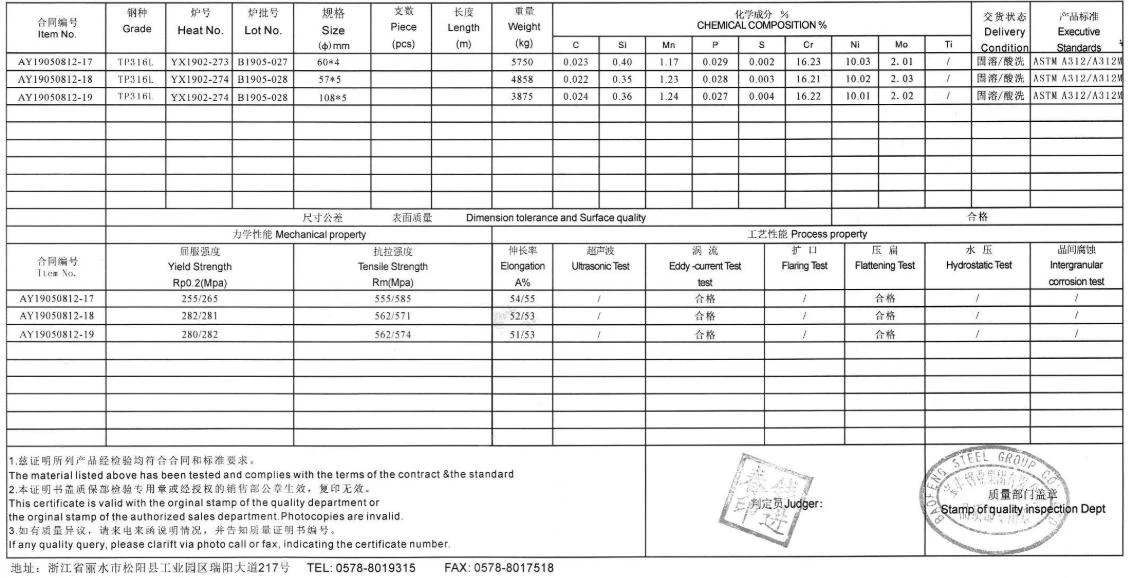
When ordering EN 1.4404 steel pipes for marine or chemical applications, be sure to specify the pressure rating (pipe diameter) and whether the pipes are seamless or welded. Gnee Steel provides complete EN 10204 3.1 factory testing certificates to ensure your project meets the highest safety standards and is fully traceable.
Get a quick quote for 1.4404 steel pipes
1.4404 Stainless Steel Pipe Supplier and Manufacturer
Our pipes are dual certified to 1.4404/316L, meeting project requirements in both Europe and the United States. A minimum molybdenum content of 2.0% is guaranteed, ensuring the pitting corrosion resistance required for your marine or chemical projects.
Comprehensive Testing:
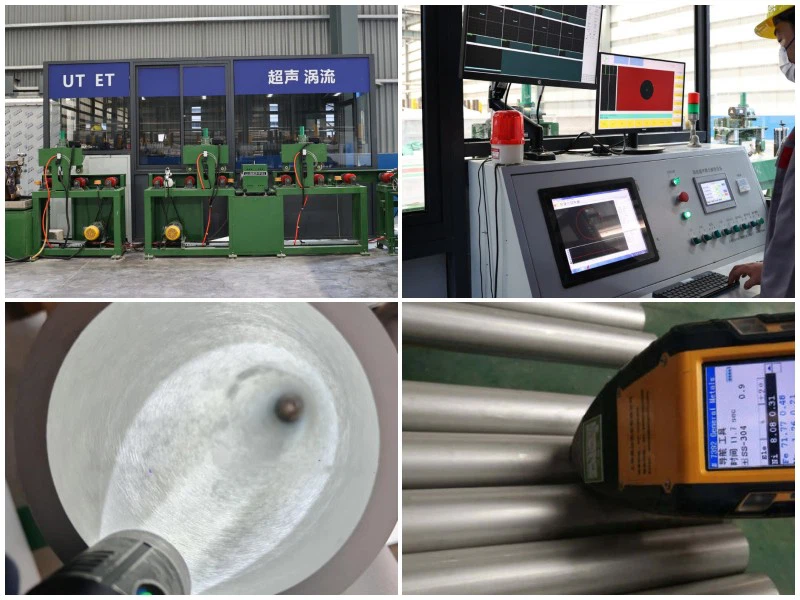
Non-destructive Testing: All pipes undergo 100% eddy current or hydrostatic testing.
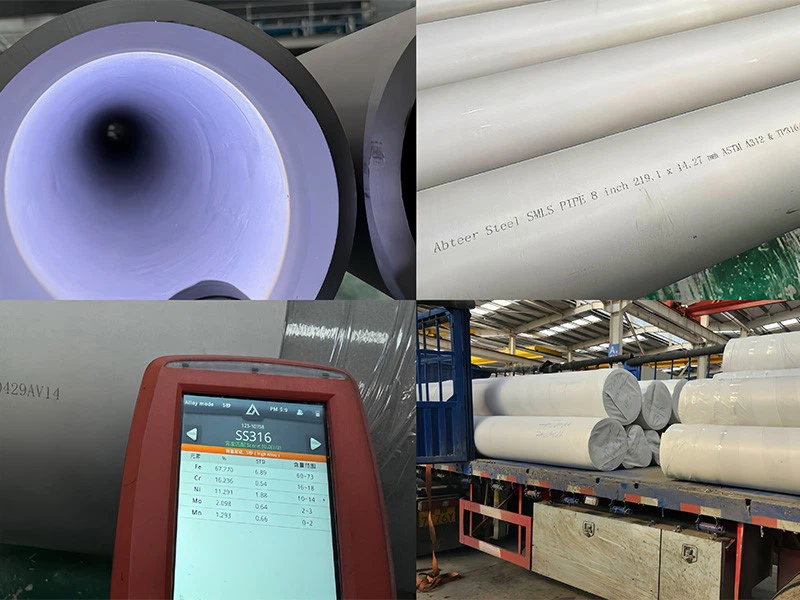
PMI Inspection: Material verification is performed before shipment to avoid mixing.
Corrosion Testing: Intergranular corrosion testing (ASTM A262 Class E) is available upon request.
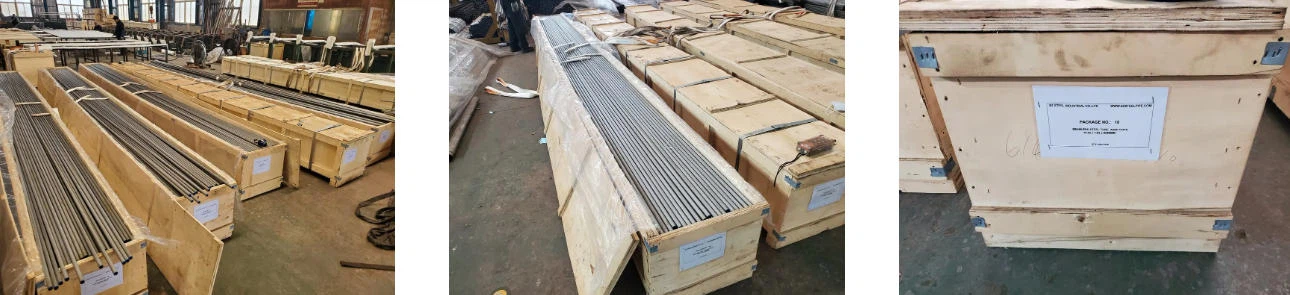
End-to-End Machining: Gnee offers custom beveling (end treatment), threaded ends, and precision cutting services with an accuracy of ±1mm.
Send Inquiry