







1.4510 vs. 1.4016 Stainless Steel: Key differences
Aug 24, 2026
Leave a message
If you are choosing between 1.4510 and 1.4016 stainless steel, understanding the differences in chemical composition, corrosion resistance, welding performance, and application suitability is essential. Both grades belong to the ferritic stainless steel family and contain approximately 17% chromium, but their performance differs significantly because 1.4510 (X3CrTi17 / AISI 439) is titanium-stabilized, while 1.4016 (X6Cr17 / AISI 430) is a conventional unstabilized ferritic stainless steel.
In practical applications, 1.4016 is mainly selected for general-purpose stainless steel products requiring good appearance and moderate corrosion resistance, while 1.4510 is preferred for welded components, humid environments, and applications requiring improved long-term stability.
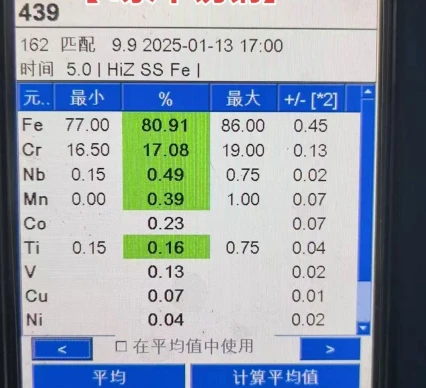
What is 1.4510 stainless steel material?
1.4510 (also designated as X3CrTi17 or AISI 439) is a titanium-stabilized ferritic stainless steel conforming to the European EN 10088 standard. Titanium serves as a stabilizing element by binding with carbon and nitrogen to suppress the precipitation of chromium carbides during heating or welding, thereby preserving corrosion resistance in the heat-affected zone (HAZ). This makes it an ideal alternative to standard ferritic grades like 1.4016 (AISI 430) in welded component applications.
what is 1.4016 Stainless Steel?
1.4016 stainless steel (also widely known as AISI 430 or X6Cr17) is a standard ferritic, non-hardenable chromium stainless steel. It contains no significant nickel, making it a cost-effective, magnetic alternative to austenitic grades like 304 (1.4301), offering good corrosion resistance in mild environments.
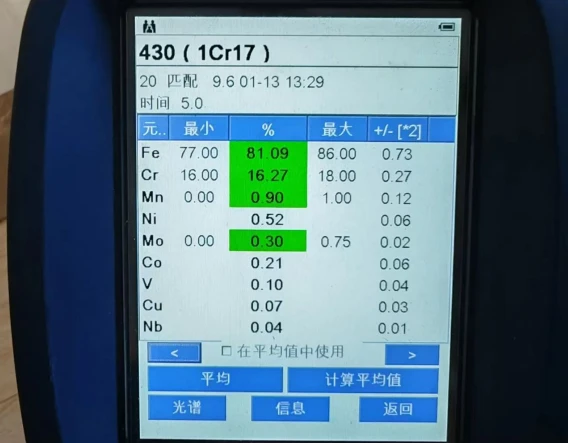

What is the difference between 1.4016 and 1.4510 stainless steel?
The main difference between 1.4016 (X6Cr17 / AISI 430) and 1.4510 (X3CrTi17 / AISI 439) is the chemical stabilization method and welding performance. Both are 17% chromium ferritic stainless steels with magnetic properties, but 1.4510 contains approximately 0.15–0.80% titanium (Ti), which improves weldability, formability, and resistance to intergranular corrosion after welding. Compared with 1.4016, 1.4510 offers better long-term performance in humid and high-temperature applications such as automotive exhaust systems and welded components, while 1.4016 remains a cost-effective choice for general applications like kitchen equipment, appliances, and decorative panels.
1.4510 vs. 1.4016 Stainless Steel: Key differences
| Property | 1.4510 Stainless Steel | 1.4016 Stainless Steel |
|---|---|---|
| EN Designation | X3CrTi17 | X6Cr17 |
| Common Equivalent | AISI 439 / UNS S43035 | AISI 430 / UNS S43000 |
| Stainless Type | Ferritic Stainless Steel | Ferritic Stainless Steel |
| Chromium Content | 16–18% | 16–18% |
| Nickel Content | Nearly 0% | Nearly 0% |
| Stabilizing Element | Titanium (Ti) | None |
1.4510 v. 1.4016 Stainless Steel:Chemical Composition
The biggest difference between 1.4510 and 1.4016 is the addition of titanium (Ti) in 1.4510. According to EN 10088, both grades have similar chromium ranges, but 1.4510 contains titanium stabilization, which improves resistance to sensitization after welding.
| Element | 1.4510 (X3CrTi17) | 1.4016 (X6Cr17) |
|---|---|---|
| Carbon (C) | ≤0.05% | ≤0.08% |
| Silicon (Si) | ≤1.00% | ≤1.00% |
| Manganese (Mn) | ≤1.00% | ≤1.00% |
| Chromium (Cr) | 16–18% | 16–18% |
| Nickel (Ni) | - | - |
| Titanium (Ti) | 0.15–0.80% | None |
1.4510 vs. 1.4016 Stainless Steel:Mechanical Properties
Typical properties in annealed condition:
| Property | 1.4510 | 1.4016 |
|---|---|---|
| Tensile Strength | 420–600 MPa | 450–600 MPa |
| Yield Strength | ≥230 MPa | ≥220 MPa |
| Elongation | ≥23% | ≥20% |
| Hardness | ≤85 HRB | ≤88 HRB |
| Density | 7.70 g/cm³ | 7.70 g/cm³ |
1.4510 vs. 1.4016 Stainless Steel: Corrosion and Heat Resistance
While both grades offer good corrosion resistance in mild atmospheric conditions, 1.4510 performs significantly better in high-temperature and wet environments:
Intergranular Corrosion: 1.4510 is highly resistant due to stabilization; 1.4016 is vulnerable after exposure to temperatures between 450°C and 850°C.
Oxidation Resistance: 1.4510 maintains stability up to 850°C (intermittent), whereas 1.4016 is generally limited to lower temperatures or risks scaling and embrittlement.
Stress Corrosion Cracking: Both perform well compared to austenitic steels, but 1.4510 is more robust in condensate-heavy environments (e.g., exhaust gases).
1.4510 vs. 1.4016 Stainless Steel: Welding Performance
The titanium stabilization of 1.4510 stainless steel is its biggest technical advantage. During welding, unstabilized ferritic stainless steels may experience chromium carbide precipitation, reducing corrosion resistance around the heat-affected zone.
| Welding Performance | 1.4510 | 1.4016 |
|---|---|---|
| Titanium Stabilized | Yes | No |
| Sensitization Risk | Lower | Higher |
| Welded Component Reliability | Excellent | Moderate |
| Post-Weld Treatment Requirement | Usually Not Required | May Be Needed |
1.4510 vs. 1.4016 Stainless Steel: Application
| Industry | 1.4510 | 1.4016 |
|---|---|---|
| Automotive | Exhaust components, heat shields | Interior parts |
| Home Appliances | Washing machine drums, oven components | Refrigerator panels, appliance covers |
| Kitchen Equipment | Sinks, welded equipment | Decorative kitchen panels |
| Construction | Roofing, rainwater systems | Interior decoration |
| Industrial Equipment | Heat-resistant welded parts | General fabrication |
1.4016 vs. 1.4510: How to Choose?
If you prioritize minimizing costs and your product involves no welding (or only minimal spot welding), choose 1.4016 (430).
If you require complex stamping/forming, welding, or high-temperature performance, you must choose 1.4510 (439).
If you are looking for a cost-effective alternative to 304, both are excellent options; however, 1.4510 is closer to 304 in terms of performance (with the exception of magnetic properties).
As a supplier, GNEE offers both grades in cold-rolled and hot-rolled coils, available with various surface finishes such as 2B, BA, and No. 4.
FAQ
Q1: Is 1.4510 better than 1.4016 stainless steel?
In many engineering applications, yes. 1.4510 offers better welding performance because it contains titanium stabilization. However, 1.4016 remains a cost-effective choice for general applications.
Q2: Are 1.4510 and 1.4016 the same material?
No. Both are ferritic stainless steels with similar chromium content, but 1.4510 contains titanium while 1.4016 does not.
Q3: Is 1.4510 equivalent to AISI 439?
Yes. EN 1.4510 is commonly equivalent to AISI 439 / UNS S43035.
Q4: Is 1.4016 stainless steel magnetic?
Yes. Both 1.4510 and 1.4016 are ferritic stainless steels and have magnetic properties.
Q5: Can 1.4510 replace SUS304 stainless steel?
For many cost-sensitive applications, 1.4510 can replace SUS304 where chloride corrosion resistance is not critical. However, SUS304 provides better overall corrosion resistance in aggressive environments.
Q6: Which is cheaper, 1.4510 or 1.4016?
Generally, 1.4016 is slightly cheaper because it has a simpler chemical composition without titanium stabilization. However, 1.4510 may reduce maintenance costs in welded applications due to better corrosion stability.
Send Inquiry