







1.4404 vs 1.4571 Stainless Steel:Temperature Resistance
Sep 24, 2026
Leave a message
If you are looking for 1.4404 (316L) or 1.4571 (316Ti) stainless steel for elevated-temperature piping, heat exchangers, tanks, valves, or process equipment, the key difference is not simply the maximum temperature. 1.4404 is a low-carbon 316L grade designed for excellent weldability and resistance to sensitization, while 1.4571 is a titanium-stabilized 316Ti grade developed to maintain better structural stability during prolonged exposure to elevated temperatures. For continuous high-temperature service, operating temperature, stress, exposure time, welding condition, and applicable design code should all be considered.
What is the difference between 316L and 316Ti?
316L relies on an ultra-low carbon content (≤0.03%) to eliminate chromium carbide precipitation during welding, thereby offering excellent cold formability, polishability, and superior machinability.
316Ti has a higher carbon content (≤0.08%) but is stabilized through the addition of titanium (Ti > 5 × [C + N], max. 0.70%) to form titanium carbonitrides; this enables it to maintain mechanical strength and resistance to sensitization during prolonged exposure to high temperatures (425°C to 815°C). 316L is recommended for general welded piping, the pharmaceutical industry, and marine applications requiring high-quality polishing, whereas 316Ti is recommended for high-temperature reactors, exhaust systems, and heat exchangers.
What is the maximum service temperature of 1.4571 (316Ti)?
815 °C (1,500 °F) continuous and 925 °C (1,700 °F) intermittent per ASTM A240. For pressure vessel design per ASME VIII Div. 1, the allowable limit is 816 °C (1,500 °F). For general engineering use without code constraints, 550–600 °C is the practical upper limit for sustained load-bearing applications.
What is the maximum service temperature of 1.4404 (316L)?
300–350 °C for general continuous service. Per ASME VIII Div. 1, the code limit is 454 °C (850 °F) - significantly lower than 1.4571's 816 °C. Above 454 °C, 1.4404 loses creep strength rapidly due to lack of carbide stabilization.
1.4404 vs 1.4571 Stainless Steel: Equivalents
| Designation System | 1.4404 | 1.4571 |
| EN Numeric | 1.4404 | 1.4571 |
| EN Chemical | X2CrNiMo17-12-2 | X6CrNiMoTi17-12-2 |
| AISI / UNS | 316L / S31603 | 316Ti / S31635 |
| BS | 316S12 | 320S31 |
| JIS | SUS316L | SUS316Ti |
| GOST | 03Х17Н11М2 | 10Х17Н9М3Т |
| Stabilization Method | Low carbon (C ≤ 0.03%) | Titanium (Ti ≥ 5×C) |
| Primary Standards | EN 10088-2/3, ASTM A240, ASME SA-240 | EN 10088-2/3, ASTM A240, ASME SA-240 |
1.4404 vs 1.4571 Stainless Steel: Chemical Composition
| Element | 1.4404 (316L) | 1.4571 (316Ti) |
| C | ≤ 0.030% | ≤ 0.080% |
| Si | ≤ 1.00% | ≤ 1.00% |
| Mn | ≤ 2.00% | ≤ 2.00% |
| P | ≤ 0.045% | ≤ 0.045% |
| S | ≤ 0.030% | ≤ 0.030% |
| Cr | 16.0 – 18.0% | 16.0 – 18.0% |
| Ni | 10.0 – 14.0% | 10.0 – 14.0% |
| Mo | 2.00 – 2.50% | 2.00 – 2.50% |
| Ti | - | 5×C to 0.70% max |
| N | ≤ 0.10% | ≤ 0.10% |
| Fe | Balance | Balance |
1.4404 vs 1.4571 Stainless Steel:Mechanical Properties (Annealed, Room Temperature)
| Property | 1.4404 (316L) | 1.4571 (316Ti) |
| Tensile Strength (Rm) | ≥ 485 MPa (70 ksi) | ≥ 500 MPa (72 ksi) |
| Yield Strength (Rp0.2) | ≥ 170 MPa (25 ksi) | ≥ 220 MPa (32 ksi) |
| Elongation (A5) | ≥ 40% | ≥ 30% |
| Reduction of Area | ≥ 50% | ≥ 40% |
| Hardness (max) | ≤ 210 HBW | ≤ 210 HBW |
| Impact Energy (−40 °C) | ≥ 270 J (typ. > 300 J) | ≥ 270 J (typ. ~250 J) |
| Impact Energy (−196 °C) | ≥ 150 J |
≥ 100 J |
1.4404 vs 1.4571 Stainless Steel: Maximum Service Temperature Limits
| Parameter | 1.4404 (316L) | 1.4571 (316Ti) |
| General continuous service | 300 – 350 °C | 400 – 550 °C |
| ASME VIII Div. 1 (pressure) | 454 °C (850 °F) | 816 °C (1,500 °F) |
| Max mechanical temperature | 950 °C | 950 °C |
| Max corrosion temperature | 410 °C | 480 °C |
| Sensitization range (IGC risk) | 425 – 815 °C | Not applicable (Ti-stabilized) |
| Creep limit (100,000 h @ 100 MPa) | ~450 °C | ~550 °C |
| Intermittent / peak exposure | 870 °C | 925 °C |
| Oxidation onset (significant scale) | ~700 °C | ~750 °C |
Strength Retention vs. Temperature (EN 10088-3, 40 < t ≤ 63 mm)
| Temperature | 1.4404 Yield (Rp0.2) | 1.4571 Yield (Rp0.2) | Δ Advantage |
| 20 °C (RT) | ≥ 220 MPa | ≥ 220 MPa | - |
| 100 °C | ≥ 210 MPa | ≥ 210 MPa | - |
| 200 °C | ≥ 200 MPa | ≥ 200 MPa | - |
| 300 °C | ≥ 185 MPa | ≥ 190 MPa | +3% |
| 400 °C | ≥ 165 MPa | ≥ 175 MPa | +6% |
| 500 °C | ≥ 140 MPa | ≥ 200 MPa | +43% ⚠️ |
| 600 °C | ≥ 100 MPa | ≥ 160 MPa | +60% ⚠️ |
| 800 °C | ~50 MPa | ~100 MPa | +100% ⚠️ |

Key insight: Below 350 °C, the two grades are nearly identical in strength. Above 400 °C, 1.4571 pulls decisively ahead - by 500 °C it holds 43% more yield strength than 1.4404, and by 600 °C the gap widens to 60%.
Creep Performance (Long-Term Load at Elevated Temperature)
| Condition | 1.4404 (316L) | 1.4571 (316Ti) |
| Creep rupture life at 600 °C / 150 MPa | ~50,000 h | ~70,000 h (+40%) |
| Creep rupture life at 700 °C / 100 MPa | ~20,000 h | ~25,000–26,000 h (+20–30%) |
| Sustained deformation threshold | > 450 °C | > 550 °C |
| Minimum stress for measurable creep (100,000 h) | ~120 MPa @ 500 °C | ~100 MPa @ 550 °C |
Practical rule: If your component operates above 450 °C under sustained load, 1.4571 is the correct choice. Below 400 °C, the creep advantage is negligible and 1.4404's superior formability and lower cost make it preferable.
316L and 316Ti Stainless Steel Suppliers
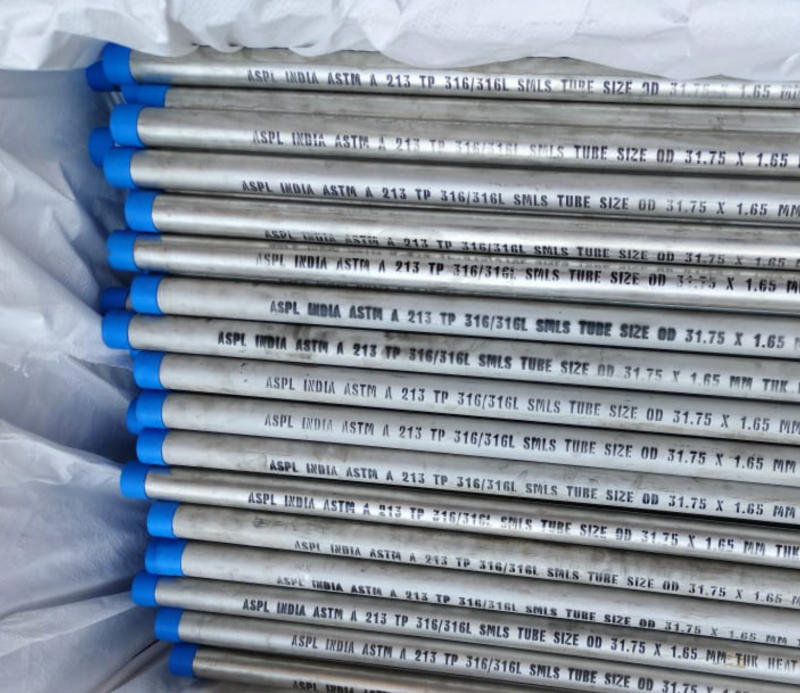
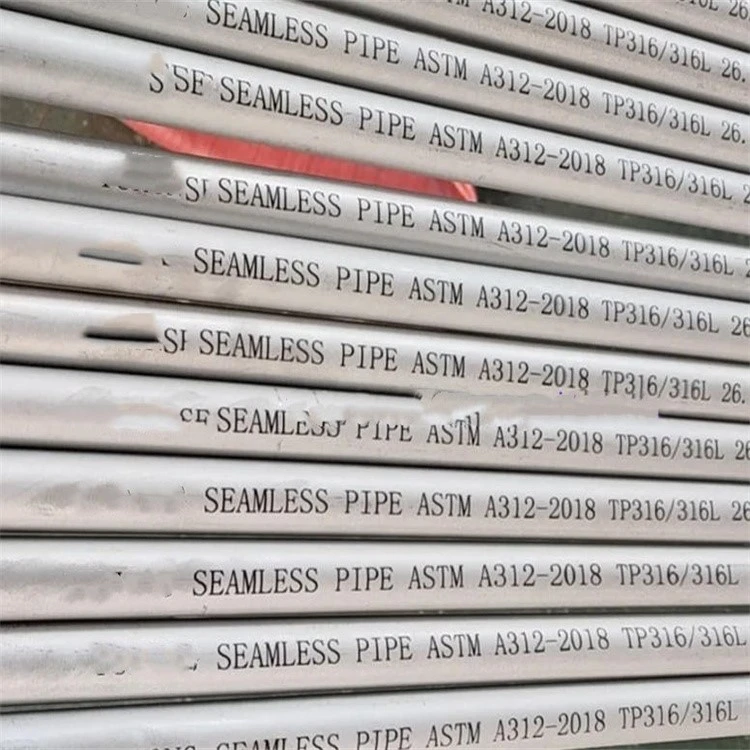
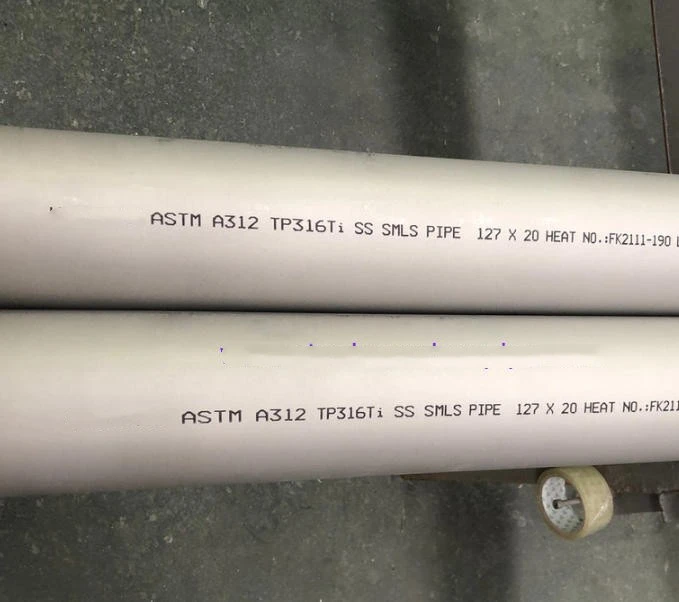
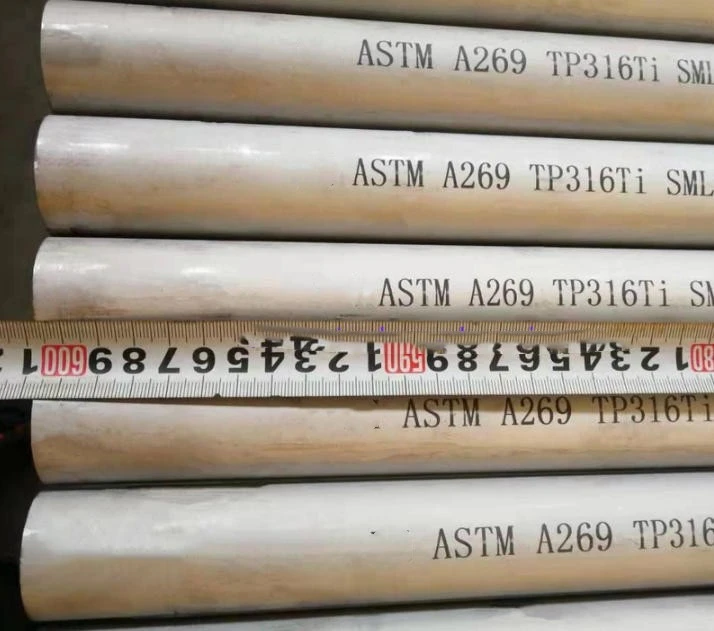
GNEE can supply EN 1.4404 (316L) and EN 1.4571 (316Ti) stainless steel products for piping, heat-exchanger, chemical-processing and industrial applications. Available product forms can include seamless and welded pipe/tube, plate, sheet, coil and bar, subject to the required standard and specification.
For export orders, material documentation can include EN 10204 3.1 MTC, heat-number traceability, chemical composition, mechanical properties and PMI inspection, with dimensional and product-specific NDT requirements available according to the purchase specification. Third-party inspection can also be arranged when required.
For high-temperature projects, buyers should provide the operating temperature, pressure, medium, product dimensions and applicable design code so that the material specification can be matched to the actual service conditions.

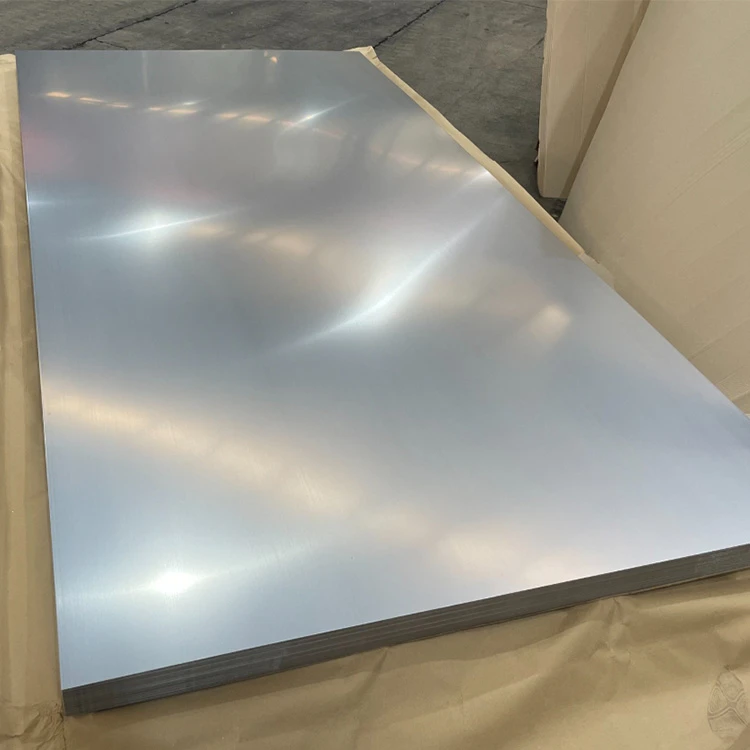
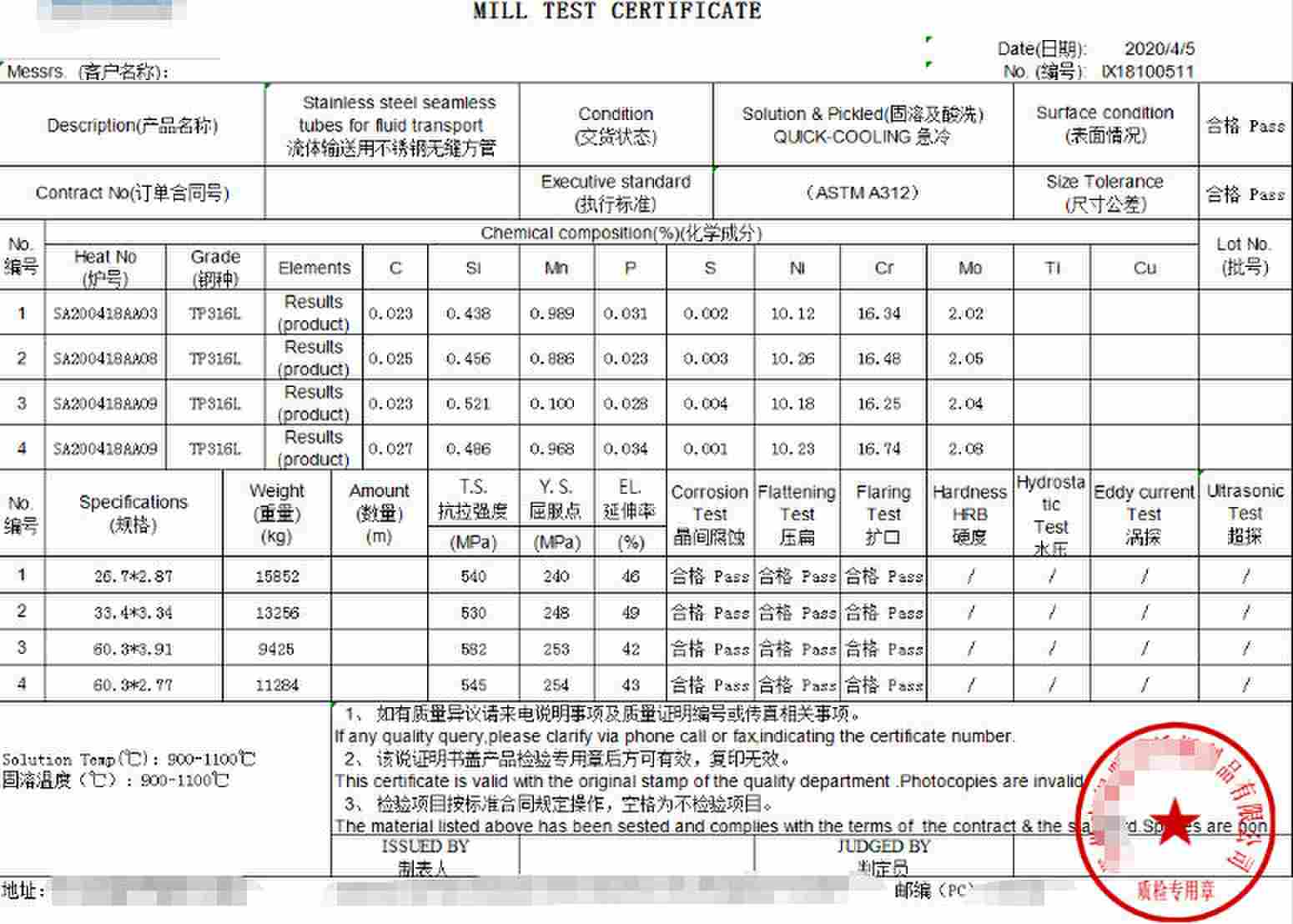
316L Stainless Steel Pipe Material Certificate

FAQ
What is the difference between 1.4571 and 1.4541 (321)?
Both are stabilized austenitic steels, but 1.4571 contains molybdenum (2–2.5%) for pitting resistance (PREN 23–28), whereas 1.4541 (321) contains no molybdenum (PREN ~18) but is slightly cheaper. 1.4571 is the correct choice for high-temperature environments containing chlorides. For applications involving only dry oxidation or carburization, 1.4541 is adequate.
Is 1.4571 more expensive than 1.4404?
Yes, by 15–25% per tonne. However, for high-temperature applications (>400°C), the total cost of ownership favors 1.4571 because: (a) no post-weld heat treatment (PWHT) is required, (b) creep life is 20–40% longer, and (c) there is no risk of failure due to intergranular corrosion (IGC) following thermal cycling.
For heat exchangers, is it better to choose 1.4404 or 1.4571?
It depends on the operating temperature, pressure, fluid chemistry, and heat exchanger tube design. 1.4404 is widely used for standard medium-temperature conditions, whereas 1.4571 may offer advantages in mechanical strength for applications subject to sustained high-temperature loads.
Is the corrosion resistance of 1.4571 superior to that of 1.4404?
Not necessarily. In many environments, their corrosion resistance is roughly comparable. The main difference lies in the stabilization method: 1.4404 relies on low-carbon stabilization, while 1.4571 uses titanium stabilization; 1.4571 offers specific advantages in applications requiring prolonged exposure to high temperatures.
Is 1.4404 magnetic?
Both 1.4404 and 1.4571 are austenitic stainless steels and are generally non-magnetic in the annealed state. Cold working may result in a certain degree of magnetic response.
Send Inquiry