







What is the difference between 1.4301 and 1.4310 stainless steel?
Sep 21, 2026
Leave a message
If you are looking for High-Strength Springs, Railway Panels, Or Cold-Formed Structural Parts, 1.4310 (AISI 301) is your grade. If you need Corrosion Resistance, Weldability, And General-Purpose Fabrication for food, chemical, or architectural use, 1.4301 (AISI 304) is the industry default. Both are austenitic chromium-nickel stainless steels, but their carbon and nickel content create fundamentally different strength, corrosion, and cost profiles. This guide gives you the data to make the right procurement decision.
What is stainless steel grade 1.4301?
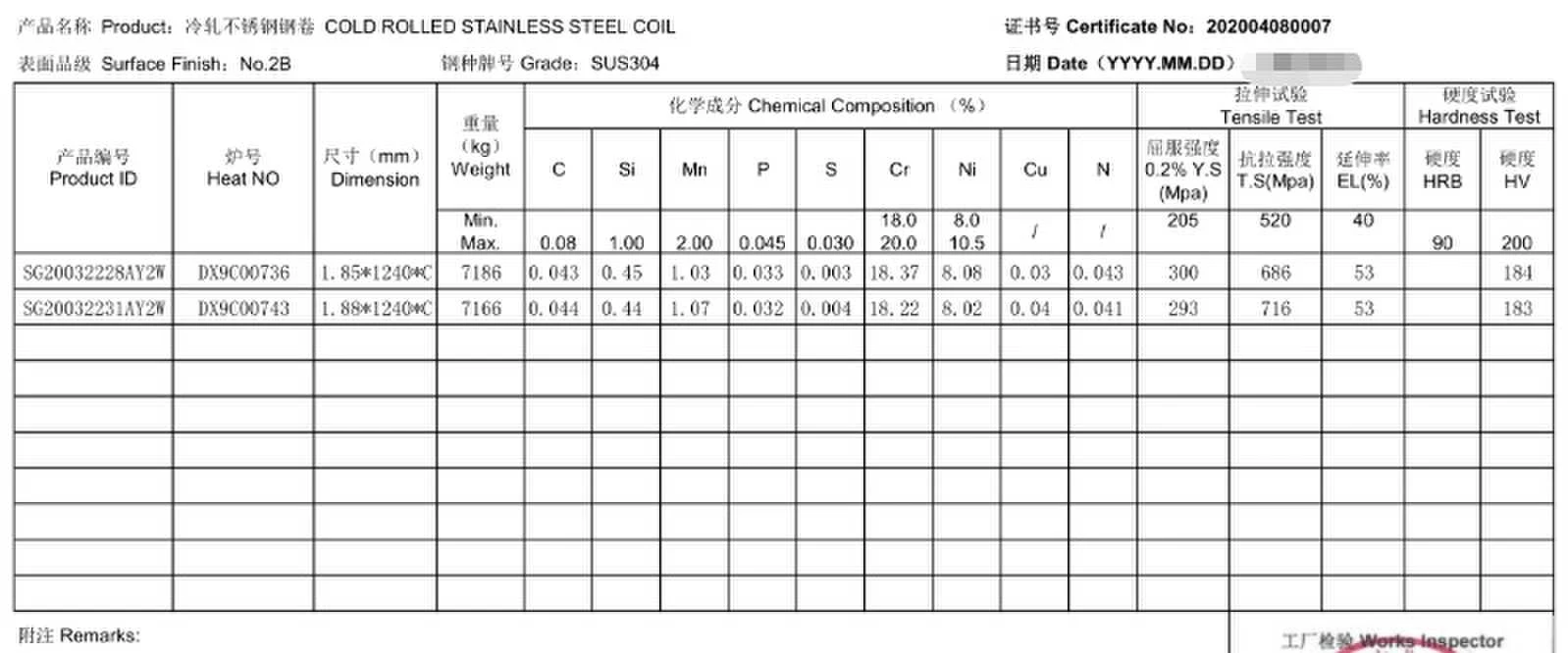
Grade 1.4301 (X5CrNi18-10, EN 10088) is a European standard austenitic stainless steel equivalent to AISI 304 / UNS S30400 and JIS SUS304. It contains 17.5%–19.5% chromium (Cr) and 8.0%–10.5% nickel (Ni) (with a carbon content C ≤ 0.07%); it has a density of 7.9 g/cm³, a yield strength of at least 210 MPa, a tensile strength between 520 and 720 MPa, and a Pitting Resistance Equivalent Number (PREN) of approximately 18–20. Renowned for its excellent formability, weldability, and good corrosion resistance, it is widely used in sectors such as the chemical industry, food processing, and construction.
What is 1.4310 stainless steel equivalent to?
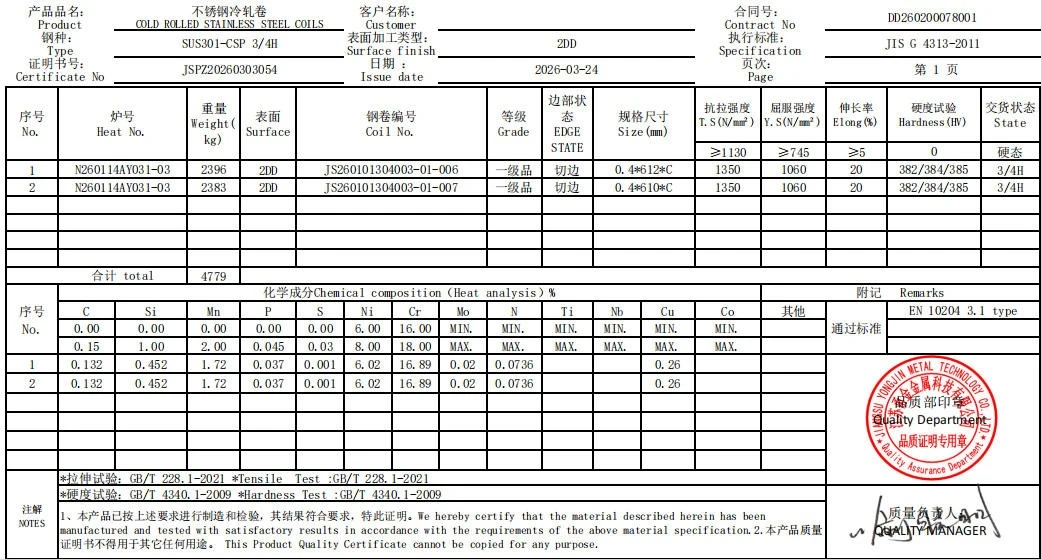
Grade 1.4310 (X10CrNi18-8, EN 10088) is a high-strength, spring-grade austenitic stainless steel equivalent to AISI 301 / UNS S30100, JIS SUS301, and GB 12Cr17Ni7. Containing 16.0%–18.0% chromium (Cr) and 6.0%–9.0% nickel (Ni) (with a carbon content of 0.05%–0.15%), this grade undergoes significant work hardening during cold deformation; this raises its tensile strength from 600–800 MPa in the solution-annealed state to 2000 MPa in the spring-hardened state, making it an ideal material for manufacturing precision springs, fasteners, and high-strength components.
1.4301 vs. 1.4310 Stainless Steel: Key Differences
| 1.4301 | 1.4310 | |
| EN Name | X5CrNi18-10 | X10CrNi18-8 |
| US Equivalent | AISI 304 / UNS S30400 | AISI 301 / UNS S30100 |
| Carbon | ≤ 0.07 % | 0.05 – 0.15 % |
| Nickel | 8.0 – 10.5 % | 6.0 – 8.0 % |
| Primary Strength Mechanism | Alloying | Cold work hardening |
| Best For | Welding, corrosion, food contact | Springs, high-strength forming |
| 2026 Indicative Price | $2.20 – $3.50 / kg | $0.99 – $3.50 / kg |
1.4301 vs. 1.4310 Stainless Steel: Chemical Composition
| Element | 1.4310 (EN 10088-1) | 1.4301 (EN 10088-1) |
| C | 0.05 – 0.15 | ≤ 0.07 |
| Cr | 16.0 – 18.0 | 17.5 – 19.5 |
| Ni | 6.0 – 8.0 | 8.0 – 10.5 |
| Mn | ≤ 2.0 | ≤ 2.0 |
| Si | ≤ 1.0 | ≤ 1.0 |
| P | ≤ 0.045 | ≤ 0.045 |
| S | ≤ 0.015 | ≤ 0.015 |
| N | ≤ 0.10 | ≤ 0.11 |
| Mo | – | – |
1.4301 vs. 1.4310 Stainless Steel:Mechanical Properties
A cold-worked 1.4310 spring can outperform an annealed 1.4301 structural member by 40–60 % in yield strength while retaining adequate ductility for cyclic loading.
| Property | 1.4310 Annealed | 1.4310 Cold-Worked (H) | 1.4301 Annealed |
| Tensile Strength (MPa) | 600 – 950 | 950 – 1,200 | 500 – 700 |
| Yield Strength (MPa) | 240 – 350 | 700 – 1,000+ | 210 – 310 |
| Elongation (%) | 40 – 50 | 15 – 25 | 45 – 55 |
| Hardness (HV) | ≤ 220 | 300 – 400+ | ≤ 200 |
| Modulus of Elasticity (GPa) | ~193 | ~193 | ~193 |
| Density (g/cm³) | 7.9 | 7.9 | 7.9 |
1.4310 vs. 1.4301 stainless steel: Corrosion Resistance
Both grades resist atmospheric, freshwater, and weak acid/alkali environments. The gap widens in three scenarios:
| Scenario | 1.4310 (301) | 1.4301 (304) |
| Outdoor / humid | Good, may show surface staining over years | Excellent, long-term stable |
| Welded joints (HAZ) | Higher risk of intergranular corrosion (C > 0.1 % sensitizes Cr carbides) | Low risk (C ≤ 0.07 %) |
| Chloride / seawater | Fair – not recommended | Good – still not marine-grade (use 316) |
| High-temperature (>400 °C) | Oxidation resistance degrades faster | Stable up to ~870 °C |
1.4310 vs. 1.4301 stainless steel: Welding Considerations
| Factor | 1.4310 | 1.4301 |
| Weldability | Good, but post-weld annealing (1010–1100 °C) recommended to restore corrosion resistance | Excellent, no PWHT needed for most service |
| Risk | Intergranular corrosion at HAZ (C sensitization) | Minimal |
| Recommended filler | 1.4307 (304L) or 1.4316 (316L) | 1.4301 / 1.4307 |
| Pre-heat | Not required | Not required |
What is the difference between 1.4301 and 1.4305?
1.4301 (AISI 304) is a standard austenitic stainless steel (sulfur content S < 0.030%), whereas 1.4305 (AISI 303) is a free-machining grade created by the intentional addition of sulfur (S content 0.15–0.35%). Both contain approximately 17.5–19.5% chromium (Cr) and 8.0–10.5% nickel (Ni). Although 1.4305 offers significantly improved chip-breaking characteristics and machining speeds during CNC turning, its higher sulfur content reduces ductility, weldability, and pitting corrosion resistance (PREN is approximately 17, compared to 18–20 for 1.4301).
What is the difference between 1.4301 and 1.4307?
1.4301 (AISI 304) has a standard carbon content (C < 0.07%), while 1.4307 (AISI 304L) is its low-carbon variant (C ≤ 0.030%). Both share the same mechanical strength (tensile strength Rm of 520–720 MPa) and general corrosion resistance (Cr 17.5–19.5%, Ni 8.0–10.5%). The reduced carbon content in 1.4307 prevents chromium carbide precipitation during welding, thereby eliminating the tendency for intergranular corrosion in the heat-affected zone (HAZ) and removing the need for post-weld solution annealing.
What is the difference between 1.4301 and 1.4016?
1.4301 (AISI 304) is a non-magnetic austenitic steel with a yield strength exceeding 210 MPa, whereas 1.4016 (AISI 430) is a nickel-free ferritic steel that is naturally ferromagnetic and has a yield strength exceeding 260 MPa. Due to the absence of nickel, 1.4016 costs approximately 25%–35% less and is immune to chloride stress corrosion cracking; however, it is inferior to 1.4301 in terms of deep-drawing properties, weldability, and pitting corrosion resistance.
What is the difference between 1.4310 and 1.4311?
1.4311 (AISI 301L) is the low-carbon variant of 1.4310 (C ≤ 0.035 %). It has lower strength but better weldability and corrosion resistance than standard 1.4310. If you need 301's formability with 304-like weldability, specify 1.4311.
1.4310 vs. 1.4301 Stainless Steel: Applications
1.4301 (AISI 304): Food processing equipment, architectural panels, chemical storage tanks, kitchenware, and general-purpose piping.
1.4310 (AISI 301): Mechanical springs, retaining rings, clips, precision stamped parts, and structural components requiring high yield strength.
1.4310 vs. 1.4301 stainless steel:Price(2026 Indicative, FOB China)
| Grade | Form | Price Range (USD/kg) | Notes |
| 1.4310 | Hot-rolled plate | $2.10 – $3.40 | 3–50 mm, No.1 finish |
| 1.4310 | Cold-rolled sheet | $2.50 – $4.20 | 0.3–6 mm, 2B |
| 1.4310 | Mirror / BA | $3.00 – $6.50 | 8K or Bright Annealed |
| 1.4301 | Hot-rolled plate | $2.20 – $2.60 | 6–20 mm most economical |
| 1.4301 | Cold-rolled sheet | $2.50 – $3.00 | 2B finish |
| 1.4301 | Cut sheet (small lot) | $2.80 – $3.50 | Service center pricing |
301 is typically 15–20 % cheaper than 304 due to lower Ni content. Prices fluctuate with LME nickel. Request current quotes for volume orders.
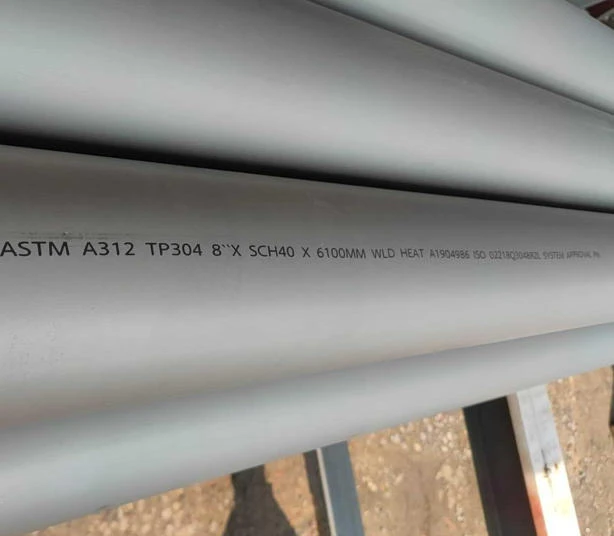
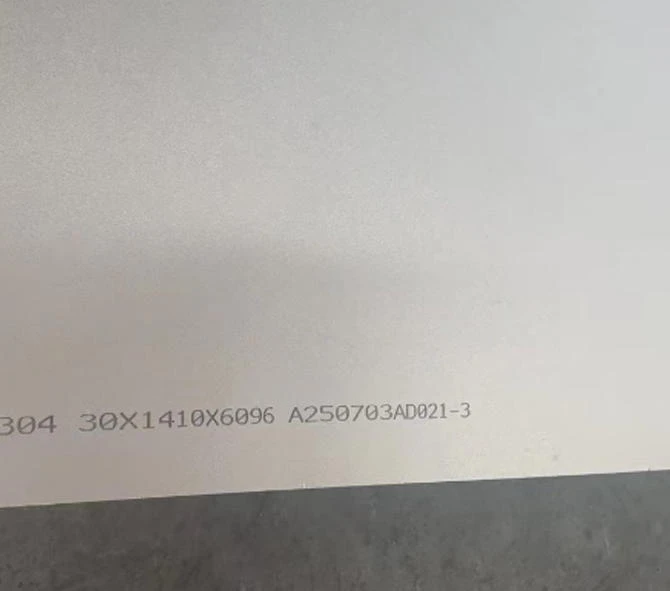
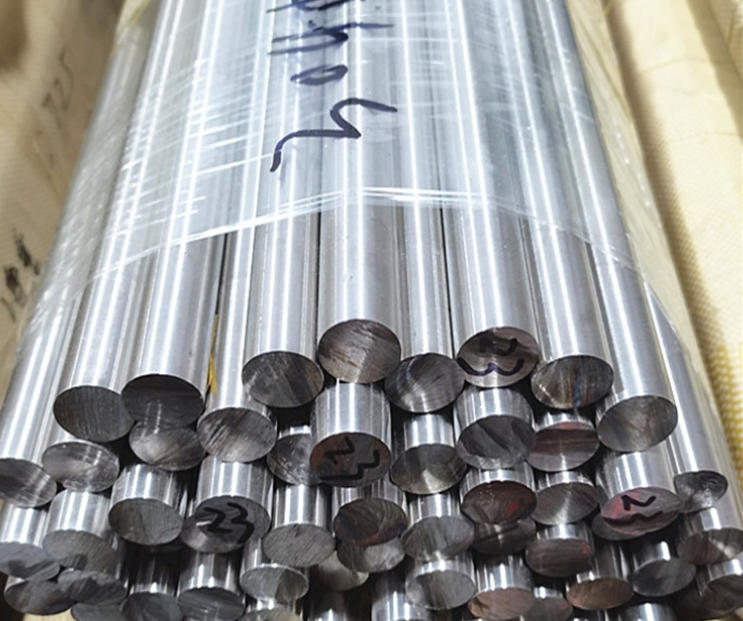
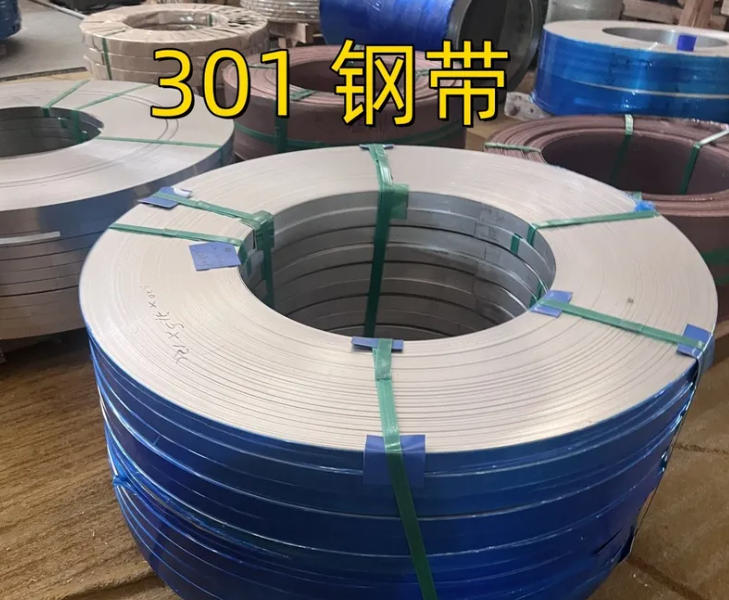
GNEE Product Forms: 1.4301 (304) 1.4310 (301) specification
| Product Category | 1.4301 (304) | 1.4310 (301) |
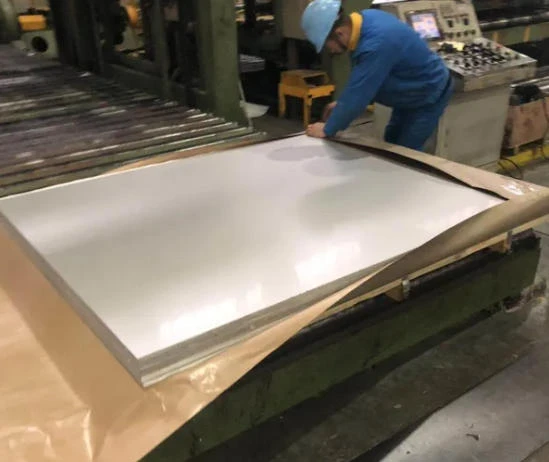
| Flat Products | Sheets, Plates, Coils, Strips | Strips (Cold Rolled), Sheets |
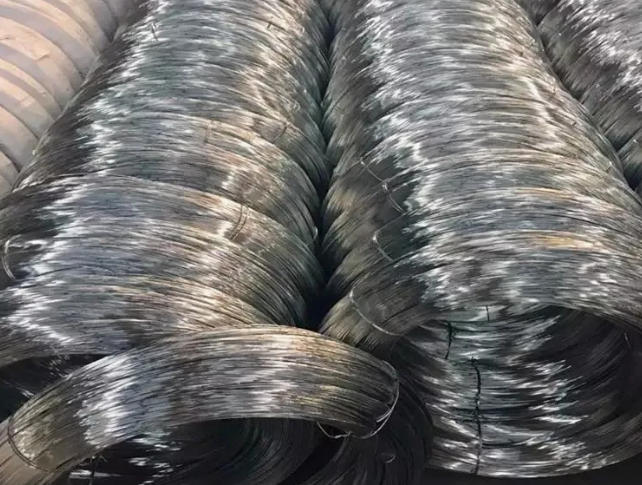
| Long Products | Round Bars, Flat Bars, Angles | Spring Wires, Special Bars |
| Pipes & Tubes | Seamless & Welded Pipes | Rarely used (not standard) |
| Mechanical Parts | Flanges, Fittings, Fasteners | Springs, Clips, Washers |
| Wire Products | Welding Wires | High-tensile Spring Wire |
Send Inquiry