







What is the density of 316 stainless steel?
Sep 24, 2026
Leave a message
If you need the density of 316 stainless steel to calculate the weight, shipping weight, or material cost of pipes, plates, sheets, bars, or coils, the value commonly used in engineering is 8.00 g/cm³ (i.e., 8,000 kg/m³ or approximately 0.289 lb/in³, based on room temperature conditions).
What Is 316 Stainless Steel?
316 stainless steel is an austenitic Cr-Ni-Mo stainless steel, commonly designated AISI 316 / UNS S31600 / EN 1.4401. Its nominal composition includes approximately 16–18% Cr, 10–14% Ni, and 2–3% Mo, with iron as the balance. The molybdenum addition gives 316 better resistance to chloride-induced pitting and crevice corrosion than 304 in many environments.
316 Stainless Steel Density in Different Units
8.00 g/cm³ may serve as a practical reference value; however, for certification purposes or calculations by specific manufacturers, the relevant material data sheet should be consulted.
| Unit | 316 Stainless Steel Density |
|---|---|
| g/cm³ | 8.00 g/cm³ |
| kg/cm³ | 0.008 kg/cm³ |
| kg/m³ | 8,000 kg/m³ |
| kg/dm³ | 8.00 kg/dm³ |
| t/m³ | 8.00 t/m³ |
| lb/in³ | ≈0.289 lb/in³ |
| lb/ft³ | ≈499 lb/ft³ |
Why Is 316 Stainless Steel Density About 8.0 g/cm³?
Density depends on the chemical composition of the alloy. In addition to chromium and iron, the composition specifications for Alloy 316 allow for a nickel content of 10%–14% and a molybdenum content of 2%–3%.
| Grade | Typical Density | Approx. kg/m³ |
|---|---|---|
| 304 | 7.9 g/cm³ | 7,900 |
| 316 | 8.0 g/cm³ | 8,000 |
| 316L | 8.0 g/cm³ | 8,000 |
| 316Ti | 8.0 g/cm³ | 8,000 |
| 347 | 7.9 g/cm³ | 7,900 |
| Carbon Steel | 7.85 g/cm³ | 7,850 |
316 vs. 304 Stainless Steel:Density
One of the most common purchasing questions is whether 316 is significantly heavier than 304.
The answer is no. Their density difference is relatively small.
| Grade | Density | Difference vs. 316 |
|---|---|---|
| 304 | ~7.9 g/cm³ | ~1.25% lower |
| 316 | ~8.0 g/cm³ | Reference |
| 316L | ~8.0 g/cm³ | Approximately the same |
For example, a theoretical 1 m × 1 m × 1 mm plate has a volume of 0.001 m³:
304: approximately 7.9 kg
316: approximately 8.0 kg
The difference is only about 0.1 kg per square metre for a 1 mm thickness.
For large orders, however, even a small density difference can affect the total theoretical weight and freight calculation.
How to Calculate 316 Stainless Steel Pipe Weight?
For pipes, density alone is not enough. You also need the outside diameter (OD), wall thickness (WT), and length.
For a hollow cylindrical pipe:
Weight = π/4 × (OD² − ID²) × Length × Density
where:
OD = outside diameter
ID = inside diameter
Length = pipe length
Density ≈ 8,000 kg/m³
For practical purchasing, many buyers use the theoretical pipe-weight formula associated with the applicable dimensional standard rather than calculating from nominal dimensions alone.
Example
For a 316 stainless steel pipe OD 60.3 mm × WT 3.91 mm × 6 m:
OD = 0.0603 m
ID ≈ 0.05248 m
Length = 6 m
Density = 8,000 kg/m³
The theoretical mass is approximately 16.9 kg per pipe.
Actual delivered weight should be checked against the applicable dimensional tolerances and the supplier's weighing records.
How to Calculate the Weight of 316 Stainless Steel Plate?
For a rectangular 316 stainless steel plate:
Weight (kg) = Length (m) × Width (m) × Thickness (mm) × 8.00
Example
For a 316 stainless steel plate:
Length = 2 m
Width = 1 m
Thickness = 10 mm
Density = 8.00 g/cm³
Calculation:
2 × 1 × 10 × 8.00 = 160 kg
Therefore, the theoretical weight is approximately 160 kg.
This type of calculation is useful for estimating RFQ weight, container loading, material consumption, and freight cost.
316 Stainless Steel Plate Weight
| Plate Size | Thickness | Approx. Weight |
|---|---|---|
| 1000 × 2000 mm | 1 mm | 16 kg |
| 1000 × 2000 mm | 2 mm | 32 kg |
| 1000 × 2000 mm | 3 mm | 48 kg |
| 1000 × 2000 mm | 5 mm | 80 kg |
| 1000 × 2000 mm | 10 mm | 160 kg |
| 1500 × 3000 mm | 3 mm | 108 kg |
| 1500 × 3000 mm | 5 mm | 180 kg |
| 1500 × 3000 mm | 10 mm | 360 kg |
| 2000 × 6000 mm | 5 mm | 480 kg |
| 2000 × 6000 mm | 10 mm | 960 kg |
Note: These are theoretical weights based on a density of 8.00 g/cm³. Actual shipment weight can differ because of dimensional tolerances, cutting losses, surface treatment, and packaging.
316 / 316L Stainless Steel Plate Suppliers
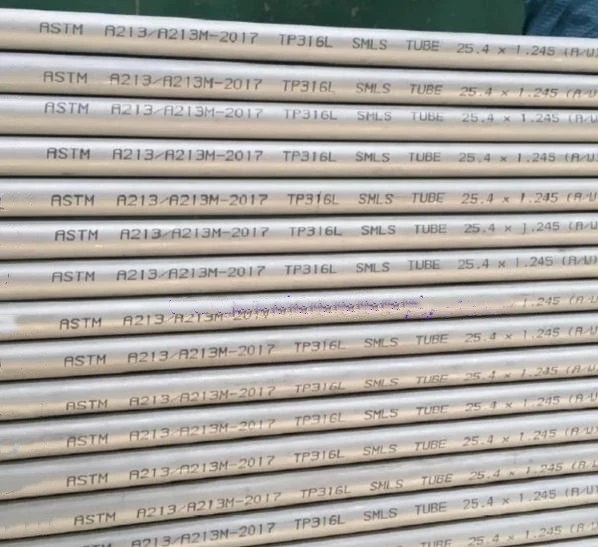
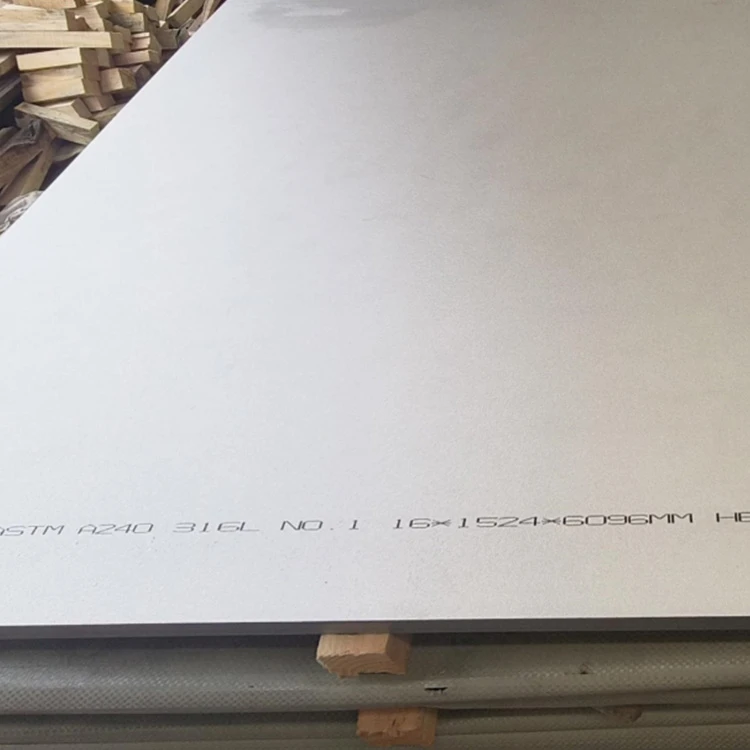
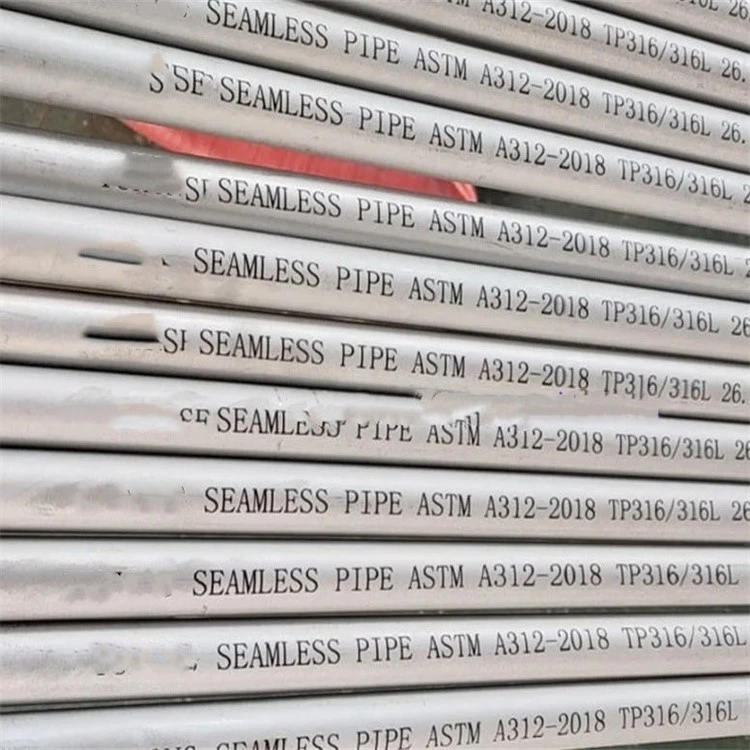
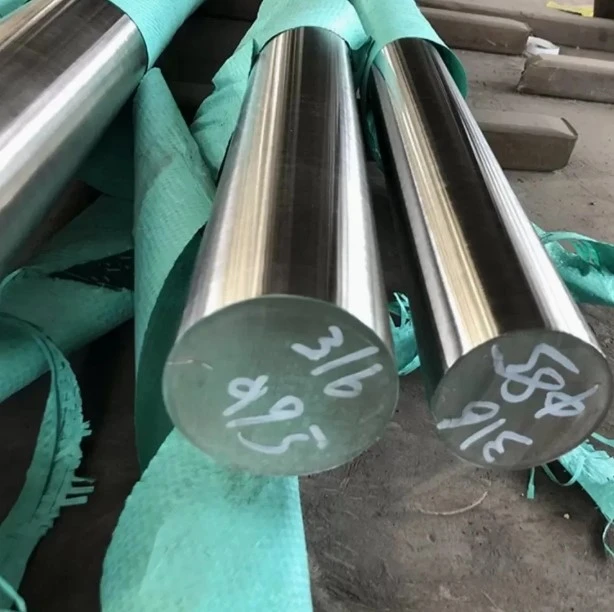
GNEE supplies 316 / 316L stainless steel plates, sheets, coils, seamless pipes, welded pipes, tubes, bars, flanges, and fittings for international industrial projects. Products can be supplied according to ASTM/ASME, EN, DIN, JIS, and GB standards, with options including EN 10204 3.1 MTC, heat-number traceability, PMI, dimensional inspection, hydrostatic testing, eddy-current testing, and third-party inspection. Standard stock and customized dimensions are available for chemical processing, marine, food, pharmaceutical, and general industrial applications.


FAQ
What is the density of 316 stainless steel?
The commonly used engineering density of 316 stainless steel is 8.00 g/cm³, equivalent to approximately 8,000 kg/m³ or 0.289 lb/in³.
Is 316 stainless steel heavier than 304?
Yes, slightly. 316 is typically around 8.0 g/cm³, while 304 is approximately 7.9 g/cm³. The difference is only about 1–1.3%, so dimensions have a much greater effect on total weight.
What is the density of 316L stainless steel?
316L is generally calculated using 8.0 g/cm³ (8,000 kg/m³) for engineering weight calculations.
What is the density of 316Ti?
The typical density of 316Ti / EN 1.4571 is also approximately 8.0 g/cm³.
How do I calculate 316 stainless steel price by kg?
If a supplier quotes 316 stainless steel by tonne, divide the price per tonne by 1,000 to obtain the nominal price per kilogram. For sheet, plate, tube, or bar orders, multiply the theoretical weight by the quoted price/kg and then compare it with the supplier's actual commercial weight basis.
Send Inquiry